
Endurance nutrition comes down to three things: enough carbs every hour, fluids on their own schedule, and practicing both in training before you race. Get those right and most of the mystery disappears. This guide walks the basics in order — why you fade, how much to take, what form, when, and how it changes by race — with a deeper guide linked at every step.
Why do you run out of energy on long efforts?
Your body stores carbs as glycogen — enough for roughly 90 minutes to two hours of work at effort. A short race runs entirely on the tank you brought. A long one drains it, and when the tank runs dry the result has a famous name: the bonk. Pace collapses, your legs feel like someone else's, and no amount of grit brings the energy back, because the fuel simply isn't there. Everything else in this guide is the fix — taking in carbs steadily so the tank never empties. Fueling isn't a trick for elites; it's the difference between fading at the end of a long effort and finishing strong.
How many carbs per hour do you need?
Most endurance athletes — runners, cyclists, triathletes — target 30 to 60 grams of carbs an hour on efforts past about an hour. If you're new to fueling, start at 30 to 40 grams an hour and let your stomach vote before you raise it. From a single carb source, the gut absorbs around 60 grams an hour — that's the practical ceiling for most people. Rates toward 90 grams an hour are real, but they take both a glucose-fructose mix and a gut that's been deliberately trained to handle it.
| Where you are | Hourly carb target |
|---|---|
| New to fueling | 30 to 40 grams |
| Most endurance athletes | 30 to 60 grams |
| Advanced — glucose-fructose mix plus a trained gut | Toward 90 grams |
The full math by finish time is in how many carbs per hour for a marathon, and the carb sweet spot: beginners vs. advanced maps the progression from 30 to 90.
What forms can your carbs take?
Your muscles don't care about the wrapper — gels, chews, carb drinks, and real food all count toward the same hourly budget. What differs is delivery. Gels are the precision default: 20 to 25 grams in one known dose, taken in seconds, with your fueling never chained to your drinking. Chews split the dose into pieces you have to chew and count. Carb drinks couple your fuel to your fluid, so you only fuel when you drink. Real food earns its place on long, steady days when appetite matters. The full side-by-side is in gels vs. chews vs. sports drinks; if you're curious what a gel actually is, see what's actually in an energy gel — and if you'd rather fuel from your kitchen, real-food alternatives to energy gels covers that honestly.
When do you start fueling, and how often?
Earlier than feels necessary. Take your first gel 30 to 45 minutes in — carbs take 10 to 15 minutes to reach your bloodstream, so a gel taken when you already feel empty arrives late. After that, settle into a rhythm of one dose every 20 to 40 minutes and hold it the whole way; steady beats heroic. Don't trust mid-race arithmetic — set a watch alarm or write the schedule on your hand. The timing logic is in when to take your first gel, and how long an energy gel lasts explains why that 20-to-40-minute cadence is the shape it is.
What about water and electrolytes?
Two rules, kept separate. First: take a few sips of water with every gel — it helps the carbs move through comfortably. Second: beyond those sips, hydration runs on its own schedule, driven by thirst, heat, and effort — not by your fueling plan. Don't couple the two; on a cool day you'd underfuel, and on a hot day you'd overdo the carbs. Hot weather raises your fluid and electrolyte needs, but it doesn't raise your carb needs — the budget stays 30 to 60 grams an hour while the drinking goes up. The details live in do you need water with energy gels, hydration vs. gels, and how to fuel in hot weather.
Does caffeine belong in the plan?
It's an optional layer, not fuel. Carbs are what keep you moving; caffeine sharpens the effort on top of them. If you use it, place it deliberately: caffeine takes about 30 to 45 minutes to fully kick in, so time it ahead of the hard stretch — the final climb, the last 10K — rather than taking it when things already hurt. Plenty of athletes race entirely without it and lose nothing on the fueling side. How it works and how to dose it is in caffeine in energy gels; the case for skipping it is in are caffeine-free gels worth it.
Do you have to train your stomach too?
Yes — and this is the step most first-timers skip. Your gut is trainable, like your legs: practiced regularly, it absorbs more carbs at effort without complaint; asked to process race-day fueling for the first time on race day, it tends to protest. So rehearse the whole plan on your long training days — same gels, same timing, same sips of water, at something like race effort. That rehearsal is what separates a smooth fueling day from a rough one; most gel trouble traces back to skipping it, not to the gel. Start with how to practice gel fueling in training, go deeper with how to train your gut to absorb more carbs, and if you've had a bad experience already, why energy gels upset your stomach explains what went wrong.
How much fuel does your race actually take?
Time on your feet decides it, not the distance on the sign. Efforts that finish inside your glycogen window need little or nothing mid-race; everything longer needs the per-hour rhythm.
| Race | Typical finish time | Fuel plan |
|---|---|---|
| 5K / 10K | 15–60 min | None mid-race — arrive topped off and bring water |
| Half marathon | 1:20–2:30 | ~2–4 gels for most; sub-90 finishers often none |
| Marathon | 3–5+ hr | ~5–8 gels; up to 10 near five hours |
| Ultramarathon | 6+ hr | No fixed total — 2–3 per hour, mixed with real food |
The short-race logic is in do you need gels for a 5K, 10K, or half marathon, and the counts by finish time are in how many gels for a marathon, half, or ultra. Going past the marathon? How to fuel for an ultramarathon covers the all-day version.
Getting started, with Hüma
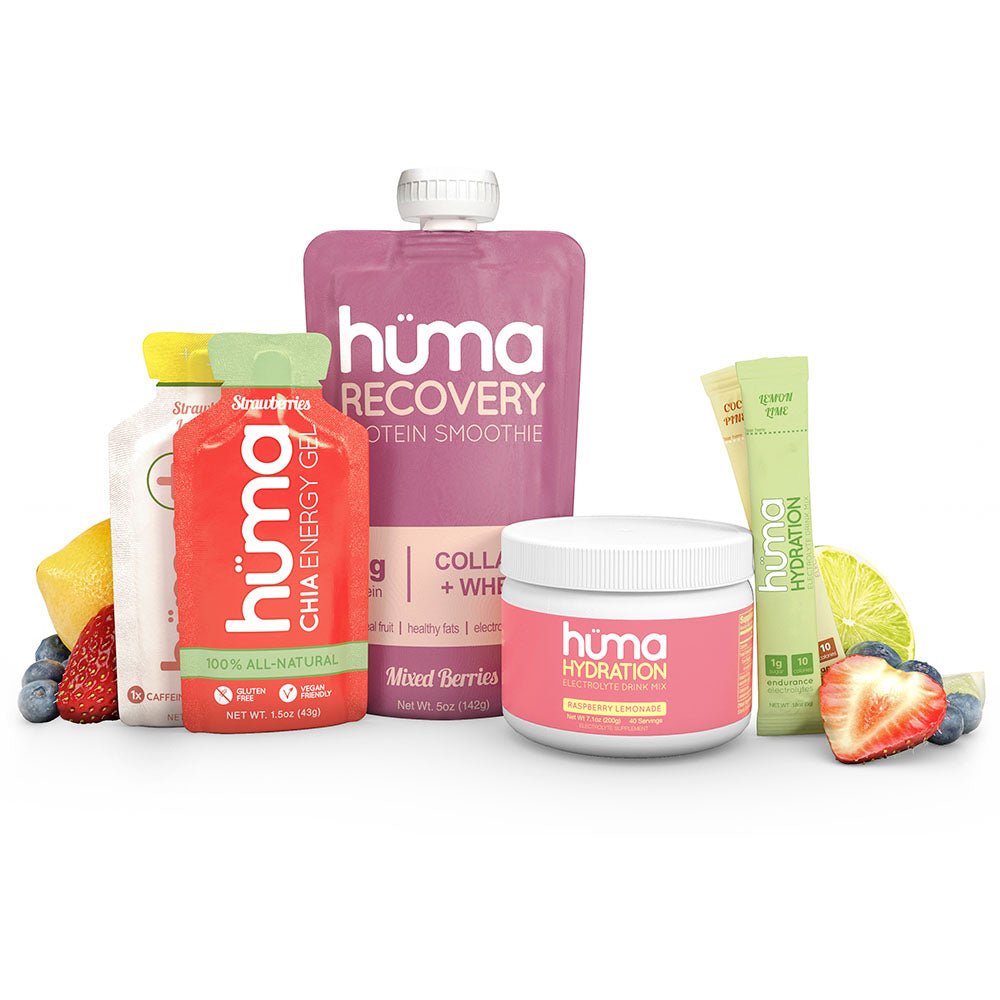
Hüma's version of the basics is built to keep the plan simple. Each pouch carries 24 grams of real-food carbs from brown rice syrup and real fruit purees — the Original line adds cane sugar, while PLUS uses fruit juice concentrates — so two to three per hour covers the 30-to-60-gram budget with math you can still do at mile 20. Because the fruit purees carry water into the formula, a Hüma is semi-concentrated: lighter going down than a thick, syrupy gel, though like any gel it still pairs best with a few sips of water. And let taste lead your flavor choice — the gel you genuinely like is the one you'll actually take on schedule. If you're choosing your first, which Hüma for first-timers narrows it down.
Related guides
- How to fuel your first marathon
- How many energy gels for a marathon, half, or ultra?
- How to train your gut to absorb more carbs
- When to take your first gel — and how often after
- Energy gels vs. chews vs. sports drinks
FAQ
What are the basics of endurance nutrition?
Three things: take in 30 to 60 grams of carbs an hour on efforts past about an hour, handle hydration on its own schedule with a few sips of water alongside each gel, and rehearse the whole plan on long training days before racing with it.
When should you start fueling during a long run or race?
Take your first gel 30 to 45 minutes in, then one every 20 to 40 minutes. Carbs take 10 to 15 minutes to reach your bloodstream, so fuel ahead of the need rather than reacting to it.
Do you need energy gels for a 5K or 10K?
Not during the race — both finish inside the roughly 90-minutes-to-two-hours your stored carbs cover. Arrive topped off with a good pre-race meal and bring water. Mid-race fueling starts mattering at the half marathon and beyond.
Do you have to drink water with energy gels?
A few sips with each gel is the habit worth keeping — it helps the carbs move through comfortably. The rest of your drinking should follow thirst and conditions, not your fueling schedule.
Can beginners take 90 grams of carbs an hour?
No — start at 30 to 40 grams an hour. From a single carb source the gut absorbs about 60 grams an hour, and rates toward 90 take both a glucose-fructose mix and weeks of deliberate gut training.