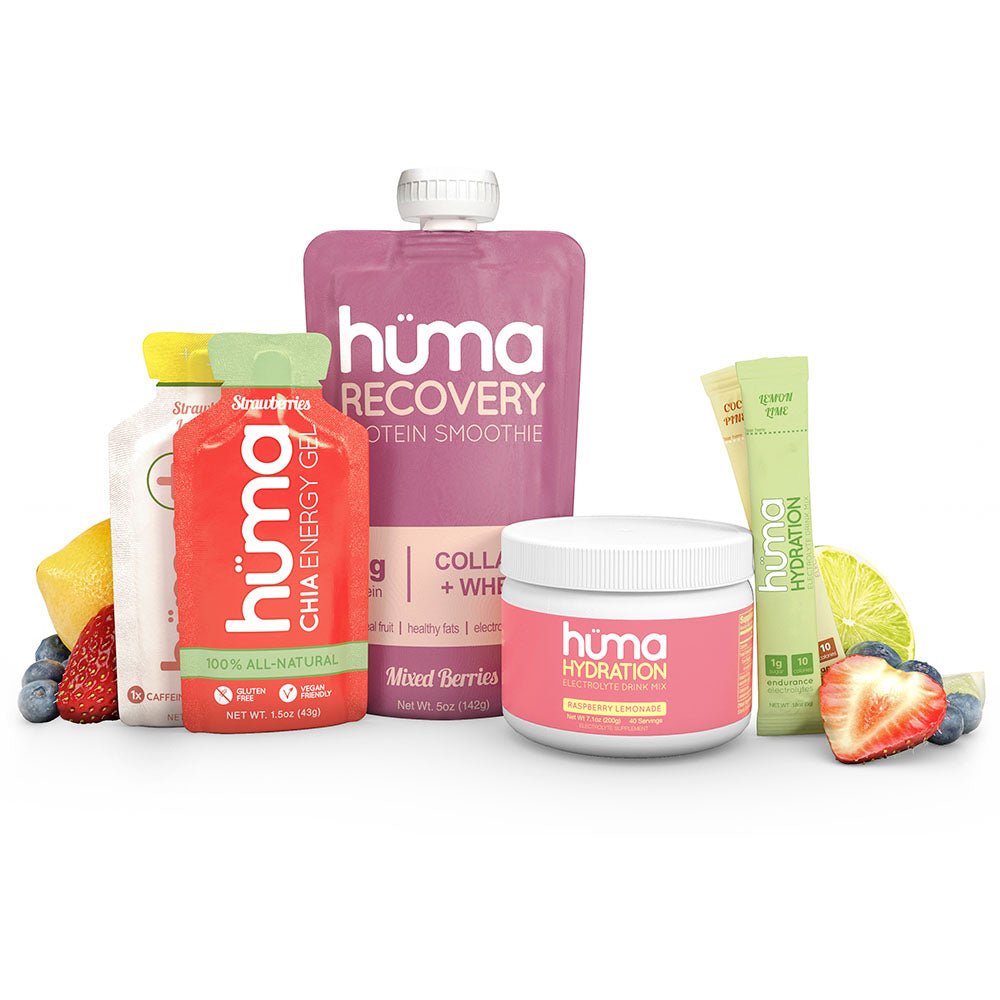


Fueling an ultramarathon is the same idea as any long effort, stretched over many more hours: take in carbs steadily, lean toward the higher end of your range, and replace electrolytes as you sweat. The two things that change over an ultra are total volume — you'll eat far more across the day — and variety, because your stomach and your taste buds both fatigue. Mix gels with real food, start early, and never try anything new on race day.
How ultra fueling is different
A marathon is over in a few hours; an ultra can run all day or into the night. That changes the math in two ways. First, the totals are bigger — you're fueling for far longer, so the carbs and calories add up. Second, your gut and your palate both wear down over the hours, so the gel that tasted great at hour two can feel impossible at hour eight. Successful ultra fueling is less about a perfect formula and more about keeping something going in, consistently, the whole way.
How many carbs per hour for an ultra?
Most ultrarunners aim for a steady stream of carbs — often the higher end of the usual range, since the effort is long even if the pace is easy. From a single carb source your gut tops out around 60 grams per hour; a glucose-and-fructose mix lets trained athletes go higher. The catch is that you have to train your gut for high rates in advance, and over a very long day many runners settle a little lower than they would in a marathon simply because the stomach gets tired. See how many carbs per hour you need for the underlying numbers.
Mix gels with real food
Few runners can take gels alone for ten-plus hours. Gels are perfect for the move-fast stretches and the climbs where chewing is hard, but most ultrarunners alternate them with aid-station food and real snacks to keep eating without burning out on any one texture or flavor. The principle holds whether you're a runner, a cyclist, or a long-course triathlete: keep the carbs coming, vary how they arrive, and your gut stays willing.
Electrolytes matter more the longer you go
Hours of sweat add up to real sodium loss, and the longer the day the more an electrolyte plan matters. Pair your fuel with electrolytes — Hüma PLUS gels carry double the electrolytes of Original, and Hüma Hydration drink mix replaces fluid and salts with almost no sugar. On hot or long days, that combination keeps cramping and fade at bay. More on that in how to fuel in hot weather and Hydration vs. the gels.
Beating flavor fatigue
The most underrated ultra skill is simply still wanting to eat at hour nine. Rotate flavors — bright fruit early, chocolate or coffee mid-race, citrus late — and mix sweet with the savory options at aid stations. Caffeinated gels are useful saved for the low points and the night miles rather than spent early.
Fueling an ultra with Hüma
Build your ultra plan on two to three Hüma per hour as the steady base — 24 grams of real-food carbs each, from brown rice syrup and real fruit purees, with chia, and more water in the formula than a thick syrupy gel, so they keep going down smooth deep into a long day. Reach for Ultra (40 grams of carbs per pouch) when you want density, lean on PLUS and Hydration for electrolytes, and rotate flavors to stay ahead of fatigue. Above all, rehearse the whole plan on your longest training days.
Related guides
- How many carbs per hour for a marathon
- How to train your gut to absorb more carbs
- How to avoid flavor fatigue on long races
- Hüma Hydration vs. the gels
- Real-food alternatives to energy gels
FAQ
How do you fuel for an ultramarathon?
Take in carbs steadily for the whole effort, lean toward the higher end of your range, replace electrolytes as you sweat, and mix gels with real food to keep eating over many hours. Practice it all in training.
How many carbs per hour for an ultra?
Often the higher end of the usual range, but it depends on a gut trained for high rates — and many runners settle a bit lower over a very long day as the stomach tires.
Can you fuel an ultra on gels alone?
Most runners can't for ten-plus hours. Gels are great for moving fast and for climbs, but alternating them with real food prevents flavor and texture burnout.
How do you avoid flavor fatigue in an ultra?
Rotate flavors through the day, mix sweet with savory aid-station food, and save caffeinated gels for the low points and night miles.