
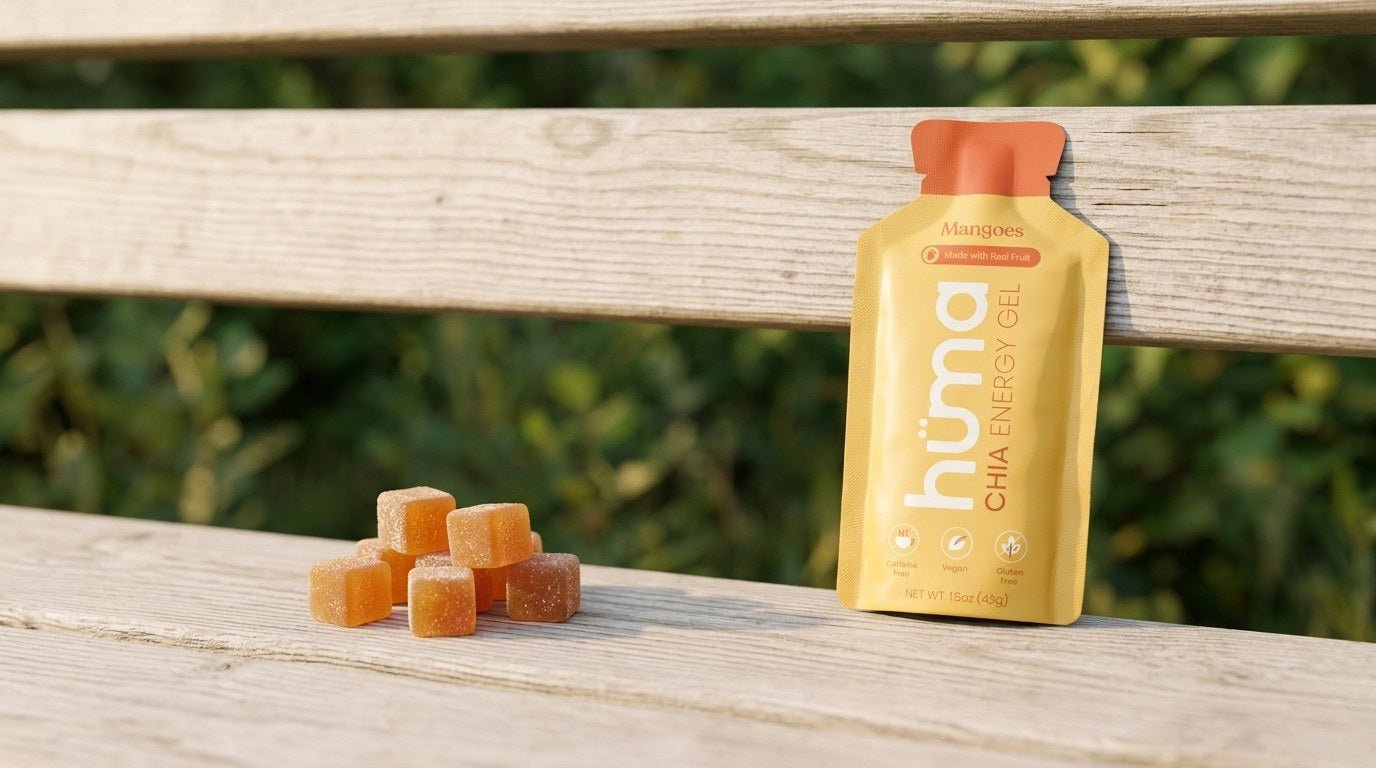
Gels, chews, and carb sports drinks all deliver the same thing — fast carbs — so the real question is delivery. Gels put a known dose in your system in seconds. Chews split that dose into pieces you have to chew — and count. Sports drinks tie your fuel to your fluid, so you only fuel when you drink. Most endurance athletes build their plan on gels and add the other formats deliberately.
Aren't gels, chews, and sports drinks all the same fuel?
At the muscle level, yes. All three are fast carbs, and every gram counts toward the same hourly budget — 30 to 60 grams of carbs an hour for most runners, cyclists, and triathletes. Your legs don't know which format the carbs arrived in. What differs is everything between the wrapper and the bloodstream: how fast you can take a dose, how precisely you can measure it, and whether your fueling is chained to your drinking. Here's the honest side-by-side:
| Format | Carbs | Taking it | Dosing control | Fuel and fluid |
|---|---|---|---|---|
| Energy gel | 20 to 25g per pouch | A few seconds, with sips of water | Precise — one pouch is one known dose | Separate — you control each |
| Chews | Similar per serving, split across several pieces | Piece by piece, and you have to chew | Flexible — partial doses are easy, but you're keeping count | Separate — water on your schedule |
| Carb sports drink | Varies — a bottle can carry as many carbs as a gel | Only as you drink | Tied to thirst and drinking pace | Coupled — fuel and fluid arrive together |
When do energy gels win?
When speed and certainty matter — which is most race scenarios. A gel is a complete, known dose you can take in seconds without breaking rhythm, and the math stays simple: one pouch, 20 to 25 grams, done — eat it and forget it. Gels are compact enough to carry a full marathon's worth in a pocket, and they keep working when eating stops sounding good — deep in a long effort, swallowing a gel is far easier than chewing anything. The one job you can't skip: a few sips of water with each one. For how many you need, see how many gels for a marathon, half, or ultra.
When do chews make sense?
On long, steadier days where you have the time and the appetite to nibble. Chews let you take partial doses — a piece or two at a time — which some athletes like for spreading carbs out gently. The honest catch is the work: it takes several pieces to equal one gel, and chewing gets genuinely hard late in a race, when your mouth is dry and your jaw has opinions of its own. There's also a memory tax. A gel is eat-it-and-forget-it — one pouch, one dose, done. Chews ask you to remember whether that was piece three or piece five, and mid-race arithmetic gets unreliable exactly when the fueling matters most. Pieces that stay in the pack are carbs you didn't take — and unlike a gel, a serving of chews is easy to half-finish without noticing.
When does a carb sports drink make sense?
When it's already part of your setup — it's what's on course at your race, or you simply prefer drinking your carbs. The trade is that fuel and fluid arrive coupled. On a hot day you'll drink more and can take in more carbs than you planned; on a cool day you'll drink less and quietly underfuel. Big swigs of a carb drink can also sit heavy and sloshy at effort. If a drink is in your plan, count its carbs toward your hourly total and space it apart from your gels — should you take gels with a sports drink covers the math.
Which fuel format should you use for your event?
| Scenario | Best fit | Why |
|---|---|---|
| Racing at effort (10K to marathon) | Gels + water | Fast, precise doses without breaking rhythm |
| Long steady days (ultras, century rides) | Gels as the core, chews or real food for variety | Steady fueling with something different to look forward to |
| Race with a carb drink on course | Gels + counted drink carbs | The bottle replaces a gel in your plan, not in addition to it |
| Late in any long effort | Gels | Swallowing beats chewing when the miles get heavy |
Whatever mix you choose, rehearse it in training before race day. What matters most isn't the format — it's hitting your carbs per hour, consistently, in a form you'll actually take.
Choosing a format, with Hüma
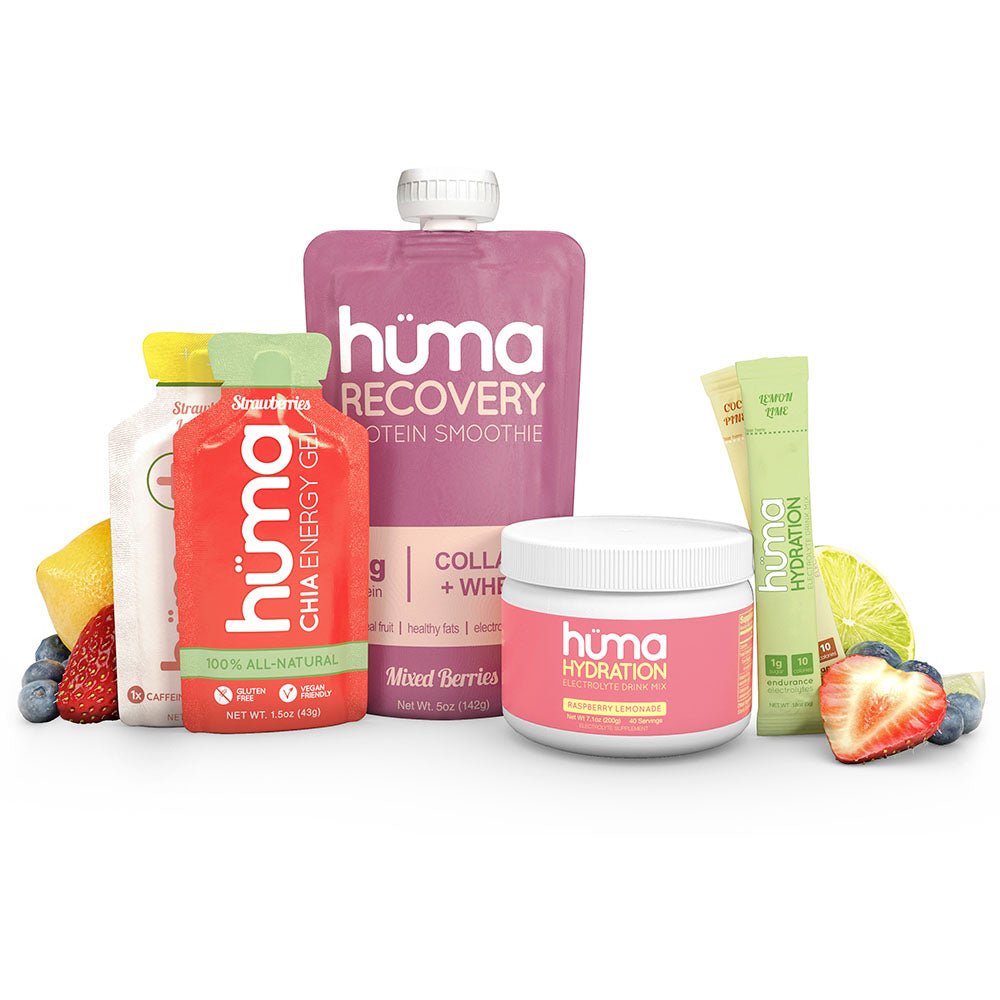
Full disclosure: Hüma makes gels, so weigh our vote accordingly — but the picture above is the fair one. Hüma's take on the format is 24 grams of real-food carbs per pouch from brown rice syrup and real fruit purees and concentrates, with chia. Because the fruit purees carry more water into the formula, a Hüma is semi-concentrated — lighter going down than a thick, syrupy gel — though like any gel, it still pairs best with a few sips of water. Two to three per hour covers the 30-to-60-gram budget with no chewing, no counting sips, and math you can do at mile 20. If where the carbs come from matters to you, real-food vs. maltodextrin gels breaks down the sources.
Related guides
- Should you take energy gels with a sports drink?
- How many energy gels for a marathon, half, or ultra?
- How long does an energy gel last (and how fast does it kick in)?
- Real-food vs. maltodextrin energy gels
- Endurance Nutrition 101: the basics of fueling
FAQ
Are energy gels better than chews?
Neither is better at the muscle level — the carbs are the same. Gels are one pouch, one dose — eat it and forget it. Chews allow partial doses but take real chewing, and you have to remember how many pieces you've taken. For racing at effort, most endurance athletes default to gels.
Do sports drinks count as fuel?
Yes. A carb sports drink is a fuel source, not flavored hydration — a bottle can carry as many carbs as a gel. Count its carbs toward your 30 to 60 grams an hour and space it apart from your gels.
Can you mix gels, chews, and a sports drink?
Yes, as long as everything counts toward one hourly carb budget. Space your carb doses apart, take gels with plain water, and rehearse the combination in training before racing with it.
Why are gels easier late in a race?
No chewing. Deep into a long effort your mouth is dry and eating feels like work — a gel goes down in seconds. Chews take several pieces per dose, and pieces left in the pack are carbs you didn't take.
How many carbs per hour do you need?
Most endurance athletes target 30 to 60 grams of carbs an hour from all sources combined. Trained guts can push toward 90 grams using glucose-fructose mixes — but that's earned in training, whatever format the carbs come in.