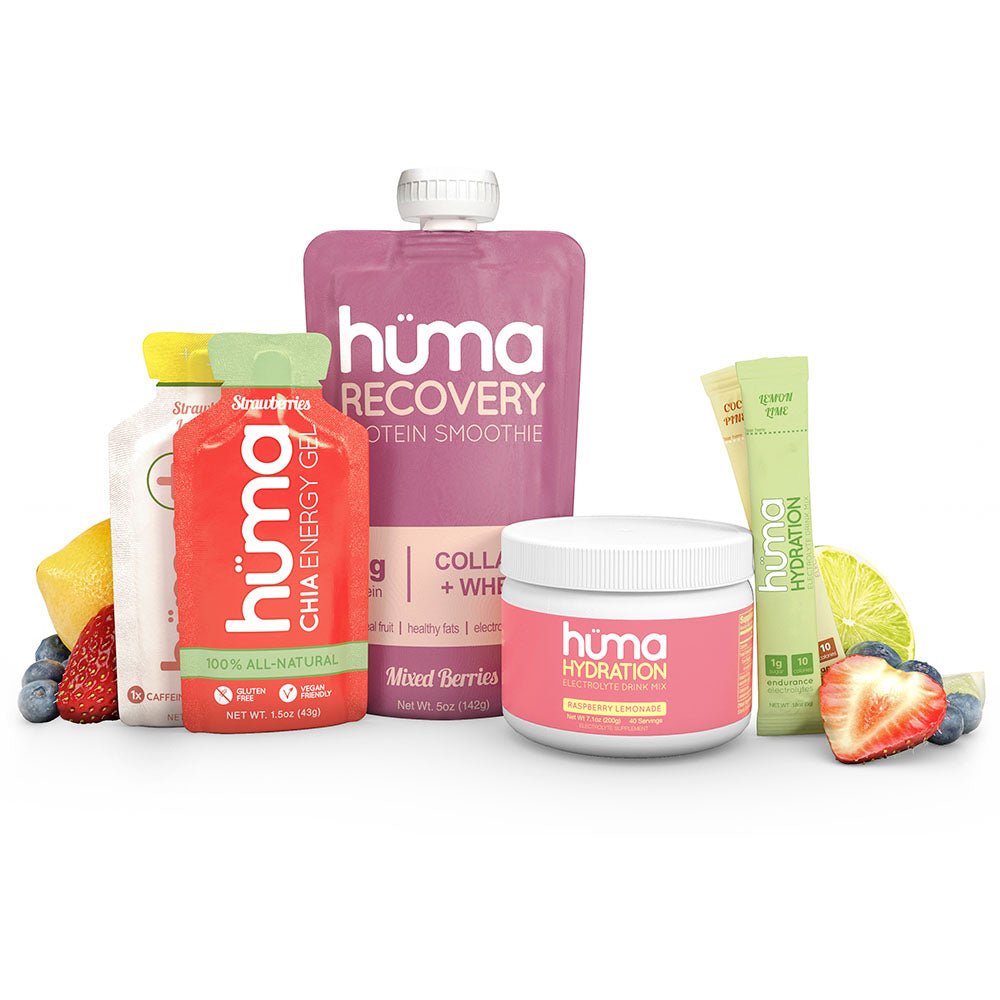

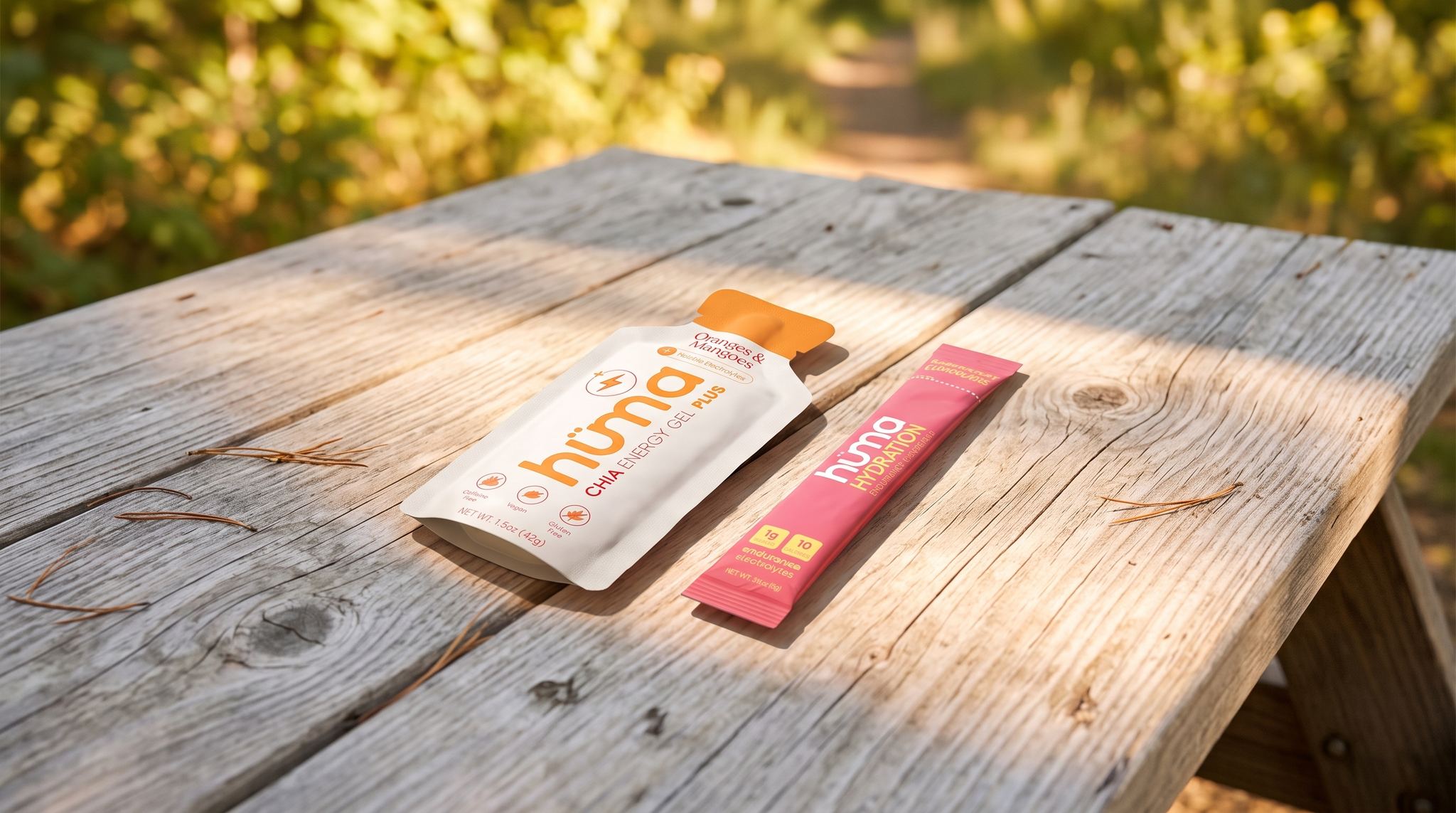
In the heat, your fueling math shifts toward more sodium and more frequent sips, not more sugar. Keep eating two to three Hüma per hour — lean toward three when it's hot or you're racing — and reach for PLUS instead of Original for the double electrolyte dose. Pair the gels with Hüma Hydration in your bottle to replace the fluid and salts you're sweating out. Same carbs, more electrolytes, more water.
What shifts in the heat — at a glance
| Variable | Cool day | Hot day |
|---|---|---|
| Carbs per hour | About 48g (two Original/hr) | About 60–72g (lean toward three/hr) |
| Sodium per hour | Lower — gels alone often cover it | Notably higher — many athletes target 600 mg+ |
| Fluid intake | As thirst calls for it | Drink early and steadily, not in catch-up gulps |
| Best gel pick | Original | PLUS — double the electrolytes |
| Drink mix in the bottle | Optional | Yes — Hüma Hydration |
Why heat changes the math
Anyone who's done a long run or ride on a really hot day knows the difference: legs get heavy earlier, fuel sits weirder, and the second half somehow feels twice as long as the first. Hot weather makes two things happen at once. You sweat more, so you lose more fluid and more sodium, which is why hot-day cramping, fading, and the late-race salt-on-your-shirt look all show up earlier than they would in cool air. And your body is sending more blood to your skin to cool you, which leaves less for your stomach — so big sugary doses feel heavier than they do at 55°F. The lever to pull isn't fewer carbs (you still need them); it's smaller, more frequent bites of fuel and a real plan for sodium and water.
Carbs in the heat: same amount, different pacing
Most endurance athletes — runners, cyclists, and triathletes — fuel at two to three Hüma per hour regardless of weather. In the heat, the small shift is leaning toward three: a pouch every 20 minutes instead of every 30, so the carb load is spread thinner and the stomach handles each bite more easily. The total is similar (~60–72g/hr), but the experience is gentler. Hüma's real-food carbs from brown rice syrup and real fruit purees, with more water in the formula than a thick syrupy gel, are part of why endurance athletes keep them in their hot-day kit.
For a deeper breakdown of the carbs-per-hour math by distance and pace, see how many carbs per hour for a marathon.
Electrolytes in the heat: where the real shift happens
The biggest hot-day change isn't carbs — it's sodium. Sweat-sodium loss varies widely from athlete to athlete. The American College of Sports Medicine's position stand on Exercise and Fluid Replacement (Sawka et al., 2007) puts typical sweat sodium concentration in the range of roughly 230 to 1,700 mg per liter of sweat, and endurance athletes commonly sweat between half a liter and two liters per hour — sometimes more in heat. The result is a wide range of hourly losses: anywhere from a few hundred milligrams to well over a thousand, depending on the athlete and the day. On a cool day, the sodium in your gels alone often covers it. On a hot day, it's almost never enough. You have two complementary levers, and most hot-day plans use both:
- Switch gels to PLUS. PLUS is Original's electrolyte upgrade — same 24g of real-food carbs, double the electrolytes. About 240mg of sodium per pouch vs. about 105mg in Original. Three PLUS per hour gets you ~720mg of sodium from gels alone.
- Add Hüma Hydration to your bottle. Hüma's electrolyte drink mix carries 380mg of sodium per stick with just 1g of sugar — the most sodium of any product in the lineup, without piling more carbs on top of your gels. Sip it through the effort.
For the full breakdown of how the gels and Hydration work together, see Hydration vs. the gels.
Your hot-day Hüma kit
The simplest hot-day setup, scaled to the effort:
| Effort | Gels | Bottle |
|---|---|---|
| Short workout, 30–60 min | One Original or PLUS mid-session | Plain water, or Hydration if you're a heavy sweater |
| Long run or ride, 1–2 hr | Two to three PLUS per hour | Hydration on hand |
| Half marathon | Two to three PLUS per hour | Hydration in your bottle or at aid stations |
| Marathon or 70.3 | Three PLUS per hour | Hydration consistently from the start, not the finish |
| Ultra or full Iron-distance | Mix of PLUS and Ultra (40g carbs) — variety helps late-race palate fatigue | Hydration throughout; refill at every chance |
Most athletes mix lines on long, hot days — PLUS for the workhorse pouches, Ultra Apple Pie when carb density matters, and Hydration alongside. See the Hüma flavor guide for which flavors to pick.
A few practical tips
- Drink early. Don't wait for thirst — by the time you feel it on a hot day, you're already behind. Start sipping Hydration in the first 15 minutes.
- Start sodium before you need it. Front-loading electrolytes in the first hour makes the back half feel better than chasing salt at mile 18.
- Pre-cool when you can. Cold water, an ice bandana, or a few minutes in the shade before the start can make the first half easier on your gut and your pacing.
- Practice your hot-day plan in training. Don't test PLUS, Hydration, or three pouches an hour for the first time on race day — your gut adapts to fueling rates with practice.
- Watch for the early signs. Heaviness, dizziness, salt rings on a dark shirt, or unusual fatigue mean dial up Hydration and PLUS, not push harder.
Shop Hüma gels →
Shop Hüma Hydration →
FAQ
How does fueling change in hot weather?
You need more sodium and more frequent, smaller sips of fuel — not more sugar. Most endurance athletes keep carbs around 60–72g/hr (two to three Hüma), but switch to PLUS for double the electrolytes and add Hüma Hydration in the bottle to replace the fluid and salts they're sweating out.
Should I use PLUS or Original in the heat?
PLUS for hot days. Same gel, double the electrolytes — about 240mg of sodium per pouch vs. about 105mg in Original. Both deliver 24g of real-food carbs, so your fueling math doesn't change.
How much sodium do I need per hour in the heat?
Sodium losses vary widely. The American College of Sports Medicine (Sawka et al., 2007) reports typical sweat sodium concentrations of roughly 230 to 1,700 mg per liter, with endurance athletes losing anywhere from a few hundred milligrams to well over a thousand per hour depending on sweat rate and the day. A hot-day plan of three PLUS gels (~720 mg) plus sips of Hüma Hydration (380 mg per stick) covers the typical range for most athletes. Heavy sweaters may want more.
Should I take a gel and Hydration at the same time?
Yes. The gel carries your carbs; Hydration carries fluid and sodium with almost no sugar. They do different jobs and pair cleanly — sip Hydration steadily and take a gel every 20–30 minutes.
Will a gel sit OK on my stomach when it's hot out?
Smaller, more frequent doses help — a pouch every 20 minutes instead of a bigger dose every hour. Hüma's real-food carbs from brown rice syrup and real fruit purees carry more water in the formula than a thick syrupy gel, which many endurance athletes find easier to handle in the heat.