
The sweet spot for most endurance athletes is 30 to 60 grams of carbs an hour, and beginners do best starting at the low end — around 30 to 40. The 90-plus-grams-an-hour fueling you hear about from advanced marathoners, ultrarunners, and elite cyclists only works with a glucose-and-fructose mix and a deliberately trained gut. Wherever you sit today, the path up is the same: practice on long runs, add a little at a time.
What's the right carb range for beginners?
Start at 30 to 40 grams an hour. A standard gel carries 20 to 25 grams, so that's your first gel 30 to 45 minutes in, then one every 30 to 40 minutes or so — well inside the usual every-20-to-40-minutes window, since each gel's fuel covers roughly that stretch (how long does an energy gel last does the arithmetic). Two notes for newer runners: efforts under about 90 minutes mostly run on the carbs you already have stored, since those stores last roughly 90 minutes to two hours at a sustained effort — and topping off before you start still matters at every distance, whether that's a normal pre-run meal or a gel before the gun. Both are legitimate; see when to take your first gel for the timing.
Where do most endurance athletes land?
The workhorse range for runners, cyclists, and triathletes is 30 to 60 grams of carbs an hour. In gel terms, two to three per hour covers the range, each with a few sips of water. Most athletes never need more than this — a steady marathon, a long ride, a half on a warm day all live comfortably here. The distance-by-distance numbers are in how many carbs per hour for a marathon.
How do advanced athletes get to 90 grams an hour and beyond?
There's a ceiling in the middle of the range that explains the whole beginner-versus-advanced split: from a single carb source like glucose, your gut tops out around 60 grams per hour — one absorption route, and it saturates. Glucose and fructose absorb through two different routes, so a mix lets trained athletes push to roughly 90 grams per hour — and the most extreme fueling protocols, like the ones some very elite cyclists run, go higher still, toward 120. Both conditions matter at every rung: the mix alone doesn't get you there without a gut trained to handle it, built over weeks of deliberate practice.
The carb sweet spot at a glance
| Fueling tier | Carbs per hour | Carb source | What it takes |
|---|---|---|---|
| Just starting out | 30–40g | Any single source is fine | Practice fueling on long runs |
| Most endurance athletes | 30–60g | Single source still works | Consistency, water with every gel |
| Advanced / long-course | 90g+ | Glucose-fructose mix required | Weeks of deliberate gut training |
How do you move up from beginner to advanced?
Your gut adapts like your legs do — progressively, on a schedule:
- Fuel every long run with the same gels and timing you'll race with.
- Add roughly 10 to 15 grams — about half a gel — every week or two. Jumping straight to a high rate is how stomachs file complaints.
- Practice at race pace. Your gut behaves differently easy versus hard.
- Mix carb sources once you're pushing past 60 grams an hour — that's where the second absorption route earns its keep.
- Take every gel with water.
The adaptation builds over a few weeks and fades if you stop, so maintain it through your race build. The full session-by-session approach is in how to practice gel fueling in training.
Why isn't more always better?
Because carbs past your absorption rate don't fuel you — they sit in your stomach and cause trouble, which is the whole story of can you take too many energy gels. The sweet spot is a match, not a maximum: the rate your gut can absorb, aimed at what the effort actually needs. A steady marathon doesn't need 90 grams an hour, and forcing it buys you nothing but ballast. Find the rate you can hold comfortably, and the back half of the race is where it pays.
Finding your sweet spot with Hüma
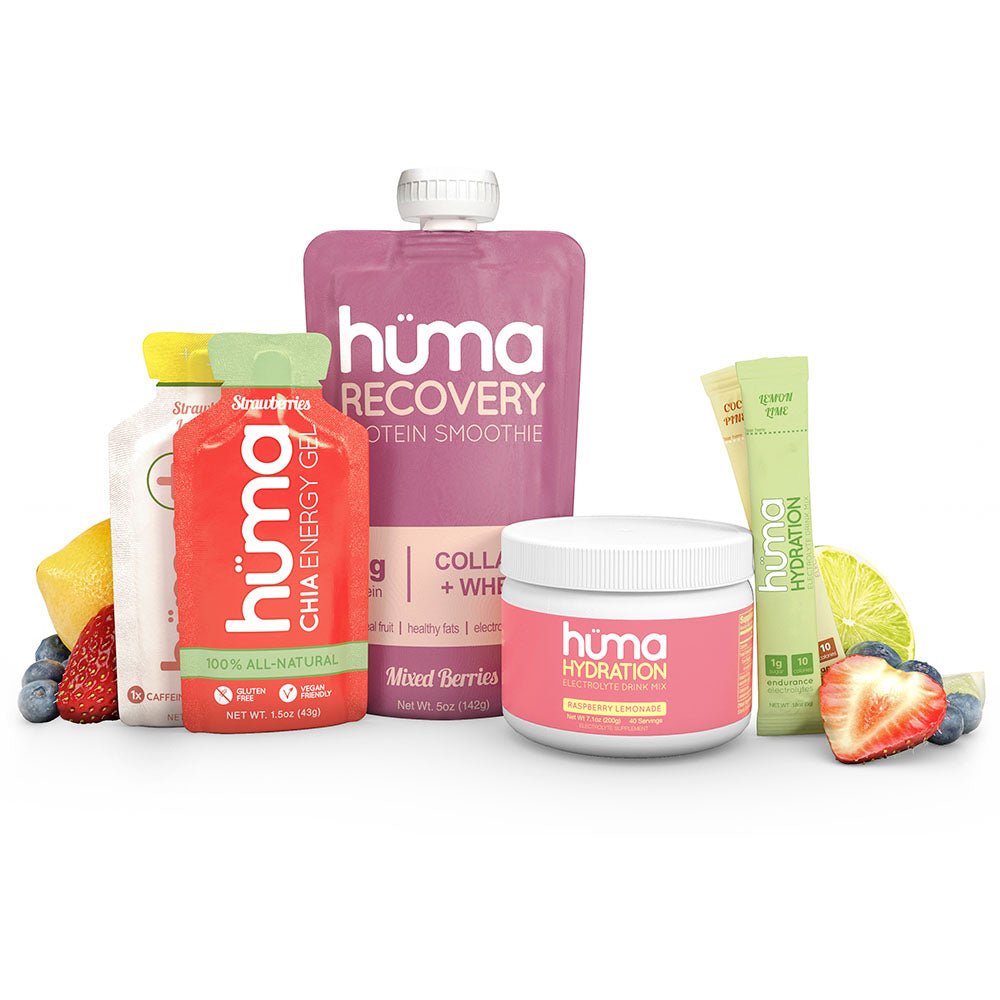
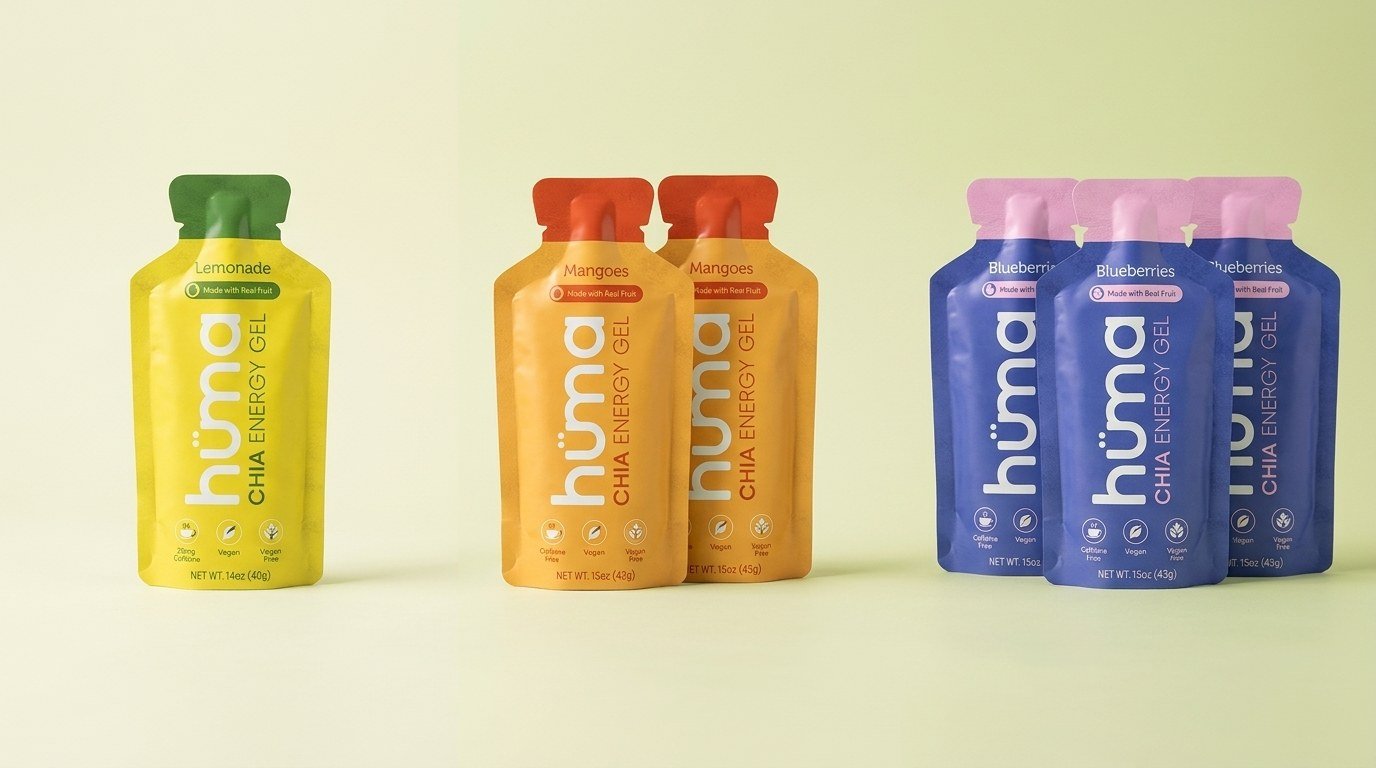
Each Hüma Original pouch carries 24 grams of real-food carbs from brown rice syrup and cane sugar with real fruit purees — sources that bring both glucose and fructose, so both absorption routes are working whether you're at two an hour or building toward more. Two to three per hour with water lands you squarely in the sweet spot. Hüma carries more water in the formula than a thick, syrupy gel, and chia's fiber modulates carbohydrate uptake to a usable rate — part of why many athletes find it sits easier as they ramp their fueling up. And when you're training at the top of your range, Ultra packs 40 grams of real-food carbs into a single pouch. Train the gut in the weeks nobody claps for; the finish line applauds the legs, but the gut did homework too.
Related guides
- How to train your gut to absorb more carbs
- How many carbs per hour for a marathon
- Can you take too many energy gels?
- How to practice gel fueling in training
- Endurance Nutrition 101: the basics of fueling
FAQ
How many carbs per hour should a beginner take?
Start at 30 to 40 grams an hour — your first gel 30 to 45 minutes in, then one every 30 to 40 minutes. Build from there as your gut gets comfortable.
How many carbs per hour can your gut absorb?
About 60 grams per hour from a single carb source like glucose. With a glucose-and-fructose mix, trained athletes can push to roughly 90 grams per hour — and the most extreme elite protocols run higher still, toward 120.
Do you need 90 grams of carbs an hour?
Most endurance athletes don't — 30 to 60 grams an hour covers most racing. Rates toward 90 matter mainly for fast marathons, ultras, and long-course triathlon, and only work with a trained gut and mixed carb sources.
How do you increase how many carbs you can handle?
Fuel every long run, add about 10 to 15 grams — half a gel — every week or two, practice at race pace, take gels with water, and mix carb sources once you're pushing past 60 grams an hour.
How many gels per hour is the sweet spot?
For a typical 20-to-25-gram gel, two to three per hour covers the 30-to-60-gram range most endurance athletes need. Beginners start nearer the low end and build gradually.