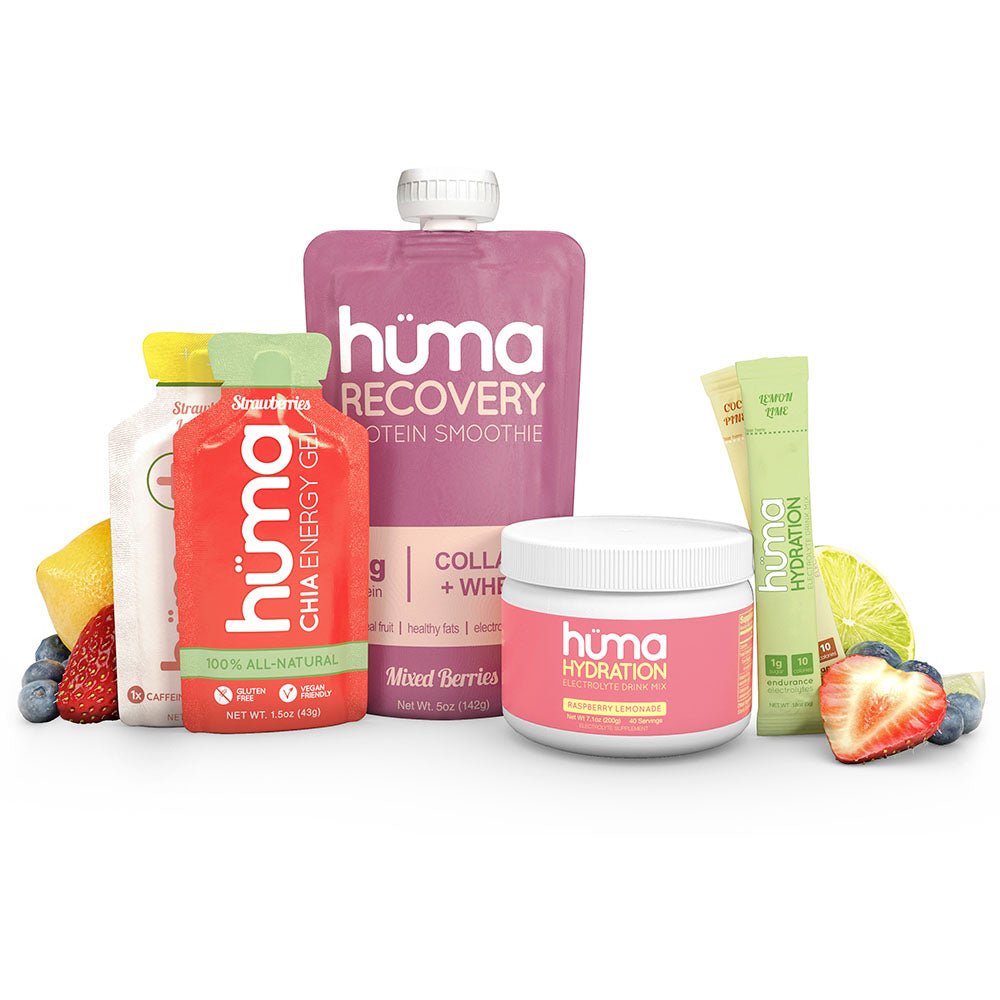

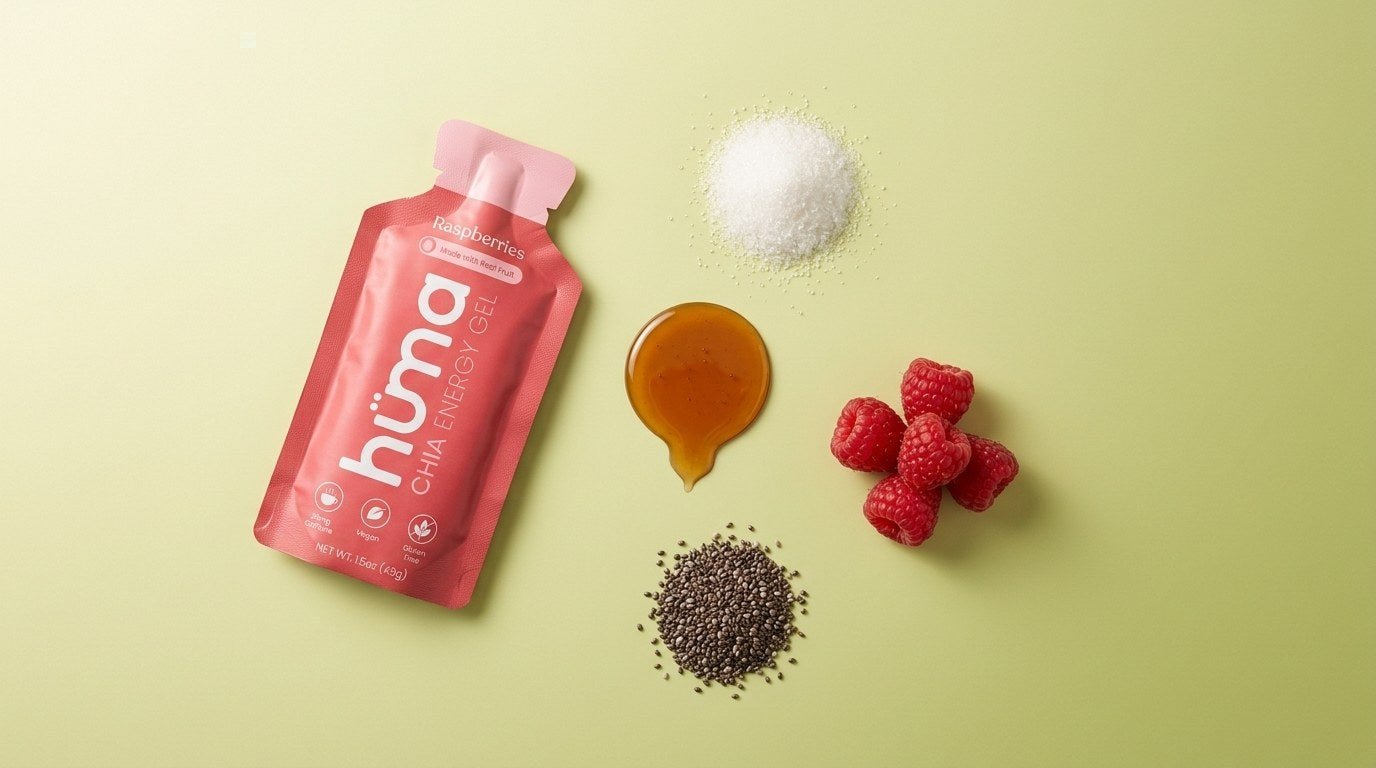
An energy gel is mostly carbs and water, plus a few supporting parts: a carb source for fuel, sodium (and sometimes other electrolytes) to replace what you sweat out, optional caffeine, and something for flavor. The big differences between gels come down to where those carbs come from — processed maltodextrin and fructose in many gels, or fast-absorbing carbs from real-food sources — and whether the flavor and color are artificial or from real fruit.
What are the parts of an energy gel?
Strip a gel down and you'll find the same handful of components, no matter the brand. The carb source is the engine — it's what your body actually burns. Sodium replaces the biggest electrolyte you lose in sweat. Caffeine shows up in some flavors and not others. And flavor plus color make it something you'll actually want to swallow at mile 20. Where gels diverge is the ingredients they use to fill each of those roles.
What does each ingredient do?
Here's the typical gel broken down component by component, and how Hüma fills each role:
| Component | What it does | Hüma's version |
|---|---|---|
| Carb source | The fuel — fast carbs your body burns during effort. Many gels use processed maltodextrin and fructose. | Fast-absorbing carbs from real-food sources: brown rice syrup and real fruit purees and concentrates, with cane sugar (Original) or fruit concentrates (PLUS). No maltodextrin. |
| Electrolytes | Replace minerals lost in sweat, chiefly sodium. | Sea salt for sodium — about 105mg in Original, 240mg in PLUS. The Hydration drink mix carries 380mg. |
| Caffeine (optional) | A pick-me-up for late in a long effort. | Seven caffeinated flavors: six at 25mg, and Double-Shot Mocha at 100mg. Eight flavors are caffeine-free. |
| Flavor & color | Makes the gel palatable. Often artificial in synthetic gels. | Real fruit purees and concentrates for flavor. No artificial flavors, no artificial colors. |
| Texture & shelf life | Thickeners and preservatives keep a gel stable on the shelf. | Chia seeds for body; no maltodextrin, no artificial preservatives. Shelf-stable via heat processing, with a 3-year best-by date. |
Carb source: real food vs. maltodextrin
This is the line that separates one gel from another. Many gels build their carbs from maltodextrin — a processed, fast-absorbing carbohydrate — often paired with fructose. Real-food gels get their carbs from sources like cane sugar, fruit, and rice or maple syrups instead. Both deliver fast carbs; the difference is the source and what comes along with it. Real-food carbs tend to arrive with more water and less of the dense-syrup concentration, which many endurance athletes find sits easier. The preference runs deeper than digestion, though. Cane sugar, fruit, and rice syrups have been human fuel for thousands of years; manufactured carbs are still early in their history, and many athletes would rather build a season on the longer record — their own call, not a lab's. Fruit even arrives with glucose and fructose in one package — two sugars, two separate doors into your system, no lining up. And for the athlete who reads labels all week, a carb source that started as food keeps that standard intact across every pouch of a long season. For the full comparison, see real food vs. maltodextrin energy gels.
What's in a Hüma gel?
Hüma is a real-food chia energy gel. The carbs are fast-absorbing carbs from real-food sources — brown rice syrup with real fruit purees and concentrates — never processed maltodextrin. Original flavors sweeten with cane sugar; PLUS flavors use fruit concentrates — grape or apple by flavor — to the same effect. Chia is the signature ingredient: its fiber modulates carbohydrate uptake to a usable rate, and it adds a little protein, omega-3s, and water-holding to the mix. Sea salt covers sodium. There are no artificial flavors, colors, or preservatives; the long 3-year best-by life comes from heat processing, not additives. Original and PLUS are 24 grams of carbs each; Ultra is 40. Every gel is vegan, gluten-free, dairy-free, and soy-free — see are Hüma gels vegan and gluten-free. If you manage a food allergy, check the pouch panel: PLUS Chocolate Peanut Butter contains peanuts and Ultra Apple Pie contains coconut.
Related guides
- Real food vs. maltodextrin energy gels
- Hüma Original vs. PLUS
- Are Hüma gels vegan and gluten-free?
- Where are Hüma gels made?
- Hüma vs. other energy gels
FAQ
What is actually in an energy gel?
Mostly carbs and water, plus a carb source for fuel, sodium and sometimes other electrolytes, optional caffeine, and flavor. Gels differ mainly in where the carbs come from - processed maltodextrin and fructose, or carbs from real-food sources - and whether flavor and color are artificial or from real fruit.
What is the main ingredient in an energy gel?
The carb source - it's the fuel your body burns. Many gels use processed maltodextrin, often with fructose. Real-food gels use carbs from sources like cane sugar, fruit, and rice or maple syrups instead.
Do energy gels have electrolytes?
Most carry sodium, the main mineral lost in sweat. Hüma Original has about 105mg of sodium and PLUS about 240mg; the Hydration drink mix carries 380mg per stick.
Do all energy gels have caffeine?
No. Caffeine is optional and only in some flavors. Hüma has seven caffeinated flavors - six at 25mg and Double-Shot Mocha at 100mg - and eight caffeine-free flavors.
What is in a Hüma energy gel?
Fast-absorbing carbs from real-food sources like brown rice syrup, real fruit purees and concentrates, chia seeds, and sea salt. Original flavors sweeten with cane sugar; PLUS flavors use fruit concentrates — grape or apple by flavor — to the same effect. No maltodextrin, no artificial flavors, colors, or preservatives. Vegan, gluten-free, dairy-free, and soy-free.