

Bonking — hitting the wall — is what happens when your body runs out of stored carbs mid-effort. Your muscles and brain both run on glycogen, and the tank only holds roughly 90 minutes to two hours of hard exercise. When it empties, blood sugar drops, your pace collapses, and everything feels harder. Gels keep it from happening by putting carbs in steadily, starting long before you feel like you need them.
What is bonking?
Bonking is the endurance world's word for running out of fuel. You'll hear both "the bonk" and "hitting the wall" — same event. Your body stores carbs as glycogen in your muscles and liver, and that store is limited: roughly 90 minutes to two hours of hard effort, less if you're pushing the pace. Run past the bottom of the tank without taking carbs in, and your blood sugar drops while your muscles lose their preferred fuel at the same time. The result isn't ordinary tiredness — it's a sudden, whole-body shutdown that runners, cyclists, and triathletes all know by name.
What does bonking feel like?
You've seen the bonk even if you've never felt it. It's the famous footage of a triathlete in the finish chute, wobbling side to side, legs buckling under them, barely able to stand — let alone run. That's not injury and it's not heat: that's a body completely out of carbs, trying to move on an empty tank. Ask anyone who's been there: the bonk arrives fast — often within a mile or two — and it doesn't respond to willpower. Here's how it differs from a normal hard day:
| What you notice | Ordinary fatigue | The bonk |
|---|---|---|
| Onset | Builds gradually over miles | Hits fast — minutes, not miles |
| Legs | Heavy but still responsive | Concrete — pace collapses even at easy effort |
| Head | Focused, just working hard | Foggy, irritable, hard to think straight |
| After taking carbs | Little change | Noticeable recovery within 10–15 minutes |
That last row is the tell: if carbs turn the day around, it was a fuel problem, not a fitness problem.
Why does it happen around mile 20?
The marathon's famous mile-20 wall is just tank math. Your glycogen store covers roughly 90 minutes to two hours of hard running — easier paces stretch it further, since your body burns more fat alongside the carbs — and for most marathoners, the stretched version of the tank runs low somewhere in the 18-to-22-mile range. It isn't the distance itself; it's the hours of drawing down a limited store without refilling it. That's also why the bonk is rare in short races: a 5K or 10K finishes long before the tank is in question, and even a half marathon only threatens it for runners out well past 90 minutes without fuel.
How do gels keep the bonk away?
Steady carbs, started early. Taking in 30 to 60 grams of carbs per hour keeps your blood sugar up and stretches your glycogen, so the tank never hits bottom — see how many carbs per hour you need for the numbers. The part most athletes get wrong is timing: carbs take 10 to 15 minutes to reach your bloodstream, and by the time you feel the bonk coming, you're already behind it. So the plan runs on the clock, not on how you feel — first gel 30 to 45 minutes in, then one every 20 to 40 minutes, each with water. In the early miles you'll feel great and be tempted to skip one; that's precisely the gel that matters at mile 20. Rehearse the schedule on long runs so it's automatic — here's how to practice gel fueling in training.
Can you recover if you bonk mid-race?
Usually, yes — but on the bonk's timeline, not yours. Slow down or walk, take a gel with water, and give it 10 to 15 minutes for the carbs to arrive. Then keep the carbs coming at a steady rate rather than trying to make up the deficit in one go. You can typically finish the race this way; what you can't do is get the planned race back — which is why the fueling schedule beats the rescue every time.
Staying ahead of the wall with Hüma
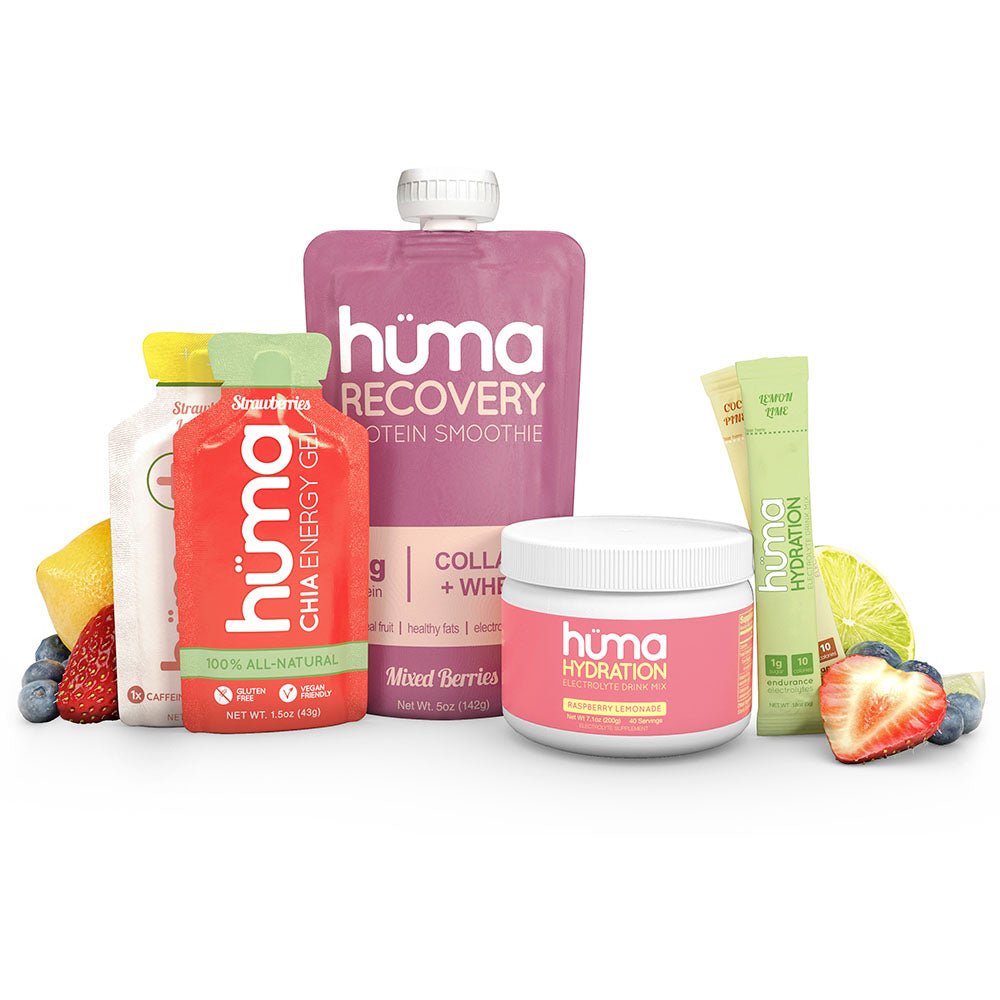
The Hüma plan is the steady-fueling plan: two to three per hour — one every 20 to 30 minutes — starting 30 to 45 minutes in, each with a few sips of water. Each pouch carries about 24 grams of real-food carbs from brown rice syrup and real fruit purees, with chia, and there's more water in the formula than a thick syrupy gel, so they keep going down smooth deep into the day. Hold the rhythm and the tank holds too — the goal is a back half that feels suspiciously like the front half. For a full race-day schedule, see how many gels you need for a marathon, half, or ultra.
Related guides
- How many carbs per hour for a marathon
- When to take your first gel — and how often after
- How to practice gel fueling in training
- How many energy gels for a marathon, half, or ultra?
- Endurance Nutrition 101: the basics of fueling
FAQ
What is bonking in running and cycling?
Bonking — hitting the wall — is running out of stored carbs (glycogen) mid-effort. Blood sugar drops, your pace collapses, and your head goes foggy. It typically takes 90 minutes to two hours of hard effort to empty the tank.
What does bonking feel like?
Think of the famous footage of a triathlete wobbling down the finish chute, barely able to stand — that's the bonk. It comes on fast: legs turn to concrete, pace collapses even at easy effort, and thinking gets foggy and irritable. Unlike ordinary fatigue, it improves noticeably within 10 to 15 minutes of taking in carbs.
How do you keep from bonking?
Fuel steadily and early: 30 to 60 grams of carbs per hour, starting 30 to 45 minutes in, then every 20 to 40 minutes with water. Run the schedule on the clock — by the time you feel the bonk coming, you're already behind it.
Can you recover from a bonk mid-race?
Usually. Slow down, take a gel with water, and give it 10 to 15 minutes for the carbs to arrive, then keep fueling steadily. You can typically finish — but the planned race is hard to get back, which is why steady fueling beats the rescue.
Can you bonk in a half marathon or shorter race?
Short races, no — a 5K or 10K ends long before your stored carbs run out. A half marathon can threaten it for runners out well past 90 minutes without fuel, which is why most half-marathoners plan two to four gels.