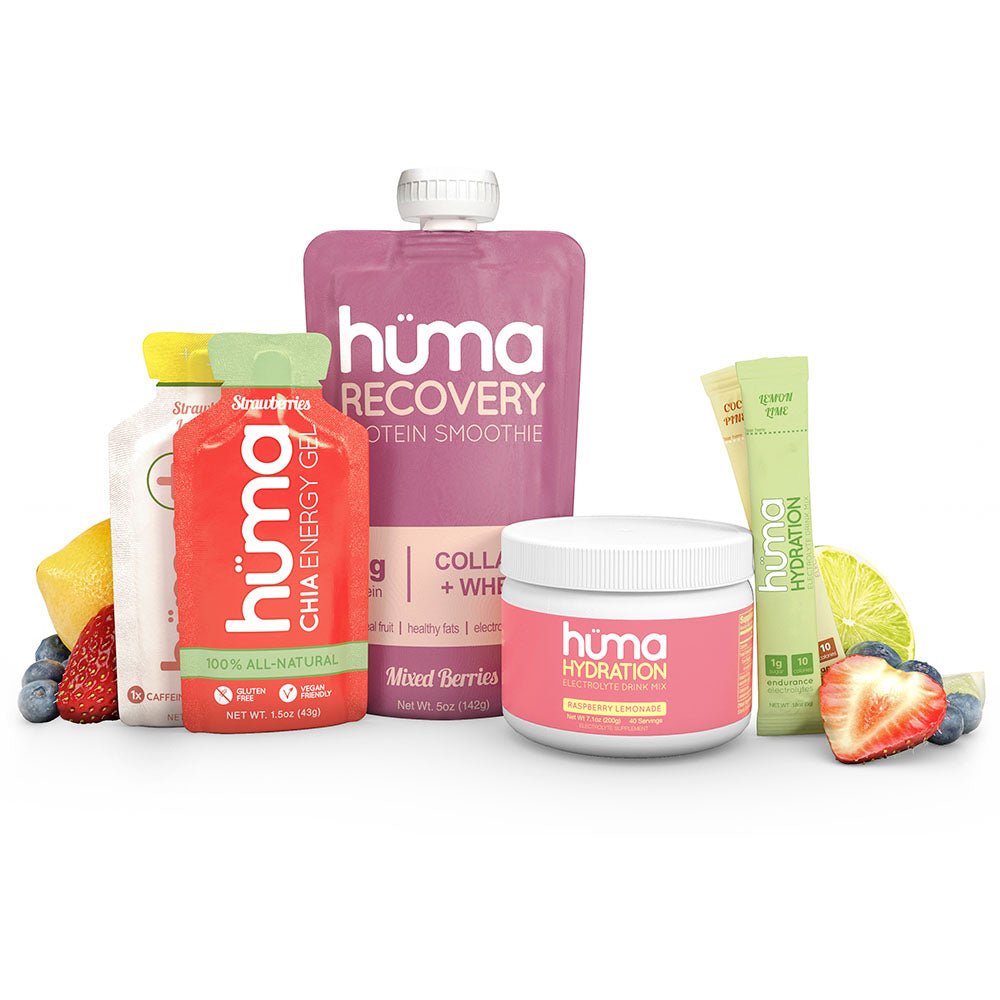


The fueling strategy for your first marathon comes down to four habits: start early, take in about 30 to 60 grams of carbs per hour, drink to thirst with electrolytes on hot days, and practice all of it in training so nothing is new on race day. In Hüma terms, that's two to three gels per hour with water, starting around 30 to 45 minutes in.
Why fueling makes or breaks a first marathon
Without fueling, your body only holds enough carbs — stored as glycogen — for roughly 90 minutes to two hours of running, and less if you're pushing the pace. A marathon takes most first-timers four to five hours, far longer than that tank lasts on its own. That's why unfueled runners fade in the back half and risk hitting the wall — the mile-20 crash you've probably heard about: blood sugar drops, legs turn to concrete, and no amount of willpower fixes it. Taking carbs in steadily from early on keeps your blood sugar up and stretches your own glycogen, so you finish strong instead of surviving the last 10K. The good news: fueling is one of the most controllable parts of race day, and it's simple once you've practiced it.
How many carbs do you need?
For most runners, 30 to 60 grams of carbs per hour covers a first marathon. Lean toward the lower end if you're newer to fueling or have a sensitive stomach, and build up from there in training. Each Hüma gel carries 24 grams of real-food carbs, so two to three Hüma per hour puts you right in range — no math mid-race. For the full breakdown by pace and how the absorption ceiling works, see how many carbs per hour you need for a marathon.
When to start, and how often
The most common first-marathon mistake isn't the carb number — it's starting too late. Carbs take time to reach your bloodstream, so if you wait until you feel empty, you're already behind. Take your first gel around 30 to 45 minutes in, then one every 20 to 40 minutes after — a pouch every half hour is an easy rhythm to hold. Set a watch alarm if you're likely to forget; in the early miles you'll feel fine and it's tempting to skip, which is exactly the trap.
Don't forget water and electrolytes
Carbs are only half the picture. Take your gels with water — a few sips helps them absorb and sit easier — and replace the sodium you sweat out, especially as the miles add up or the weather warms. On a hot race day, switch to Hüma PLUS for double the electrolytes and add Hüma Hydration to your bottle for fluid and salts with almost no sugar. For how the gels and drink mix split the job, see Hydration vs. the gels; for hot-weather specifics, see how to fuel in hot weather.
Practice your fueling in training — the golden rule
Nothing new on race day. Your gut adapts to taking in carbs while you run, just like your legs adapt to mileage — so the gels, the timing, and the amount all need rehearsing on your long runs first. Practice fueling on every long run: same products, same schedule you'll use in the race. It teaches your stomach to handle fuel at pace, confirms which flavors you actually like late in a run, and means race day holds no surprises. If a gel sits poorly in training, that's the time to adjust — not at mile 20. (More on why gels can feel heavy and how to prevent it: why energy gels upset your stomach.)
A simple first-marathon fueling plan
Here's a clean starting template for a four-to-five-hour first marathon. Adjust the exact timing to your stomach in training:
| When | What |
|---|---|
| Night before / morning | Normal carb-focused meals; don't try new foods |
| 15–30 min before start | Optional: one gel with water for a topped-off tank |
| 30–45 min in | First gel + a few sips of water |
| Every 30 min after | One Hüma + water — roughly 8 to 10 gels over the race |
| Hot day | Use PLUS instead of Original; sip Hydration throughout |
| Last 5–6 miles | Keep fueling if your stomach allows; a caffeinated flavor (Lemonade, Raspberries) can give a late lift |
Fueling your first marathon with Hüma
Hüma keeps it simple: 24 grams of real-food carbs per gel — from brown rice syrup and real fruit purees, with chia — and the instruction is just two to three per hour with water. The carbs come from real food rather than maltodextrin, and there's more water in the formula than a thick syrupy gel, which is part of why many first-timers find them easy to take deep into a long run. Start with a fruit flavor like Strawberries, our best-seller since day one, and build your race-day flavor rotation in training. See the Hüma flavor guide for picking flavors.
FAQ
How many gels do I need for my first marathon?
Most first-timers take two to three Hüma per hour, which works out to roughly 8 to 10 gels over a four-to-five-hour marathon. Start on the lower end and build up in training.
When should I take my first gel in a marathon?
Around 30 to 45 minutes in, then one every 20 to 40 minutes after. Don't wait until you feel empty — by then you're already behind.
Should I practice fueling before race day?
Yes — it's the golden rule. Practice your exact gels, timing, and amounts on long runs. Your gut adapts to fueling at pace, and race day should hold no surprises.
Do I need electrolytes for a first marathon?
You need some sodium, and more as it gets hot or the miles add up. Original's electrolytes cover mild days; switch to PLUS and add Hüma Hydration for heat and heavy sweat.
What if a gel upsets my stomach during the race?
Take gels with water, space them out, and don't take in more than you've practiced. Real-food gels with more water in the formula tend to sit easier; rehearsing your plan in training is the best prevention.