

For a 5K or 10K, no — they're short enough that your stored carbs cover the whole effort. For a half marathon, most runners should plan to fuel: the majority are out longer than 90 minutes, where a gel or two keeps your energy up — only faster runners finishing well under that can usually skip it. The rule of thumb: efforts under roughly 75 minutes rarely need mid-race fuel, and longer ones do. But "no gel needed" only holds if your glycogen stores are already topped off going in — that part isn't optional at any distance.
The short answer, by distance
| Race | Typical duration | Do you need gels? |
|---|---|---|
| 5K | 15–30 min | No — your stored carbs cover it |
| 10K | 35–60 min | Usually not |
| Half marathon | 80 min–2.5 hr | Usually yes — most runners are out past 90 minutes |
| Marathon | 3–5+ hr | Yes — see the marathon guide |
Why duration decides it
Your body stores enough carbs as glycogen for roughly 90 minutes to two hours of running. Any race that finishes inside that window doesn't run the tank dry, so mid-race fueling does little — there's nothing to top up yet. Once an effort stretches past about an hour and a quarter, you start drawing the tank down, and taking in carbs keeps your blood sugar and your pace from fading late. That's why the question is really about time on your feet, not the distance on the sign.
5K and 10K: no gel needed during the race
A 5K is over before fueling could even help — carbs take 10 to 15 minutes to reach your bloodstream, so a gel taken at the start wouldn't kick in until you're nearly done. A 10K is the same story for most runners. During the race itself, water is usually all you need.
That's a "during the race" answer, though — it's not the same as "fueling doesn't matter." Every race, regardless of distance, runs on the glycogen you've already stored, and a 5K or 10K just doesn't last long enough to draw that tank down. If you show up under-fueled, you're racing on a partial tank from the start. There's more than one way to arrive full: a normal carb-focused meal in the hours before works well, and so does a gel about 15 minutes before the gun — handy when you're racing early, traveling, or just don't want a meal in your stomach. Either gets carbs ready to go. That's a before-the-gun concept that applies to every distance — the only thing that changes race to race is whether you need to keep fueling once you're moving.
The half marathon: most runners should fuel
For the majority of half-marathoners, the answer is yes. Most runners finish somewhere between two and two and a half hours — well past the point where stored carbs run thin — so one to three gels, started around 45 minutes in and spaced out, keep your energy up through the back half. The exception is faster runners finishing well under 90 minutes, who can often race on a good pre-race meal and water alone. If you're not sure which camp you're in, practice both ways on your long runs and see what your body prefers. For the amounts, see how many carbs per hour you need, and for timing, when to take your first gel.
What about caffeine for short races?
Here's the exception to "you don't need fuel for short races": caffeine can help a 5K or 10K even when carbs won't. A caffeinated gel taken 30 to 60 minutes before the start can sharpen a hard, short effort. If you go that route, take it with water and only on a stomach that's used to it — see the Hüma flavor guide for which flavors are caffeinated and how much they carry.
Don't skip hydration
Not needing carbs doesn't mean not needing fluid. Even a 10K on a hot day pulls real water and sodium out of you, so drink to thirst and replace electrolytes when it's warm — more on that in do you need water with energy gels.
Fueling these distances with Hüma
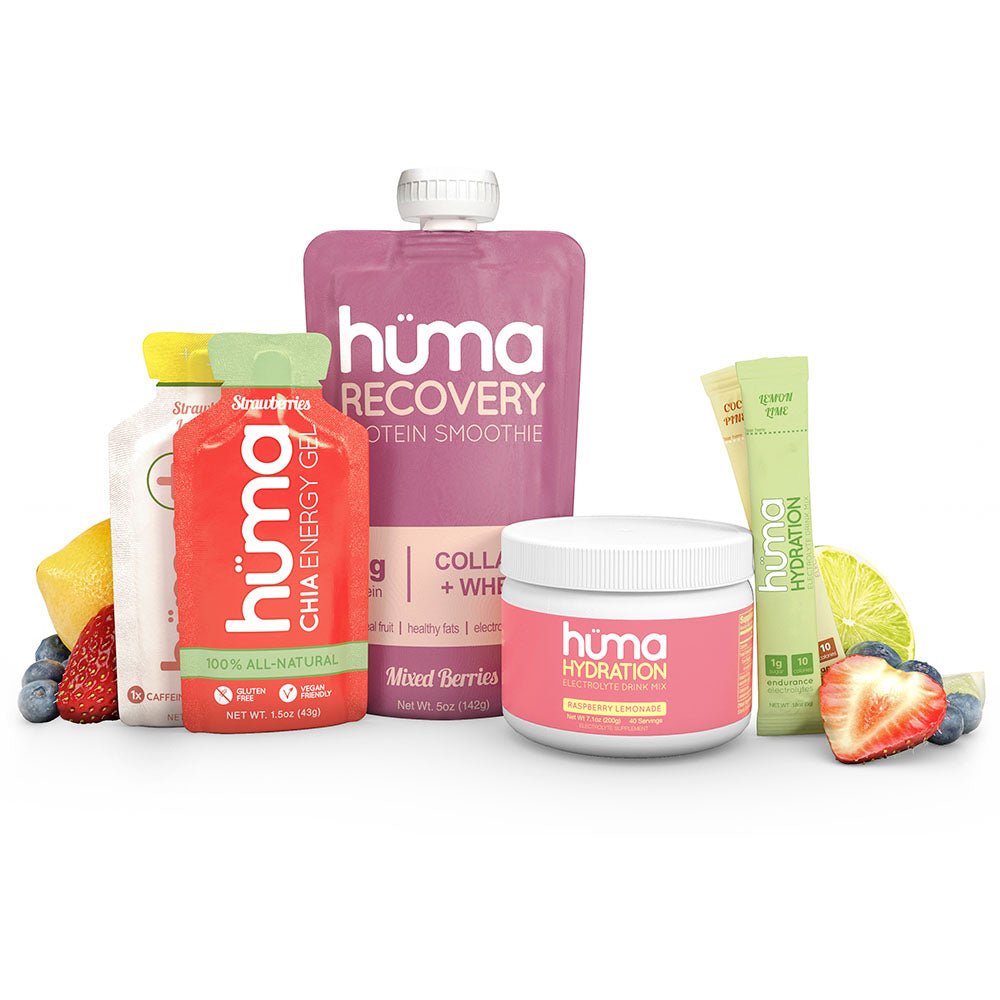
For a 5K or 10K, keep it simple: arrive topped off and bring water. A good pre-race meal does the job, and so does a Hüma about 15 minutes before the gun — either one gets carbs ready to go, and a gel is an easy option when you're racing early, traveling, or just don't want a meal sitting in your stomach. Reach for a caffeinated flavor if you want the lift on top of it. For a half that runs long, reach for two to three Hüma per hour once you pass the 45-minute mark — 24 grams of real-food carbs each, from brown rice syrup and real fruit purees, with chia, and more water in the formula than a thick syrupy gel, so they go down smooth even when you're pushing the pace. Start with a fruit flavor like Strawberries, our best-seller, and practice your race-day plan on your long runs first.
Related guides
- How many carbs per hour for a marathon
- How to fuel your first marathon
- When to take your first gel — and how often after
- Endurance Nutrition 101: the basics of fueling
- Are energy gels OK for beginners?
FAQ
Do you need energy gels for a 5K?
Not during the race — a 5K is too short for mid-race fuel to help, since carbs take 10 to 15 minutes to reach your bloodstream. What matters is arriving topped off: a good meal or a gel about 15 minutes before the gun both work. Then use water during the race.
Do you need gels for a 10K?
Not during the race — most 10Ks finish in under an hour, which your stored carbs cover. Just arrive topped off. A pre-race gel is a handy way to do that, especially if you're racing early or don't want a meal in your stomach.
Do you still need to fuel for a short race even if you skip gels?
Yes. Not needing gels during a 5K or 10K only holds if your glycogen stores are already topped off before the start. Eat a normal carb-focused meal beforehand, and if you're racing early without a real meal, a gel about 15 minutes before the gun tops off your stores — the same principle behind fueling any distance.
Should you take gels during a half marathon?
For most runners, yes — the majority finish in over 90 minutes, where one to three gels (started around 45 minutes in) help you finish strong. Faster runners under about 90 minutes can often go without.
Can caffeine help a short race?
Yes. Even when you don't need carbs, a caffeinated gel 30 to 60 minutes before a 5K or 10K can sharpen a short, hard effort — take it with water and only if your stomach is used to it.
Do you still need water for short races?
Yes. Not needing carbs doesn't mean not needing fluid — drink to thirst, and replace electrolytes when it's hot, even for a 5K or 10K.