
Triathlon fueling is one plan across three sports, and the trick is matching each leg to what your gut can handle. You can't eat mid-swim, so you start the water already fueled. The bike is where you bank most of your carbs — it's the easiest place to take them. The run leans on what you banked, topped up with a gel or two at run pace. Aim for 30 to 60 grams of carbs an hour across the whole race.
Why does triathlon fueling need its own plan?
Because you're asking one stomach to work through three very different jobs back to back, and each leg changes what it can take. Swimming shuts fueling down entirely. Cycling opens it wide. Running narrows it again. The carb target barely moves — most triathletes live in the same 30 to 60 grams of carbs an hour as any endurance athlete — but where in the race those carbs go in is the whole game. Get the timing right and you come off the bike with a full tank; get it wrong and you're chasing fuel on the run, the worst place to do it. The distance-by-distance carb math is in how many carbs per hour you need, and if fueling is new to you, start with endurance nutrition 101.
How do you fuel before and during the swim?
You don't fuel during the swim — there's no way to take a gel with your face in the water — so it's fueled entirely before you start. That makes the pre-swim top-up the most important one you'll take: a carb-focused breakfast a few hours out, then an optional gel about 10 to 15 minutes before the gun, so the carbs land right as you hit the water. The same pre-race gel logic runners use applies exactly here — see should you take a gel before the race. Enter the water topped off, because for the length of the swim, what you brought in is all you've got.
Why is the bike the best place to fuel?
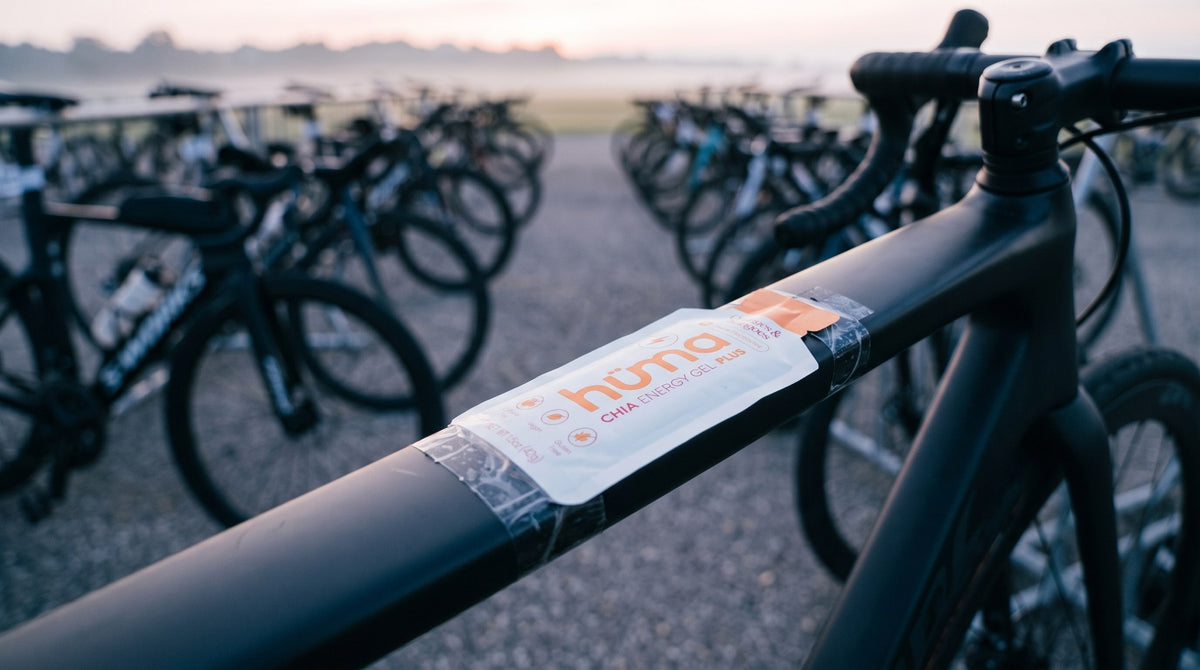
The bike is the buffet. It's the easiest leg to take carbs on: the effort is smooth instead of pounding, so your gut stays calmer and tolerates more, and your bottles and food are right there on the frame. That calmer-gut advantage is real physiology, not just convenience — energy gels for cycling vs. running explains why riding is gentler on the stomach. So the bike is where you front-load. Bank the bulk of your race's carbs here, steadily, from the first climb on — a gel every 20 to 40 minutes plus whatever carbs are in your bottles, all counting toward your hourly total. The goal is simple: start the run already topped off, not empty and scrambling.
How do you fuel on the run?
The run leans on what you banked on the bike, kept going with maintenance gels at run pace. Off the bike, your gut is back in the harder-to-fuel environment — the impact jostles everything and blood heads to your legs, so digestion slows exactly when you're relying on it. That's why the bike front-load matters so much: you want the run topping up a full tank, not filling an empty one. Keep taking carbs on the same clock — a gel every 20 to 40 minutes with a few sips of water — but know each one works a little harder to go down than it did on the bike. Placement helps: take gels at aid stations where the water is, or on a flat stretch rather than a hard surge. The full breakdown of fueling at race intensity is in are gels hard to digest at high intensity.
How does fueling change by race distance?
The shorter the race, the more of it runs on what you brought in; the longer it is, the more it runs on a steady per-hour rhythm. Here's how the plan scales:
| Distance | Rough time | Fueling approach |
|---|---|---|
| Sprint | About 1 to 1.5 hours | Mostly pre-loaded. A solid breakfast and an optional pre-swim gel cover most of it; a gel on the bike if you want a top-up. Short enough that stored carbs carry much of the effort. |
| Olympic | About 2 to 3 hours | Now the per-hour rhythm matters. Start fueling on the bike and stay at 30 to 60 grams an hour through the run — this is where banking on the bike pays off. |
| Long-course (70.3 and full) | 4 hours and up | Full per-hour discipline from the start. Hold 30 to 60 grams an hour every hour, front-loaded on the bike, with the run kept simple. Over these durations, carbs you skip early you can't make up late. |
Notice the counts don't balloon with distance — the rate stays in the same 30-to-60-gram band whether you race for one hour or six; what changes is how many hours you hold it. The same gel-count logic across race lengths is in how many gels for a marathon, half, or ultra.
What about the transitions?
Treat T1 and T2 as fueling checkpoints, not just gear stops. Racking or grabbing your bike is a natural, low-effort window to take a gel — you're moving slowly, hands free, setting up the leg ahead. A gel heading out of T1 starts the bike front-load early; a gel in T2 before the run gives you carbs that land in 10 to 15 minutes, right as you settle into run pace. Build fuel into your transition routine and you never have to remember it mid-leg.
Fueling your triathlon with Hüma
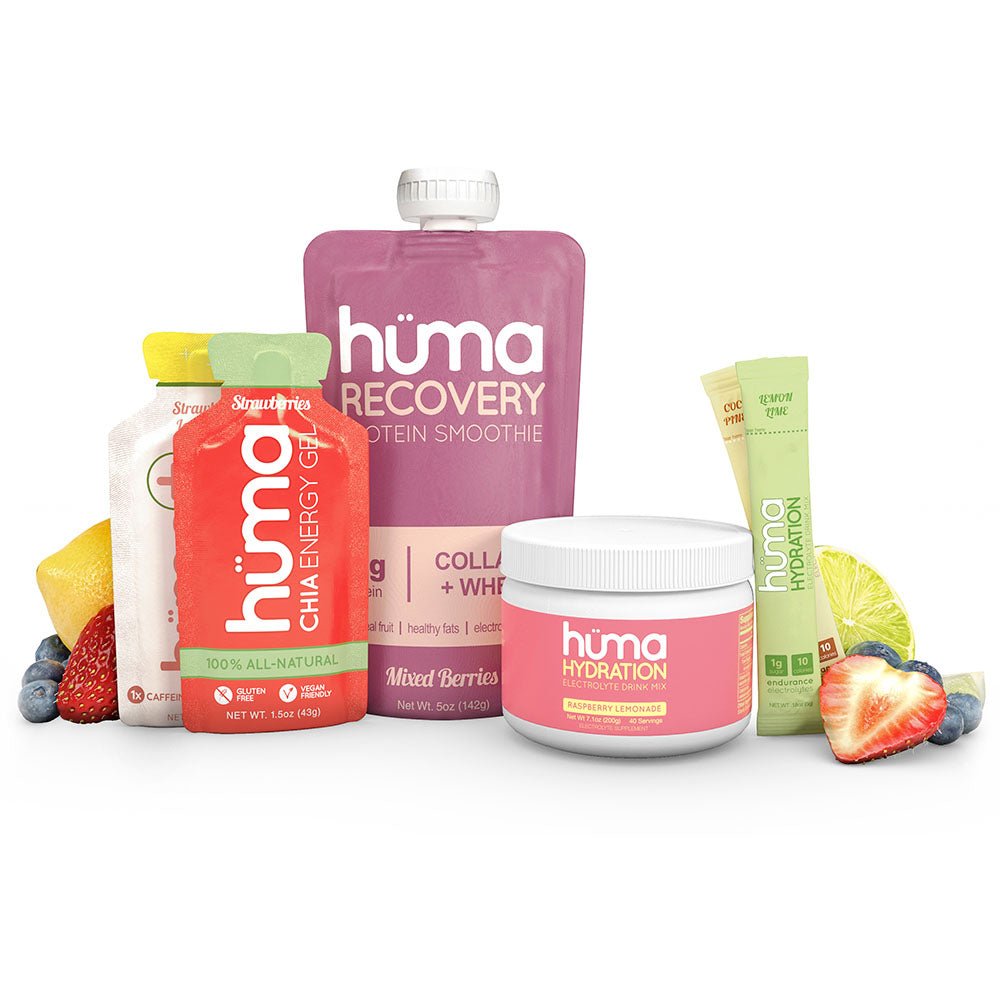
The same Hüma works across all three legs — 24 grams of real-food carbs per pouch from brown rice syrup and real fruit purees and concentrates, with chia. Two to three per hour covers the 30-to-60-gram range, and because the fruit purees carry more water into the formula, a Hüma is semi-concentrated — lighter going down than a thick, syrupy gel, which matters most on the run when your gut is working hardest. Front-load them on the bike with a few sips of water, and lean on PLUS for double the electrolytes on hot or long-course days. Reach for Ultra — 40 grams of carbs in one pouch — when you want carb density without another wrapper on a long bike leg. One rule above all: rehearse the whole plan in training, so race-day fueling is something your gut has already done a dozen times — see how to practice gel fueling in training.
Related guides
- Energy gels for cycling vs. running
- Should you take a gel before the race?
- How many carbs per hour for a marathon
- How to practice gel fueling in training
- How to fuel in hot weather
FAQ
How do you fuel during a triathlon?
Aim for 30 to 60 grams of carbs an hour across the whole race. Start the swim already fueled, bank most of your carbs on the bike where your gut can handle them, then keep topping up with a gel or two at run pace. Take gels with a few sips of water.
Can you take a gel during the swim?
No — you can't fuel with your face in the water. The swim runs entirely on what you took in beforehand: a carb-focused breakfast a few hours out and an optional gel about 10 to 15 minutes before the start, so the carbs land as you hit the water.
Why fuel most on the bike?
The bike is the easiest leg to take carbs on. Riding is smooth rather than pounding, so your gut stays calmer, and your bottles and food are right on the frame. Front-loading carbs there means you come off the bike topped off instead of chasing fuel on the run.
How many gels for a triathlon?
It depends on distance, but the rate stays the same: 30 to 60 grams an hour, which is two to three gels an hour for most athletes. A sprint runs largely on pre-loaded carbs; Olympic and long-course races need that per-hour rhythm held every hour.
Should you fuel in transition?
Yes — treat T1 and T2 as fueling checkpoints. You're moving slowly with your hands free, which makes them easy windows to take a gel. One in T2 before the run gives you carbs that land in 10 to 15 minutes, right as you find run pace.