
Yes — the harder you go, the harder any fuel is to digest. At high intensity your body routes blood to your working muscles and away from your gut, so digestion slows just when you need the fuel most. Gels are still one of the easiest fuels to handle at race pace — if you help them: water with every gel, a less concentrated formula, a trained gut, and smart timing.
Why are gels harder to digest when you're going hard?
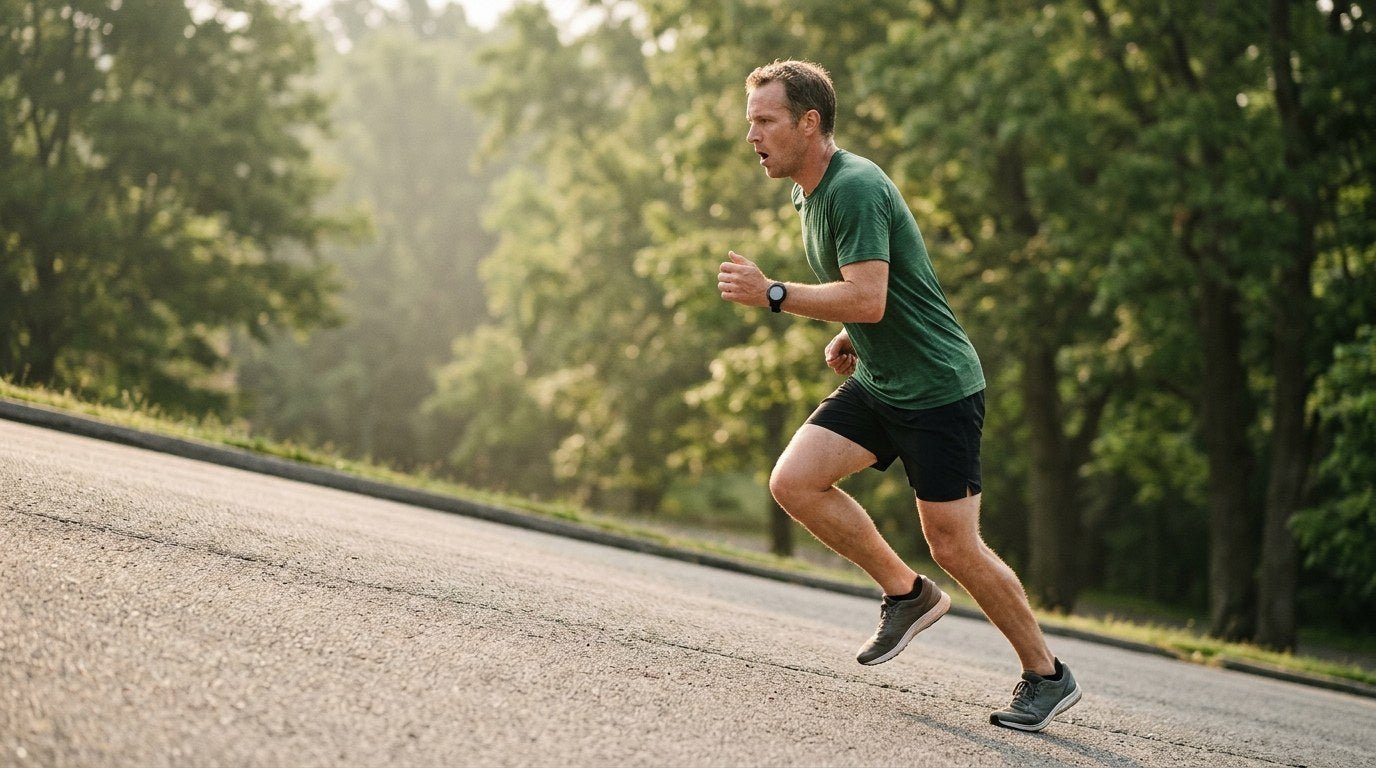
Digestion runs on blood, and at high intensity your muscles get first claim on it. The harder the effort, the more blood your body sends to your working legs and the less it leaves for your gut — so anything you swallow gets processed more slowly than it would on an easy day. That's not a gel problem; it's a fuel problem. A sandwich at race pace would be a disaster. Gels exist precisely because they sit at the easy end of the scale: a small dose of 20 to 25 grams of carbs designed to reach your bloodstream within 10 to 15 minutes. But "easiest fuel to digest" still isn't "effortless at race pace" — at high intensity, even a gel needs a little cooperation. If your stomach has already staged a mid-race protest, why energy gels upset your stomach covers the usual suspects.
What helps a gel go down at race pace?
Four things, and they stack:
| What helps | Why it works |
|---|---|
| A few sips of water with every gel | Dilutes the gel so the carbs move out of your stomach smoothly instead of sitting there |
| A less concentrated gel | The less concentrated the dose going in, the less work your busy gut has to do to thin it out |
| A trained gut | Practicing race-pace fueling teaches your gut to absorb more, faster |
| Smart timing | Taking gels on easier stretches gives your gut a window when blood is available to work with |
The water rule matters most at intensity — the same gel that sits fine with a few mouthfuls of water can feel like a brick without them. The full logic is in do you need water with energy gels. And if your stomach runs touchy even on easy days, start with the sensitive-stomach guide.
When during a hard effort should you take a gel?
Timing is the most underrated fix on the list. The plan itself doesn't change — first gel 30 to 45 minutes in, then one every 20 to 40 minutes, since each gel covers roughly that window (see how long a gel lasts). What changes is where inside that window you place each one. Aim for the easier moments: a downhill, an aid station you're already slowing for, the flat stretch after a climb, the minute after a surge settles. Skip the moments your gut has the least to give: mid-climb, mid-surge, or while you're closing a gap. Your gut gets more blood the instant you back off even slightly — those are the moments to fuel.
Can you train your gut to handle gels at high intensity?
Yes — the gut adapts to what you practice. Most endurance athletes — runners, cyclists, and triathletes alike — comfortably absorb 30 to 60 grams of carbs an hour, and with deliberate training that ceiling moves toward 90 grams using glucose-fructose mixes; a single carb source tops out around 60. The how-to is in how to train your gut to absorb more carbs. Just as important for race day: practice gels at race pace, not only on easy miles. Taking your long-session gels during the quality segments teaches your stomach to do the job under the exact conditions you'll ask of it — how to practice gel fueling in training lays out the progression.
Digesting gels at high intensity, with Hüma
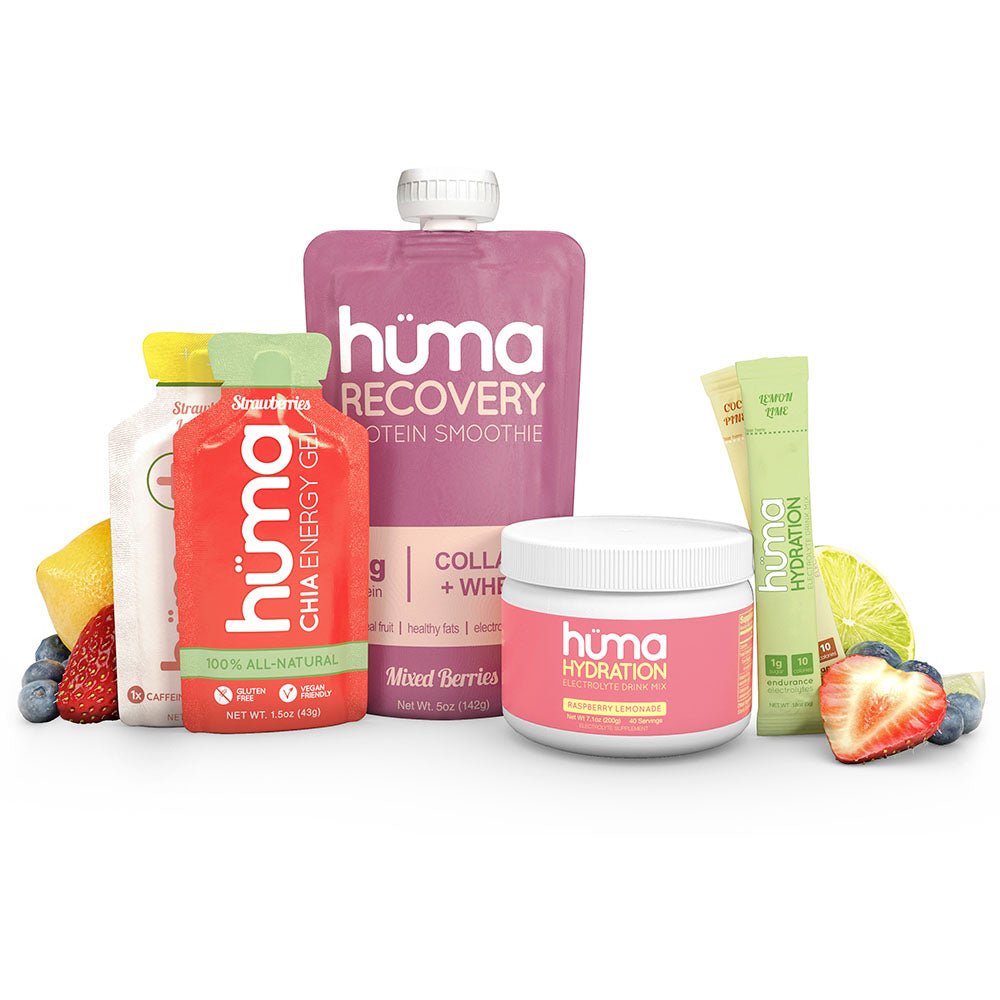
Hüma's formula was built with exactly this problem in mind. Real fruit purees carry more water into the formula, so Hüma is semi-concentrated at most — noticeably lighter going down than a thick, syrupy gel, which means less for your hard-working gut to dilute at race pace. The fuel is 24 grams of fast-absorbing real-food carbs per Original pouch, from brown rice syrup and cane sugar, and chia's fiber modulates carbohydrate uptake to a usable rate — part of why Hüma sits easier when you're deep in an effort. Two to three Hüma per hour, each with a few sips of water, placed on the easier stretches. Your legs get the blood; give your stomach the easy moments.
Related guides
- Why energy gels upset your stomach
- How to train your gut to absorb more carbs
- Do you need water with energy gels?
- The best energy gel for a sensitive stomach
FAQ
Are energy gels hard to digest at high intensity?
Harder, yes. Hard efforts route blood to your working muscles and away from your gut, so digestion slows. Gels are still the easiest fuel to handle at race pace — help them with a few sips of water, a trained gut, and timing gels onto easier stretches.
Why does a gel sit fine on easy runs but heavy at race pace?
Blood flow. On easy days your gut has plenty of blood to process fuel; at high intensity your muscles claim most of it, so the same gel gets digested more slowly. Water with the gel and smarter timing usually close the gap.
Should you take water with a gel at high intensity?
Yes — a few solid sips with every gel. Water dilutes the gel so the carbs move out of your stomach smoothly, and the higher the intensity, the more that dilution matters.
When should you take a gel during a race?
First gel 30 to 45 minutes in, then one every 20 to 40 minutes — placed on easier moments: downhills, aid stations, flat stretches after climbs. Avoid fueling mid-climb or mid-surge, when your gut has the least blood to work with.
Does gut training make gels easier to digest at intensity?
Yes. The gut adapts to practice — most endurance athletes absorb 30 to 60 grams of carbs an hour, and deliberate gut training with glucose-fructose mixes can push that toward 90. Practicing gels at race pace in training matters as much as the totals.