
The fueling math is the same for cycling and running — carbs per hour, electrolytes, water — but cyclists can usually take in more. Riding is smooth and lower-impact, so your stomach tolerates more food and you can carry bottles and real food easily. Running jostles your gut, so gels and smaller, steadier amounts tend to sit better. The same gels work for both; how much and how you take them is what changes.
Same fuel, different gut tolerance
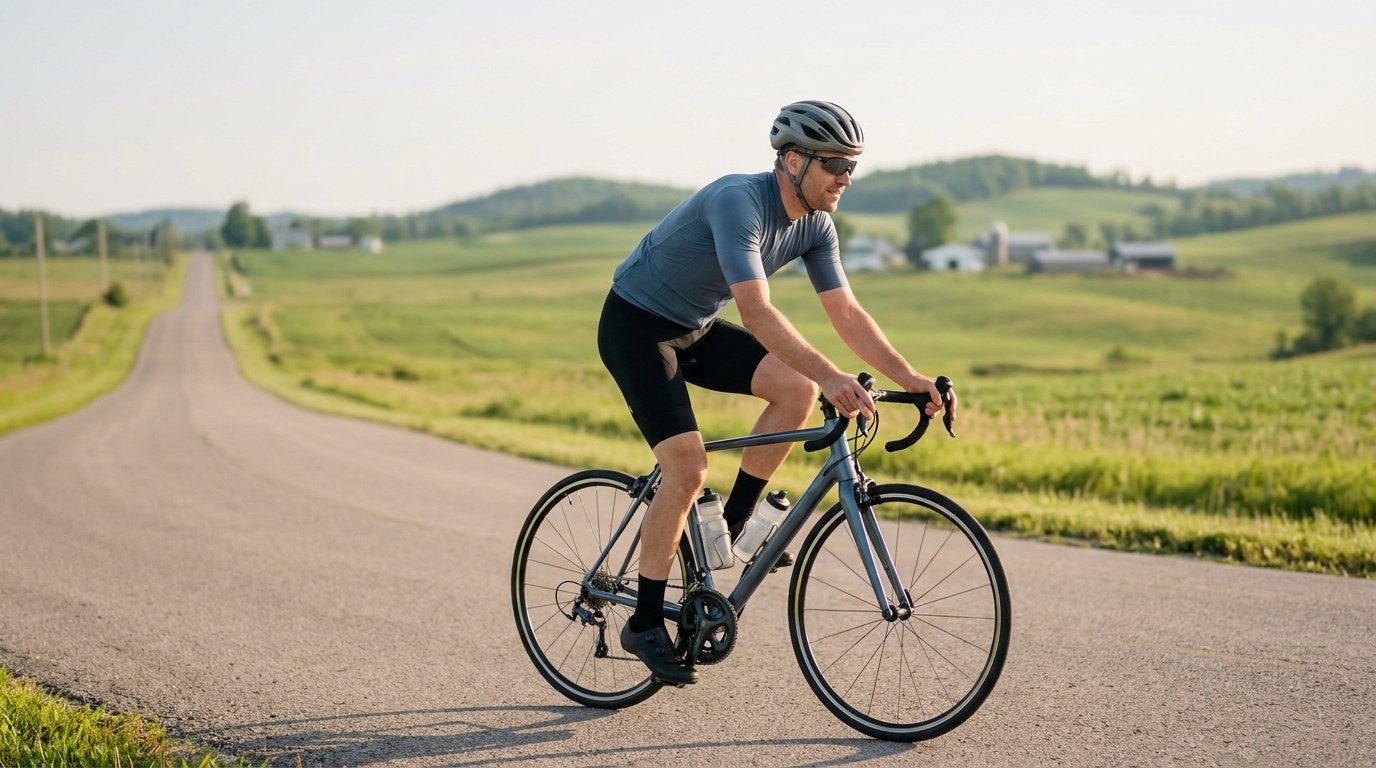
Carbs are carbs whether you're on two feet or two wheels, and energy gels work for both. The difference is mechanical: running bounces your insides with every stride, which slows digestion and makes big doses harder to handle. Cycling is smooth and steady, so blood flow to the gut holds up better and riders can often take in more carbs per hour without trouble. That's why cyclists tend to push toward the high end of the fueling range while runners stay a touch more conservative.
What changes on the bike
- You can take in more. Lower impact means a more forgiving stomach, so trained cyclists often fuel at higher carb rates than they could running.
- Carrying is easier. Bottles, a top-tube bag, and jersey pockets hold far more than running kit, so real food and drink-mix carbs are simple to bring along.
- Drink-mix carbs play a bigger role. Many cyclists get a chunk of their carbs from their bottles, with gels topping up — handy when you don't want to unwrap something at speed.
- Timing is looser. It's easy to sip and snack steadily on a bike, where running rewards planned, bite-sized fueling.
What stays the same for running
On the run, gels shine because they're fast, compact, and easy to take mid-stride. Most runners — and triathletes on the run leg — do best with steady, smaller amounts: two to three gels per hour with water, rather than a big dose at once. The jostling gut rewards little and often. For the details, see how many carbs per hour you need and why energy gels upset your stomach.
If you do both — like a triathlete
Triathletes get the best of both: load up more on the bike, where your stomach can take it, so you start the run already topped off and can fuel lighter when the pounding starts. Bank carbs while it's easy, ease off when it's not.
Hüma for the bike and the run
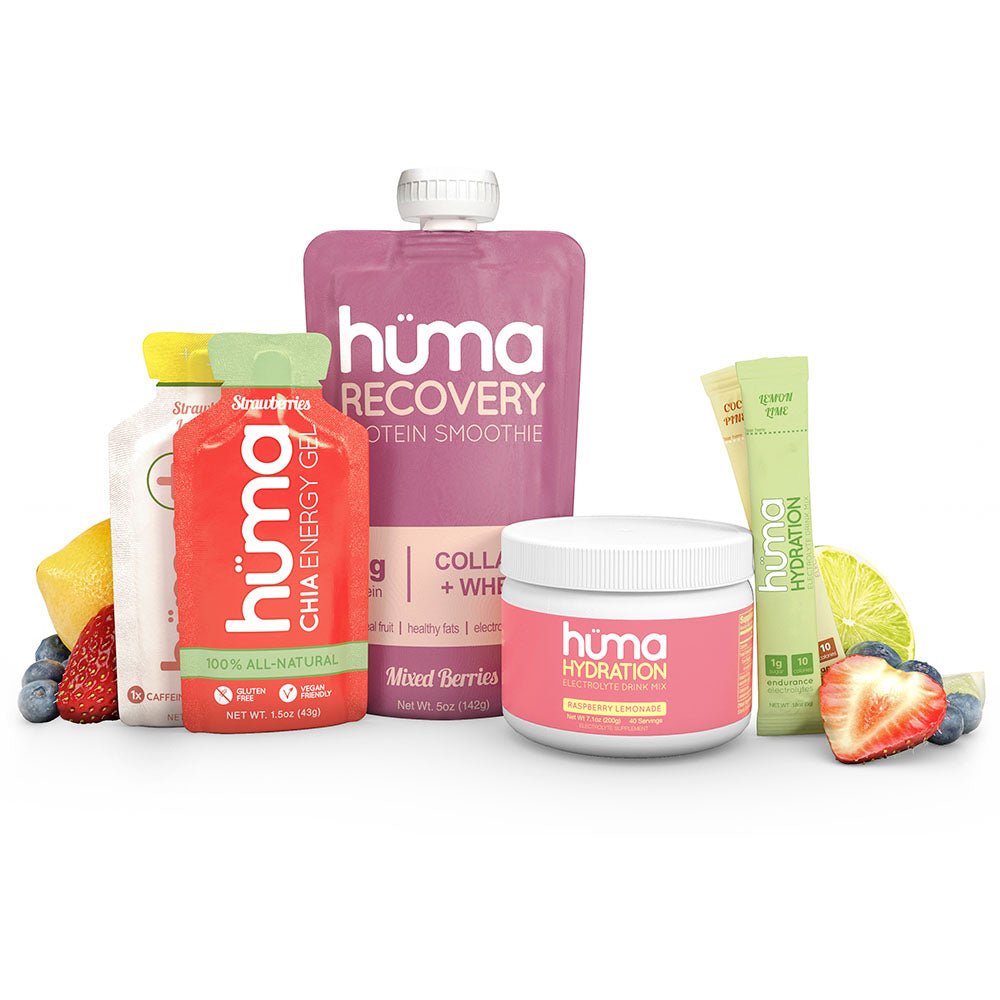
The same Hüma works on both — 24 grams of real-food carbs per gel, from brown rice syrup and real fruit purees, with chia, and more water in the formula so they go down smooth at any effort. Riding, you can fuel at the higher end and pair gels with Hüma Hydration in your bottles; running, lean on two to three per hour with water. Reach for PLUS when it's hot for the electrolyte boost, and rotate flavors to keep it interesting on long days in either sport.
Related guides
- How many carbs per hour for a marathon
- Hüma Hydration vs. the gels
- Why energy gels upset your stomach
- How to fuel for an ultramarathon
- Should you take energy gels with a sports drink?
FAQ
Are energy gels different for cycling and running?
The gels are the same; the fueling differs. Cyclists can usually take in more carbs per hour because riding is smooth, while running jostles the gut and rewards smaller, steadier amounts.
Can you use running gels for cycling?
Yes. The same gels work for both. On the bike you can often fuel at a higher rate and lean more on drink-mix carbs alongside them.
Why can cyclists eat more than runners?
Cycling is low-impact and smooth, so blood flow to the gut holds up and the stomach tolerates more. Running's repeated impact slows digestion.
How should a triathlete fuel?
Bank more carbs on the bike where your stomach can take it, so you start the run topped off and can fuel lighter once the impact begins.