
They share a word and almost nothing else. An energy drink is a stimulant product — built around caffeine, often a lot of it, to make you feel alert and wired. An energy gel is fuel — built around fast carbs that replace the glycogen your muscles burn during a long effort, with caffeine optional and usually light. One is about stimulation; the other is about energy in the literal sense: calories your body turns into work.
What is an energy drink?
An energy drink is a beverage engineered around stimulants. Caffeine is the headline — often 80 to 300 milligrams a can, on par with one to three cups of coffee — usually alongside additives like taurine, guarana (itself a caffeine source), and sometimes a heavy dose of sugar. Its job is a feeling: alertness, a lift, the sense of being switched on. It isn't designed as exercise fuel, and that stimulant load is why health authorities flag energy drinks in particular for kids and teens — more on that in are energy gels OK for kids and teens. Plenty of adults reach for one on a slow afternoon or a late drive; that's the use they're built for.
What is an energy gel?
An energy gel is food in a pouch — the edible kind of fuel, not the gas-tank kind. Strip it down and it's a concentrated dose of fast-absorbing carbs — usually 20 to 25 grams — plus a little sodium, built to replace the glycogen your muscles burn during a long, hard effort. Your body stores only about 90 minutes to two hours of carbs at effort, and a gel tops that tank back up so you don't run dry. Caffeine, if it's there at all, is an optional layer: many gels are caffeine-free, and the caffeinated ones typically carry a fraction of an energy drink's load. The point of a gel isn't a buzz — it's calories your legs can burn. The full parts list is in what's actually in an energy gel.
The real difference: stimulants vs. fuel
Everything else follows from that one split. An energy drink exists to change how you feel; an energy gel exists to give your muscles something to burn. Here's the side-by-side:
| Energy drink | Energy gel | |
|---|---|---|
| Built around | Stimulants — caffeine, taurine, guarana | Fast carbs — glycogen replacement |
| Main job | Alertness, a wired lift | Fuel for a long effort |
| Caffeine | Usually high (~80–300 mg) | Optional — often none, or a light dose |
| Carbs | Varies; sometimes high sugar, sometimes zero | ~20–25 g — the whole point |
| Designed for | Everyday alertness, not exercise | During endurance exercise |
| Form | A can or bottle you drink | A single-serve pouch you carry |
Where does a sports drink fit in?
A third product often gets lumped in, and it's worth separating out: the sports drink. That's neither a stimulant nor straight fuel — it's carbs plus electrolytes in fluid, built to hydrate and fuel at the same time during exercise. So the field really has three lanes: energy drinks for stimulation, sports drinks for fluid-plus-fuel, and energy gels for concentrated fuel you carry. The two exercise-fuel options go head to head in energy gels vs. chews vs. sports drinks.
Does an energy gel give you an energy-drink buzz?
Not the way an energy drink does. A caffeine-free gel has no stimulant in it at all — it's pure fuel, and the "energy" you feel is your muscles getting the carbs they were running low on, not a caffeine jolt. A caffeinated gel adds a modest lift, but even the strong ones usually top out around a single cup of coffee, timed to help through a hard stretch rather than to wire you. If you want the fuel with none of the stimulation, a caffeine-free gel delivers exactly that — caffeine in energy gels covers how to plan the dose either way.
Which one do you actually want?
Match the product to the job. For a long run, ride, or race — anything that outlasts your stored carbs — you want fuel, which means a gel (or a sports drink, or real food). For staying alert at a desk or behind the wheel, an energy drink is doing the stimulant job it's built for, though that's a caffeine decision, not a fueling one. The mistake is treating them as interchangeable: reaching for a stimulant drink to fuel a long effort leaves your muscles short on carbs, and reaching for a fuel gel to wake up misses the point of both. Different jobs, different tools.
Fueling, not stimulating — with Hüma
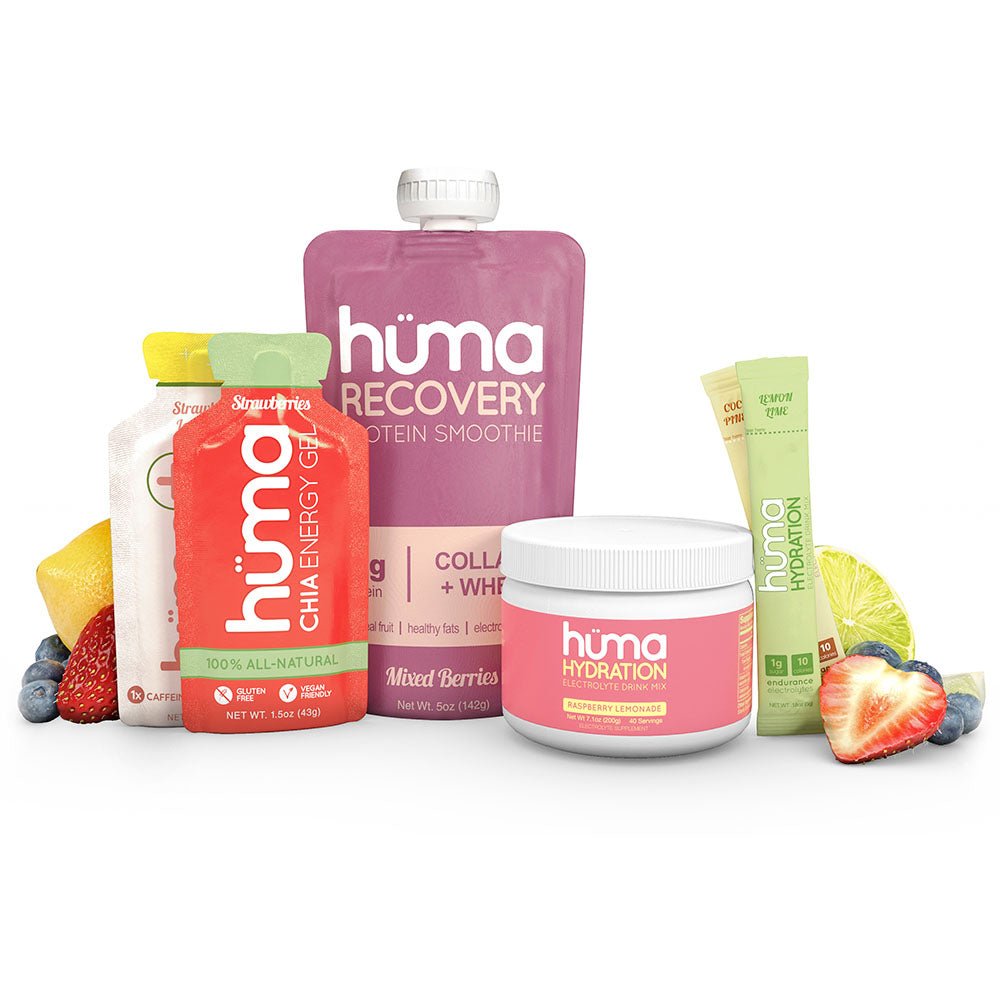
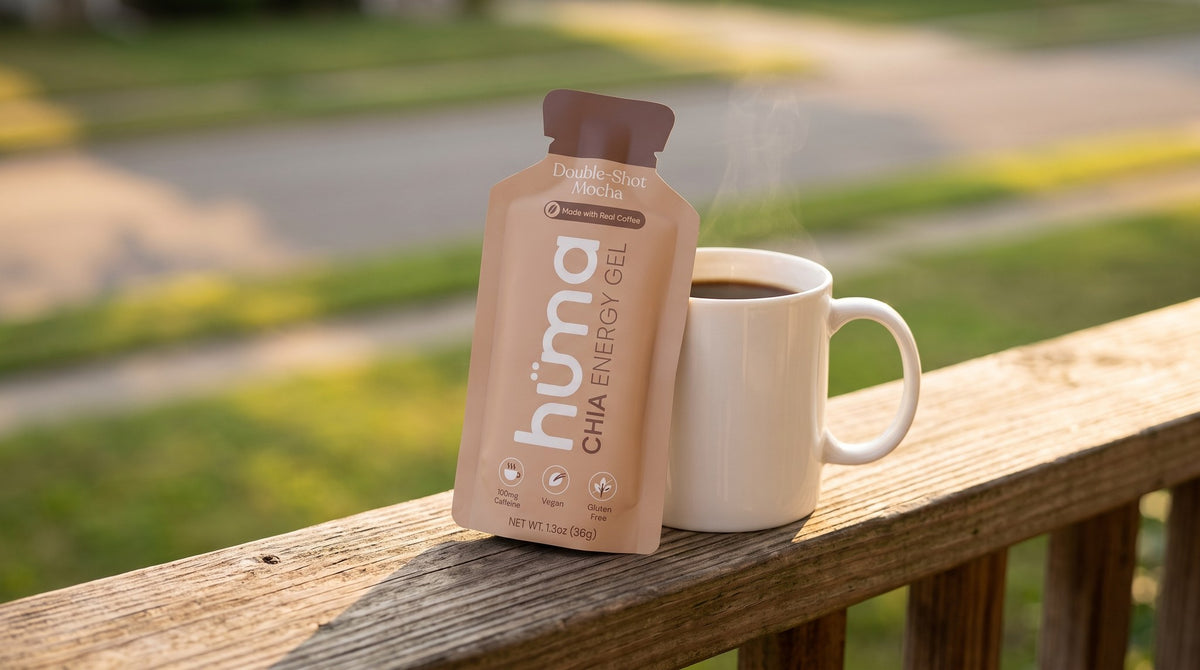
Hüma sits squarely in the fuel lane — an energy gel in the truest sense: 24 grams of real-food carbs per pouch from brown rice syrup and real fruit purees, with chia, built to replace what you burn on a long effort. It isn't a stimulant product. Eight of the 15 gel flavors are caffeine-free, and the caffeinated ones carry a light 25 mg (100 mg in Double-Shot Mocha) — a fraction of an energy drink, there to help through the back half only if you want it. Two to three per hour with water is the whole plan. If "energy" to you means fuel your legs can actually burn, that's exactly what a gel is for.
Related guides
- What's actually in an energy gel?
- Energy gels vs. chews vs. sports drinks
- Caffeine in energy gels: how much, and when
- Are energy gels OK for kids and teens?
- Endurance Nutrition 101: the basics of fueling
FAQ
What's the difference between an energy gel and an energy drink?
An energy drink is a stimulant product built around caffeine (and additives like taurine and guarana) to make you feel alert. An energy gel is fuel built around fast carbs — usually 20 to 25 grams — to replace the glycogen your muscles burn during a long effort. One stimulates; the other feeds.
Do energy gels have as much caffeine as energy drinks?
No. Many gels are caffeine-free, and caffeinated ones usually carry a light dose — often around a quarter to one cup of coffee's worth. Energy drinks are built around caffeine and often run 80 to 300 milligrams a can.
Is an energy gel a stimulant?
Not inherently. A gel's purpose is carbs — fuel your muscles burn. A caffeine-free gel contains no stimulant at all; a caffeinated gel adds an optional, usually modest dose. The "energy" from a plain gel is calories, not a buzz.
What's the difference between an energy drink and a sports drink?
An energy drink is built around stimulants for alertness. A sports drink is built for exercise — carbs plus electrolytes in fluid to hydrate and fuel at once. They're different products for different jobs, despite both being drinks.
Should you use an energy gel or an energy drink for exercise?
For fueling a long effort, you want carbs — a gel, a sports drink, or real food. An energy drink is a stimulant, not exercise fuel, so it won't replace the glycogen your muscles are burning. Use each for the job it's built for.