
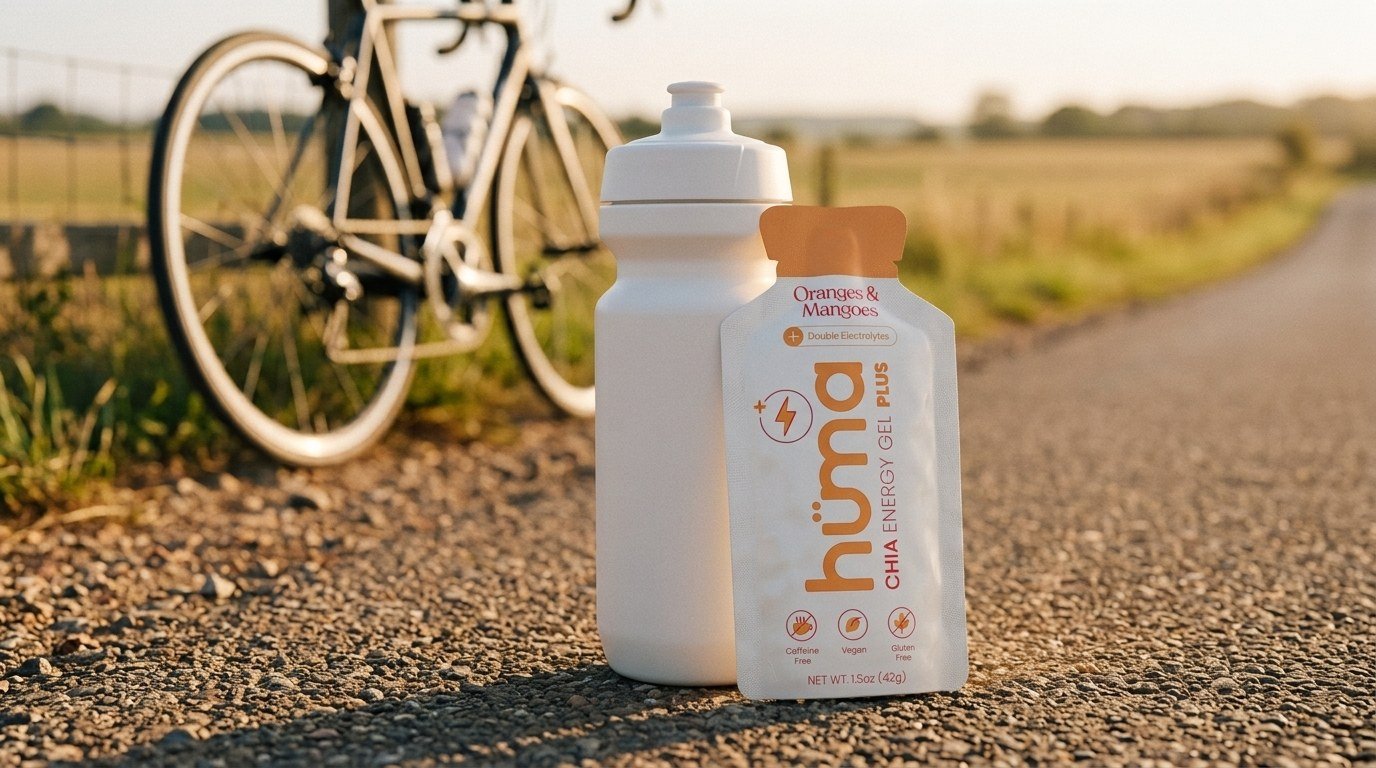
Better not at the same time. Take your gels with plain water — a carb-based sports drink is a fuel source in its own right, and chasing a gel with one stacks two concentrated doses of carbs in your stomach at once, one of the fastest routes to a heavy, sloshy gut. If you like a sports drink, count its carbs toward your hourly total and space it apart from your gels.
Can you take an energy gel with a sports drink?
You can use both in the same effort — plenty of endurance athletes do — but not in the same mouthful. The thing to understand is that a carb sports drink isn't hydration with flavor; it's fuel. Both the gel and the drink count toward the same hourly carb budget, which for most runners, cyclists, and triathletes is 30 to 60 grams an hour. A standard gel runs 20 to 25 grams, so a gel chased with a big swig of carb drink can land most of an hour's fuel in your stomach in about thirty seconds.
Why is a gel plus a sports drink too much at once?
It comes down to concentration. A gel is a deliberately concentrated dose of carbs, designed to be thinned out with plain water so it can move from your stomach into your bloodstream smoothly. A sports drink already carries its own sugars. Take them together and your stomach gets a double load of concentrated carbs with nothing to dilute it — so your body pulls in its own fluid to do the diluting, which is that heavy, sloshing feeling that can turn into cramping on a hard effort. And there's a ceiling on the other end too: your gut can only absorb roughly 60 grams an hour from a single carb source, so carbs stacked beyond what you can absorb just sit there. Your stomach doesn't care that both things tasted great going down.
What should you drink with energy gels instead?
Plain water — a few solid mouthfuls with each gel. That's the whole trick: the water does the diluting so your body doesn't have to. On hot days you'll want more fluid overall, plus electrolytes to replace what you're sweating out — and that's a job for a low-sugar electrolyte mix, which adds fluid and salts without piling more carbs on top of your gels. The full picture is in do you need water with energy gels.
How do you make gels and a sports drink work together?
If a sports drink is part of your setup — say it's what's on course at your race — the fix is spacing and math, not abstinence. Sip the drink between fueling points, take your gels with plain water, and count everything: a bottle of carb drink can carry as many carbs as a gel, so it replaces a gel in your hourly plan rather than adding to it. Here's how the three common setups compare:
| Setup | Where the carbs come from | What to watch |
|---|---|---|
| Gels + plain water | Gels only — simplest math | A few sips of water with every gel |
| Sports drink + fewer gels | Both — the bottle counts as fuel | Add up drink + gel carbs; keep them spaced apart |
| Gels + low-sugar electrolyte mix | Gels only — the mix adds fluid and salts, not fuel | Check the label: low sugar is the point |
Whichever you choose, rehearse it in training first — see how to practice gel fueling. If your stomach has complained mid-race before, stacked carb sources are one of the usual suspects: why energy gels upset your stomach covers the rest.
Gels and your bottle, with Hüma
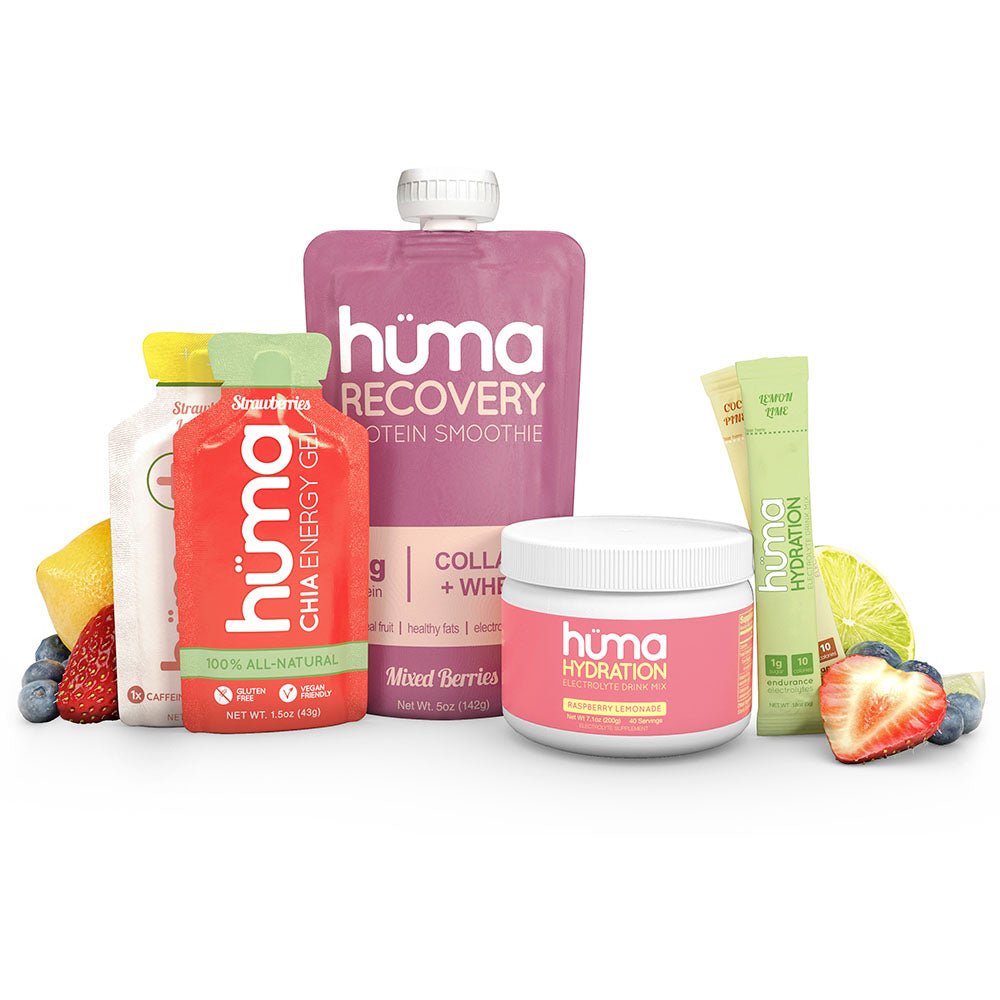
Hüma keeps the two jobs separate by design. The gels are the fuel: 24 grams of real-food carbs per pouch from brown rice syrup and real fruit purees and concentrates, with chia — two to three per hour, each with a few sips of water. Hüma carries more water in the formula than a thick, syrupy gel, so it goes down less concentrated to begin with. And for the bottle, Hüma Hydration is the low-sugar side of the equation — 380mg of sodium with just 1 gram of sugar — so you can replace fluid and electrolytes on long, hot days without touching your fueling math. Gels for the fuel, Hydration for the fluid and salts, water in between.
Related guides
- Do you need water with energy gels?
- Hüma Hydration vs. the gels: do you need both?
- Why energy gels upset your stomach
- Can you take too many energy gels?
- Energy gels vs. chews vs. sports drinks
FAQ
Should you take an energy gel with a sports drink?
Not at the same time. Both are concentrated carb sources, and stacking them overloads your stomach. Take gels with plain water, and if you use a sports drink, sip it apart from your gels and count its carbs in your hourly total.
What happens if you take a gel and a sports drink together?
Your stomach gets a double dose of concentrated carbs with nothing to dilute it, so your body pulls in its own fluid — that heavy, sloshy feeling that can become cramping on a hard effort. Carbs beyond what your gut can absorb just sit there.
Should you drink water or a sports drink with energy gels?
Plain water — a few solid mouthfuls per gel. It thins the gel out so the carbs absorb smoothly. Save any carb drink for the stretches between gels.
Do sports drink carbs count toward hourly fueling?
Yes. A bottle of carb-based sports drink can carry as many carbs as a gel, so it replaces a gel in your plan rather than adding to it. Most endurance athletes target 30 to 60 grams of carbs an hour from all sources combined.
How do you get electrolytes without stacking carbs?
Use a low-sugar electrolyte mix instead of a carb sports drink. Hüma Hydration carries 380mg of sodium with just 1 gram of sugar, so it adds fluid and salts on hot days without piling carbs on top of your gels.