
Most energy gels get their carbs from maltodextrin — a fast, heavily processed sugar. Real-food gels deliver the same fast carbs, sourced from real food instead. Both fuel your effort; the difference athletes notice is digestion — many find real-food gels gentler on the stomach, especially when an effort calls for a lot of carbs over a long day.
What is maltodextrin?
Maltodextrin is a processed carbohydrate — a glucose chain made from corn, rice, or wheat starch. Most gels use it because it's cheap, nearly flavorless, and absorbs fast. The downside for some athletes: it's a concentrated, processed sugar, and large doses taken quickly can arrive faster than the gut can absorb them — a common cause of mid-race stomach trouble.
What's in a real-food gel?
A real-food gel gets its carbs from real food — sources like cane sugar, fruit and fruit juices, and syrups such as brown rice or maple — instead of maltodextrin. The carbs are still fast-absorbing; they just come from recognizable food rather than a processed starch. Many real-food gels also skip artificial flavors and colors.
Which is easier to digest?
For many endurance athletes — runners, cyclists, and triathletes alike — real-food gels sit easier. The likely reason isn't magic: they avoid leaning on big doses of concentrated processed sugar, which is where a lot of mid-race GI trouble comes from. That said, well-made maltodextrin gels work fine for plenty of athletes, and digestion is individual — the real test is your own long runs and rides.
Why do athletes choose real-food carbs?
Digestion is the difference people feel first, but it usually isn't where the preference starts. It starts with track record: cane sugar, fruit, and rice syrup are carbs humans have been eating for thousands of years, while newer manufactured carbs haven't been around long enough to build that kind of history. Plenty of athletes see that as an unknown they'd rather leave out of a long training block — a preference, not proof, and each athlete's call to make.
The second reason is that fruit came pre-mixed. Real fruit naturally contains both glucose and fructose, and your gut takes those two sugars in through separate doors — neither one has to wait behind the other. Sports nutrition worked its way to multi-sugar fueling over decades; fruit had it built in the whole time. Fruit also brings its own water, which keeps a real-food gel less concentrated on the way down — the gentleness covered above — and the payoff is energy that arrives as a steady curve instead of a surge that drops out from under you.
Last — and it belongs last — there's consistency. These are athletes who check ingredient lists at the grocery store, and a training block goes through dozens of pouches. A real-food gel lets the standard they keep everywhere else hold up mid-effort too.
Real food vs. maltodextrin, side by side
| Real-food gel | Maltodextrin gel | |
|---|---|---|
| Carb source | Real food (cane sugar, fruit, brown rice or maple syrup) | Maltodextrin (processed starch) |
| Absorption | Fast | Fast |
| Processing | Minimally processed | Highly processed |
| Flavor | Real fruit | Often synthetic flavoring |
| Digestion | Many find it gentler | Fast; big doses can overwhelm |
Where Hüma fits
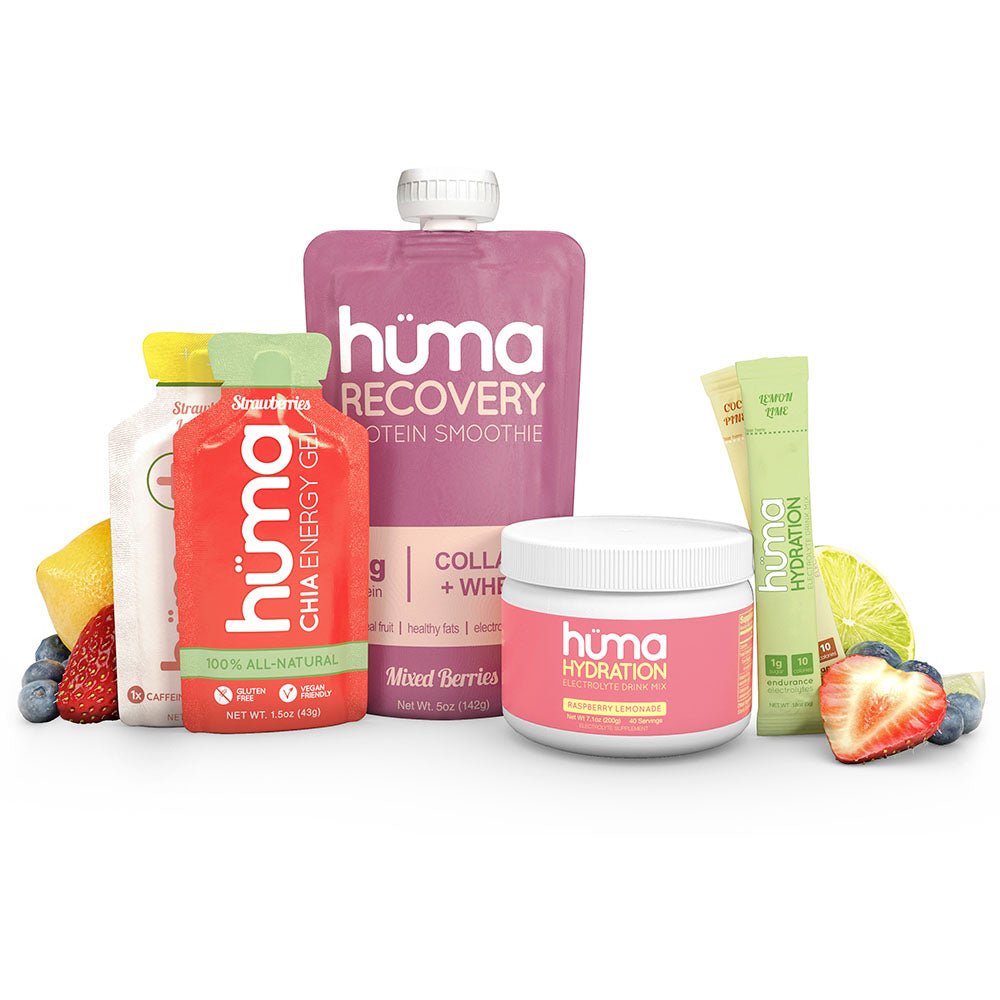
Hüma is a real-food chia energy gel — its carbs come from real food, with no maltodextrin and no artificial flavors. It's one of the real-food options worth trying if processed gels have been rough on your stomach. Two to three Hüma per hour, with water, covers most athletes' needs.
FAQ
What is maltodextrin in energy gels?
A processed carbohydrate — a glucose chain made from corn, rice, or wheat starch. It's fast-absorbing and cheap, and it's the main carb in most gels.
Are real-food gels easier to digest than maltodextrin gels?
Many athletes find them gentler, likely because they avoid big doses of concentrated processed sugar. It's individual, so test both in training.
Are real-food gels slower to absorb?
No — they deliver fast-absorbing carbs too. The carbs simply come from real-food sources instead of processed starch.