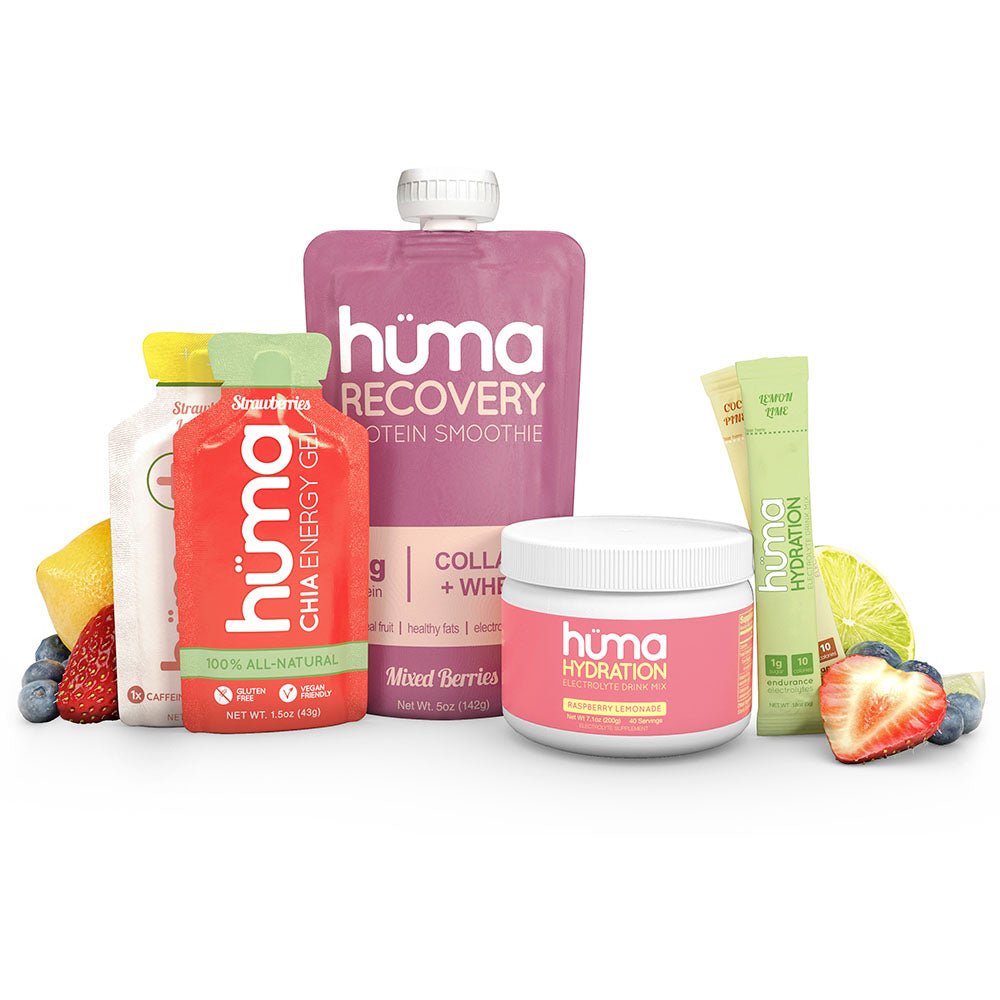


The gentlest energy gels share a few traits, and concentration leads the list: a formula with more water in it lands less concentrated and sits lighter than a dense syrup. Real-food carbs and a glucose-and-fructose mix help too — no single carb pathway gets overrun. The rest comes down to habits: fuel at a rate your gut can absorb, take water with every gel, and train your gut before race day. Get the gel and the habits right, and most stomachs settle.
Why do energy gels upset your stomach?
Most gel stomach trouble isn't the gel itself — it's asking your gut to do too much at once. A gel is a concentrated hit of carbs, and there's a ceiling on how fast those carbs cross from your gut into your blood. Overrun that ceiling and the extra carbs sit undigested, pulling water into your stomach and turning into the familiar bloating, nausea, and cramps. Three things usually push people past it: taking in carbs faster than they can absorb, leaning on one carb type so a single pathway gets swamped, and swallowing a concentrated gel without enough water to thin it out. For the full breakdown, see why energy gels upset your stomach.
What makes one gel gentler than another?
A few formulation and habit factors move the needle for runners, cyclists, and triathletes with a touchy gut:
| Factor | Why it matters for a sensitive stomach |
|---|---|
| Carb source | Carbs from real-food sources are fast-absorbing but come with more water and less of the dense-syrup mouthfeel, so the gel is less concentrated going in. |
| Glucose-and-fructose mix | Two carb pathways instead of one means no single route gets overrun, which raises how much you can comfortably absorb. |
| Water in the formula | More water lowers the concentration, so the gel doesn't sit as heavy. |
| Chia | Chia's fiber modulates carbohydrate uptake to a usable rate, which many athletes find helps the gel settle. |
| How you take it | Taken with water, at a steady rate, most gels sit far easier than they do slammed dry and all at once. |
How should you take a gel so it sits easier?
Formulation only gets you part of the way — habit does the rest. Chase every gel with a few sips of water so it isn't fighting for fluid in your stomach; see why energy gels upset your stomach for how concentration drives that. Keep the rate sensible — for most endurance athletes, two to three gels per hour, which works out to roughly 30 to 60 grams of carbs an hour. Start early, before you're running on empty, so you're topping up rather than playing catch-up. And don't try anything new on race day.
Can you train your stomach to handle gels?
Yes — the gut adapts like any other system. Practicing your fueling on long runs and rides teaches your body to absorb more carbs with less complaint, so the rate that felt rough in week one feels routine by race day. That's the single highest-leverage move for a sensitive stomach, and it costs nothing but consistency. See how to train your gut to absorb more carbs for a simple way to build it in.
A gentler gel with Hüma
Hüma is built around the traits that help a gel sit easier. The carbs are real-food carbs — brown rice syrup with real fruit purees and concentrates — instead of dense processed syrup, and there's more water in the formula, so it's less concentrated going in. For many of the athletes who land here, real-food carbs aren't only a comfort feature — they're the standard they wanted anyway: carb sources roughly as old as agriculture itself, where the newer manufactured ones simply haven't been around long — a call athletes make for themselves, not a lab verdict. The preference also survives volume: fueling a training block means a lot of pouches, and it's simpler when every one of them clears the bar they already hold their groceries to. Chia is the signature: its fiber modulates carbohydrate uptake to a usable rate. Original and PLUS are 24 grams of carbs each; two to three per hour with water is the whole plan. If you manage a food allergy, check the pouch panel — PLUS Chocolate Peanut Butter contains peanuts and Ultra Apple Pie contains coconut. Hüma gels are also vegan, gluten-free, dairy-free, and soy-free.
Related guides
- Why energy gels upset your stomach
- Real food vs. maltodextrin energy gels
- How to train your gut to absorb more carbs
- Can you take too many energy gels?
- Are energy gels hard to digest at high intensity?
FAQ
What is the best energy gel for a sensitive stomach?
Look first at concentration: gels with more water in the formula land less concentrated and sit lighter than dense syrups. Real-food carbs and a glucose-and-fructose mix help too — no single pathway gets overrun. How you take it matters as much: with water, at a steady rate, started early.
Why do energy gels upset your stomach?
Usually because you're asking your gut to absorb carbs faster than it can, leaning on one carb type, or swallowing a thick gel with too little water. The excess carbs sit undigested and cause bloating, nausea, and cramps.
Does taking a gel with water help?
Yes. Water lowers the concentration of the gel in your stomach so it doesn't sit as heavy, and it gives the carbs fluid to move with. Chase every gel with a few sips of water.
Can you train your stomach to tolerate gels better?
Yes. Practicing your fueling on long runs and rides teaches your gut to absorb more carbs with less complaint, so a rate that felt rough early on feels routine by race day.
How many gels per hour should you take?
For most endurance athletes, two to three gels per hour — roughly 30 to 60 grams of carbs. Newer athletes and shorter efforts sit at the lower end; taking more than you can absorb just adds stomach trouble.