

There's no "too early" that hurts you — a gel taken in the opening minutes still gets used. It's just mostly wasted: your body starts with roughly 90 minutes to two hours of stored carbs, so the fuel you'd want at mile 18 gets spent at mile 2. The 30-to-45-minute guideline isn't about safety — it's about not burning a limited supply before you need it.
Can you take an energy gel too early?
Not in any way that harms you. Once you're moving, carbs are carbs — a gel taken five minutes in gets used like any other. What it doesn't do is add anything you need yet. You start every effort with roughly 90 minutes to two hours of stored carbs, and those stores handle the opening stretch on their own. A gel covers about 20 to 40 minutes of effort — see how long a gel actually lasts — so one taken at minute five mostly overlaps fuel you already had. Too early isn't dangerous. It's spending good fuel into a full tank.
What actually happens to a too-early gel?
It gets burned right alongside your stored carbs — doing a job that was already covered. The real cost shows up at the other end of the race. A marathon plan runs on a handful of gels — how many gels for a marathon, half, or ultra has the totals — and a pouch spent at mile 2 is a pouch missing at mile 18, where the plan earns its keep. That's the entire case against fueling early: arithmetic, not physiology.
Doesn't the pre-race gel break the rule?
No — the pre-race gel is its own move with its own clock. Taken about 10 to 15 minutes before the start, it's a top-off that puts carbs online right as the effort begins — and it doesn't count toward your in-race rhythm. The full logic — caffeine included — is in should you take a gel before the race starts.
What are the real "too early" mistakes?
The genuine timing errors aren't about your stomach or your legs — they're practical:
| Mistake | What it costs you | The fix |
|---|---|---|
| Burning pouches in the opening miles | A limited supply spent covering miles your stored carbs already covered | Hold the first gel until 30 to 45 minutes in |
| Caffeine that peaks too soon | Caffeine kicks in 30 to 45 minutes after you take it — at the gun, the lift lands before the race gets hard | Time caffeinated gels so they kick in for the hard final stretch |
| Fueling off-rhythm | A random early gel isn't part of any cadence, so you lose count of when the next one is due | Start the rhythm on schedule and let a watch alarm keep the count |
So when should the first gel actually go down?
On schedule, not on feel: first gel 30 to 45 minutes in, then one every 20 to 40 minutes — a pouch roughly every half hour. Standard gels carry 20 to 25 grams of carbs, so that rhythm covers the 30 to 60 grams an hour most runners, cyclists, and triathletes target. Carbs take 10 to 15 minutes to reach your bloodstream, so by the time you feel like you need one, you're already behind it. The full timing picture is in when to take your first gel; for the whole plan, start with Endurance Nutrition 101.
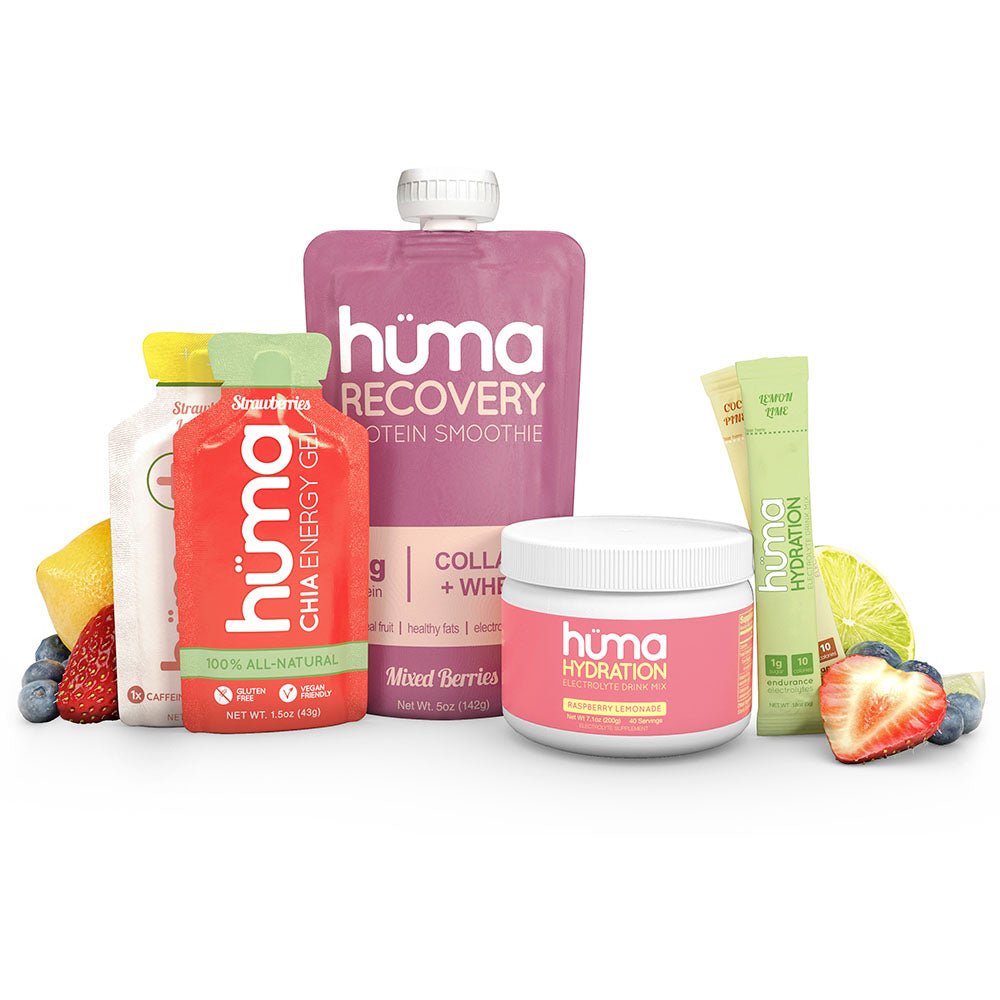
Getting the timing right with Hüma
The Hüma rhythm is simple: two to three per hour — one every 20 to 30 minutes — starting 30 to 45 minutes in, each with a few sips of water. About 24 grams of real-food carbs per pouch, from brown rice syrup and real fruit purees and concentrates, with chia. And if one goes down early because a climb showed up sooner than planned? No harm done — the carbs still count. Restart the count from that gel and keep the rhythm.
Related guides
- When should you take your first energy gel — and how often after?
- Should you take a gel before the race starts?
- How long does an energy gel last (and how fast does it kick in)?
- How many energy gels for a marathon, half, or ultra?
- Endurance Nutrition 101: how to fuel long runs, rides, and races
FAQ
Can you take an energy gel too early?
Not in a harmful way. A gel taken in the opening minutes still gets absorbed and used — it just overlaps the 90 minutes to two hours of carbs your body already has stored. The cost is practical: one of a limited number of pouches, spent before it was needed.
What happens if you take a gel in the first few miles?
Nothing bad — the carbs get burned alongside your stored fuel. But a gel covers about 20 to 40 minutes of effort, and a pouch spent at mile 2 is a pouch missing at mile 18. Hold the first one until 30 to 45 minutes in.
Is a gel before the race too early?
No — the pre-race gel is a separate move with its own timing, about 10 to 15 minutes before the start. It tops you off as the effort begins and doesn't count toward your in-race rhythm.
Can you take a caffeinated gel too early?
Yes — this is the one real "too early." Caffeine takes about 30 to 45 minutes to kick in, so a caffeinated gel taken at the gun delivers its lift long before the hard final stretch. Time caffeine for when you'll want it, not the start.
When should you take your first gel?
About 30 to 45 minutes into any effort over an hour, then one every 20 to 40 minutes after that. Carbs take 10 to 15 minutes to reach your bloodstream, so early and steady beats waiting until you feel it.