
A "sugar crash" is what happens when you take on a hit of fast sugar with nothing to meter it — energy climbs quickly, then dips, and you feel it as a slump mid-effort. The fix isn't avoiding carbs; it's how the carbs arrive. Real-food carbs, a glucose-fructose mix, chia modulating uptake to a usable rate, and more water in the formula all give you steadier energy. Take it with water at a steady rate and the fuel holds.
What is a "sugar crash," really?
In plain terms: you take on a slug of fast sugar all at once, your available blood sugar spikes, and then it dips — and that dip is the slump you feel deep into a long run or ride. It's the classic spike-then-crash pattern. For endurance athletes the goal is the opposite: energy that arrives and stays level so you can finish strong. That doesn't mean fewer carbs — you still need them to fuel the effort — it means carbs that land steadily instead of all at once.
Why do some gels spike then crash you?
A crash usually comes from one fast hit of sugar with nothing to meter how quickly it's taken up — often made worse by taking a concentrated gel with too little water, so it dumps in and backs up. Three things shape whether energy is steady or spiky:
- Carb type and source. Where the carbs come from and how they're delivered changes how they land.
- A single carb pathway vs. a mix. Leaning on one sugar alone tops out sooner; a glucose-fructose mix uses two pathways and rides more smoothly.
- How concentrated it is going in. A thick, syrupy gel taken dry hits harder and sits heavier than a gel with more water in it.
Spike vs. steady: what changes the curve
| Factor | Spikes you | Steadier energy |
|---|---|---|
| Carb source | One fast sugar hit, nothing to meter it | Real-food carbs from real-food sources |
| Carb pathways | Single carb source, tops out around 60g/hr | Glucose-fructose mix, rides two pathways |
| Uptake | Unmetered — all at once | Chia's fiber modulates uptake to a usable rate |
| Concentration | Thick and syrupy, little water | More water in the formula, taken with water |
| Rate | Big dose, then nothing | Steady — two to three gels per hour |
How do you get steady energy instead?
Steady energy is mostly about how the carbs arrive, not how few you take:
- Real-food carbs from real-food sources. Fast-absorbing carbs that come from real food — in Hüma Original, brown rice syrup and cane sugar, with real fruit purees and concentrates for flavor. Real food is also why many athletes pick this lane in the first place: fruit and cane sugar carry thousands of years of human fueling, a track record newer manufactured carbs haven't earned yet — a preference each athlete sets for themselves — and fruit pre-pairs glucose and fructose, the very mix that rides both pathways. None of that makes the carbs slower; they're as fast as any gel's. Steady describes the curve, not the speed.
- A glucose-fructose mix. Two pathways instead of one lets trained athletes take on more carbs per hour and ride the energy more smoothly. A single carb source tops out around 60 grams per hour. See how many carbs per hour you actually need.
- Chia modulating uptake. Chia's fiber modulates carbohydrate uptake to a usable rate, so the carbs land steadily rather than as one sharp hit. Here's what chia does in a gel.
- More water, and take it with water. A less concentrated gel, taken with a few sips, spreads the load instead of dumping it. Concentration with too little water is a big reason gels can upset your stomach.
- A steady rate. Two to three gels per hour, spread out — start early, before you're empty, rather than one big dose when you're already fading.
How to avoid the crash
Put it together and it's simple: take your fuel with water, keep a steady rate of two to three gels per hour, start before you're running low, and choose real-food carbs with a glucose-fructose mix so the energy arrives level. Fueling steadily beats one big hit followed by a dip every time.
Steady energy with Hüma
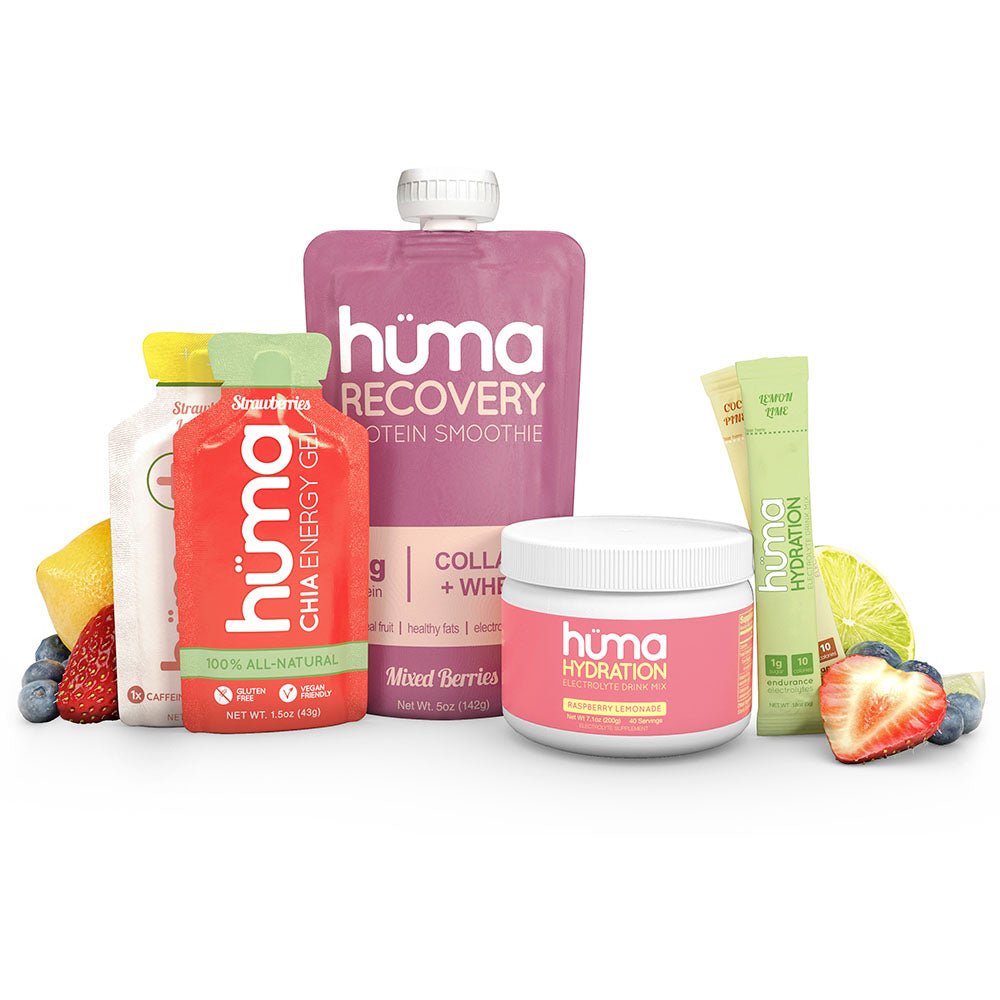
Hüma is built for the steady curve. Each Original gel is 24 grams of real-food carbs from brown rice syrup and cane sugar, with real fruit and chia, and more water in the formula than a thick syrupy gel. The chia's fiber modulates carbohydrate uptake to a usable rate, so the carbs land steadily; the real-food sources and the extra water help it go down smooth. For runners, cyclists, and triathletes chasing a strong finish instead of a mid-race slump, take two to three per hour with water, started early, and let the fuel hold.
Related guides
- Real food vs. maltodextrin energy gels
- What do chia seeds do in an energy gel
- Why energy gels upset your stomach
- How many carbs per hour for a marathon
- What is the bonk — and how do gels prevent it?
FAQ
What causes a sugar crash from energy gels?
A crash comes from one fast hit of sugar with nothing to meter how quickly it's taken up - available blood sugar spikes, then dips, and you feel the slump. Taking a concentrated gel with too little water makes it worse. Steadier fueling keeps energy level.
How do you get steady energy from a gel instead of a spike?
Choose real-food carbs from real-food sources, a glucose-fructose mix that rides two pathways, chia that modulates uptake to a usable rate, and more water. Take it with water at a steady rate of two to three gels per hour rather than one big dose.
Does a glucose-fructose mix help avoid a crash?
It helps you fuel more smoothly. A single carb source tops out around 60 grams per hour; a glucose-fructose mix uses two pathways, so trained athletes can take on more carbs per hour and ride the energy more evenly.
How does chia give steadier energy?
Chia's fiber modulates carbohydrate uptake to a usable rate, so the carbs land steadily rather than as one sharp hit. Chia isn't a carb source itself - it shapes how the real-food carbs are delivered.
How do I avoid a mid-race energy dip?
Fuel steadily instead of in one big hit: take gels with water, keep a rate of two to three per hour, start early before you're empty, and use real-food carbs with a glucose-fructose mix so the energy arrives level.