

Yes. Carbs are carbs once they reach your muscles — the fuel in a real-food gel powers the same pathways, on the same timeline, as the fuel in a synthetic one. What actually differs is everything around the carbs: what's on the ingredient list you're fueling with dozens of times a training block, how the gel tastes at hour three, how it feels going down, and how it sits deep into a long effort. That's where natural gels earn their keep — honestly, not magically.
Do natural energy gels give you the same energy as synthetic ones?
They do. Whether the carbs come from fruit purees and cane sugar or from maltodextrin — a processed carbohydrate most synthetic gels are built on — your body breaks them down into the same simple sugars and sends them to the same working muscles. The carbs from either kind of gel start reaching your bloodstream in about 10 to 15 minutes, and either kind counts the same toward the 30 to 60 grams of carbs an hour most runners, cyclists, and triathletes target. Your muscles can't read the label. Energy-wise, a real-food gel and a synthetic gel are doing the same job.
What's actually different between natural and synthetic gels?
The differences live around the carbs, not in them:
| What differs | Real-food gels | Synthetic gels |
|---|---|---|
| Carb source | Real-food sources — fruit purees, cane sugar, honey, maple and rice syrups | Mostly maltodextrin, often paired with fructose |
| Flavor | Comes from the food itself — fruit tastes like fruit | Comes from added flavoring |
| Texture and water | Varies — fruit-based formulas carry more water | Typically a concentrated syrup |
| Ingredient list | Reads like food — ingredients you recognize | Longer, more technical ingredient names |
For the full breakdown of what's inside the category, see what's actually in an energy gel.
Why do athletes prefer real-food ingredients?
Start with the reason most athletes actually give. Fruit, rice, and cane sugar have thousands of years of human use behind them; newer manufactured carbs simply don't have that track record yet. For a lot of athletes, that's an open variable they'd rather not carry through a training block — a personal call, not a scientific verdict, but a real one, and it's usually where the preference starts.
From there, the science does them a favor, because fruit turns out to be well-designed fuel. Real fruit naturally carries both glucose and fructose — the two sugars your gut absorbs through different doors, so they don't queue up behind each other. Sports nutrition spent decades arriving at multi-sugar fueling; fruit shipped that way all along. The sugar also arrives the way food packages it — alongside the fruit's own water, which is part of why real-food gels go down lighter and, for many athletes, sit easier at effort. The result is energy you can run on steadily instead of a spike you ride down the far side of.
And then there's the simple consistency of it: these are athletes who read ingredient lists the other 23 hours of the day, and a marathon build runs through dozens of pouches. A real-food gel means the standard they hold the rest of their diet to doesn't get dropped at mile 16.
Do natural gels absorb more slowly?
No — and this cuts both ways. Real-food carb sources like cane sugar, fruit, and rice syrup are fast-absorbing; that's the whole point of a fuel gel, whatever it's made from. Don't buy the overclaim in either direction: a natural gel isn't slower fuel, and it isn't faster fuel either. Absorption limits come from carb chemistry and your gut, not from whether the source was a strawberry: a single carb type caps out around 60 grams an hour, glucose-fructose mixes let trained guts push toward 90, and how much you can handle is trainable either way — see real-food vs. maltodextrin gels for the source-by-source picture.
Where do real-food gels genuinely earn it?
Beyond the ingredient list itself, three places — and notice none of them show up in the first 45 minutes. They show up deep in a long day, which is exactly where fueling plans break:
- Taste that survives the hours. After a few hours of sweetness, any single flavor gets hard to face — and a gel you can't face is fuel you skip. Real fruit flavors tend to hold up better against that fade, and rotating them helps more; see how to avoid flavor fatigue.
- Texture with more water in it. Fruit-based gels carry more water into the formula, so they go down lighter than a thick, concentrated syrup — a difference your mouth cares about more at hour three than at minute thirty.
- How they sit. For many endurance athletes, recognizable food sits easier late in an effort than the same dose of processed carbs. That's a tendency, not a guarantee — but it's the reason "what's in it" becomes a real performance question once the day gets long.
Real-food fueling, with Hüma
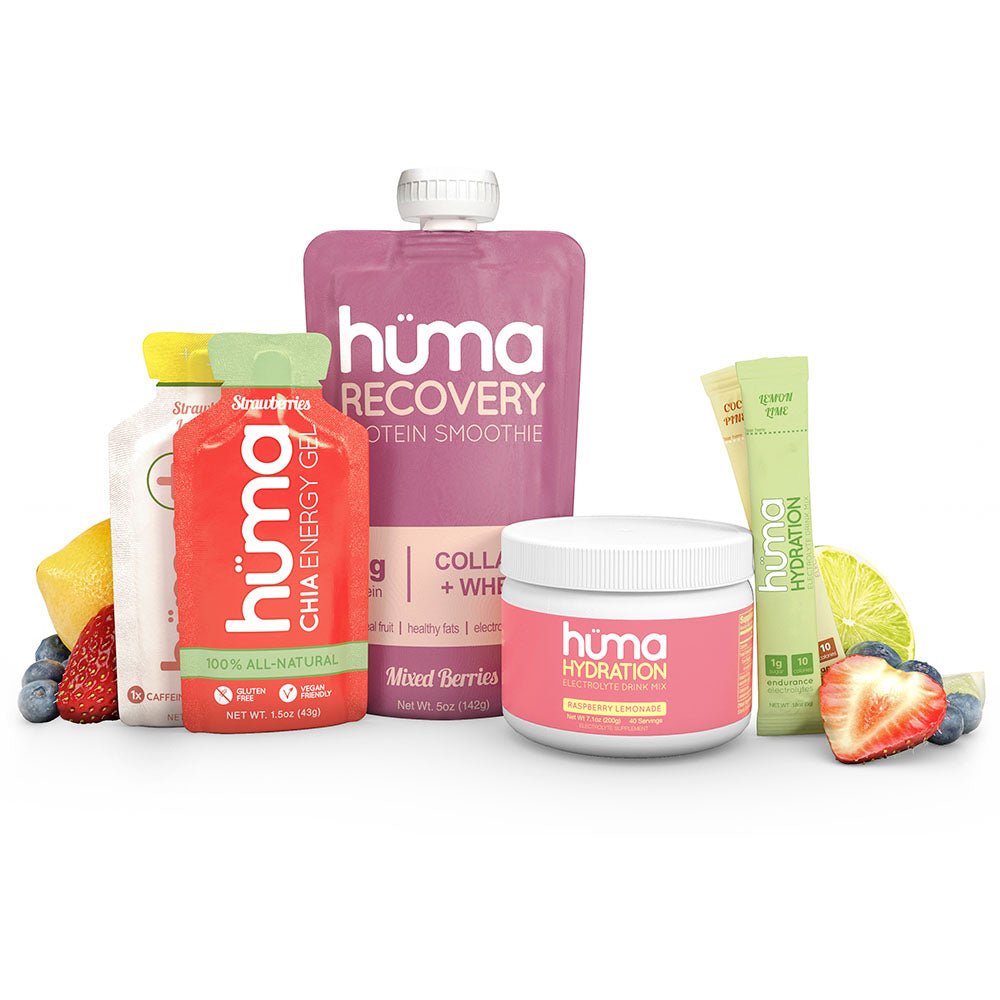
Hüma is one example of the real-food approach: 24 grams of fast-absorbing carbs per Original pouch from brown rice syrup and cane sugar, built on real fruit purees and concentrates — strawberries that taste like strawberries at mile 20, not just at the expo (see is there an energy gel made from real fruit). The purees carry more water into the formula, so a Hüma is semi-concentrated and goes down smooth, and chia's fiber modulates carbohydrate uptake to a usable rate — the reason it's in the recipe. The fueling math doesn't change because the ingredients are real: two to three per hour, each with a few sips of water. Real food, real fuel.
Related guides
- Real-food vs. maltodextrin energy gels
- Is there an energy gel made from real fruit?
- What's actually in an energy gel?
- How to avoid flavor fatigue on long races
FAQ
Do natural energy gels work as well as synthetic ones?
Yes. The carbs fuel the same muscles on the same 10-to-15-minute timeline regardless of source. The real differences are taste over long hours, texture and water content, and how the gel sits deep into an effort.
Are natural energy gels slower to absorb?
No. Real-food carb sources like cane sugar, fruit, and rice syrup are fast-absorbing — that's the point of a gel. Absorption limits come from carb type and gut training, not from whether the source is natural.
What counts as a natural or real-food energy gel?
A gel whose carbs come from real-food sources — fruit purees, cane sugar, honey, maple and rice syrups — rather than processed maltodextrin. Honey-based gels belong in the real-food group too.
Why do athletes switch to real-food gels?
Usually three reasons: ingredients with a long track record of human use, fruit's natural mix of glucose and fructose — the two sugars the gut absorbs through different doors — and a lighter, more-water formula that tends to sit easier at effort. The consistency seals it: they're taking dozens of pouches a training block, and they'd rather those read like food.
Do natural gels have fewer carbs than synthetic gels?
No. Standard gels of both kinds carry 20 to 25 grams of carbs. Huma's Original pouches deliver 24 to 25 grams depending on the flavor — the same fueling math as any standard gel.