
Yes — candy works. Gummy bears are fast carbs, your muscles burn them the same way they burn a gel, and plenty of marathoners have trained on them. The real differences are practical, not magical: a gel is one counted dose with sodium, a sugar blend chosen for absorption, and a single-serve pouch built for a shorts pocket at mile 16. Candy asks you to chew, count, and hope the bag didn't melt.
Does candy actually work as running fuel?
It does, and anyone who tells you otherwise is selling something. Gummy bears are fast carbs, and fast carbs are exactly what a working body wants mid-effort. Every gram counts toward the same 30 to 60 grams of carbs an hour that most runners, cyclists, and triathletes target, and ultra aid stations have set out bowls of candy for decades for exactly this reason. Gummy bears, hard-shell fruit candies, sour worms — your legs can't read the wrapper. The differences between a bag of candy and a gel all live upstream of the muscle: in the counting, the carrying, and the chewing.
How many gummy bears equal one energy gel?
More than you'd guess. A standard gummy bear carries roughly one and a half to two grams of carbs, so matching the 20 to 25 grams in one gel takes somewhere around a dozen to fifteen bears — counts vary by brand, so check your label. That's the first practical difference: a gel is one pouch, one known dose — eat it and forget it. Candy turns your fueling plan into arithmetic. Was that bear nine or bear eleven? Mid-race math gets unreliable exactly when the fueling matters most — it's the same memory tax that chews carry, with three times as many pieces to track.
What does a gel have that a bag of candy doesn't?
Set the sugar rush aside and compare the practical stuff:
| What matters mid-run | Gummy bears | Energy gel |
|---|---|---|
| Dosing | A handful you count piece by piece | One pouch, one known dose |
| Sodium | Essentially none | Most gels carry sodium to replace what you sweat out |
| Sugar blend | Chosen for taste and texture; the ratio varies by brand and isn't on the label | Chosen for absorption — glucose and fructose paired so they don't queue up |
| Late in a race | Chewing, on a dry mouth and a tired jaw | Swallow and go |
| Carrying & packaging | A snack bag built for a shelf or lunchbox, not a shorts pocket | Single-serve tear-top, pocket-sized, opens one-handed on the move |
| Heat | Melts and fuses in a warm pocket | Sealed pouch holds up |
| Mess | A sticky fistful, plus whatever your pocket added | Tear, squeeze, stash the wrapper |
A few of those rows deserve a sentence more. Candy carries essentially none of the sodium you sweat out — on long or hot days it covers only the carb half of the job; electrolytes vs. carbs explains the split. And the sugar blend matters as your hourly target climbs: candy sugars are picked for chew and shine, gel blends for absorption — glucose and fructose entering through two doors at once.
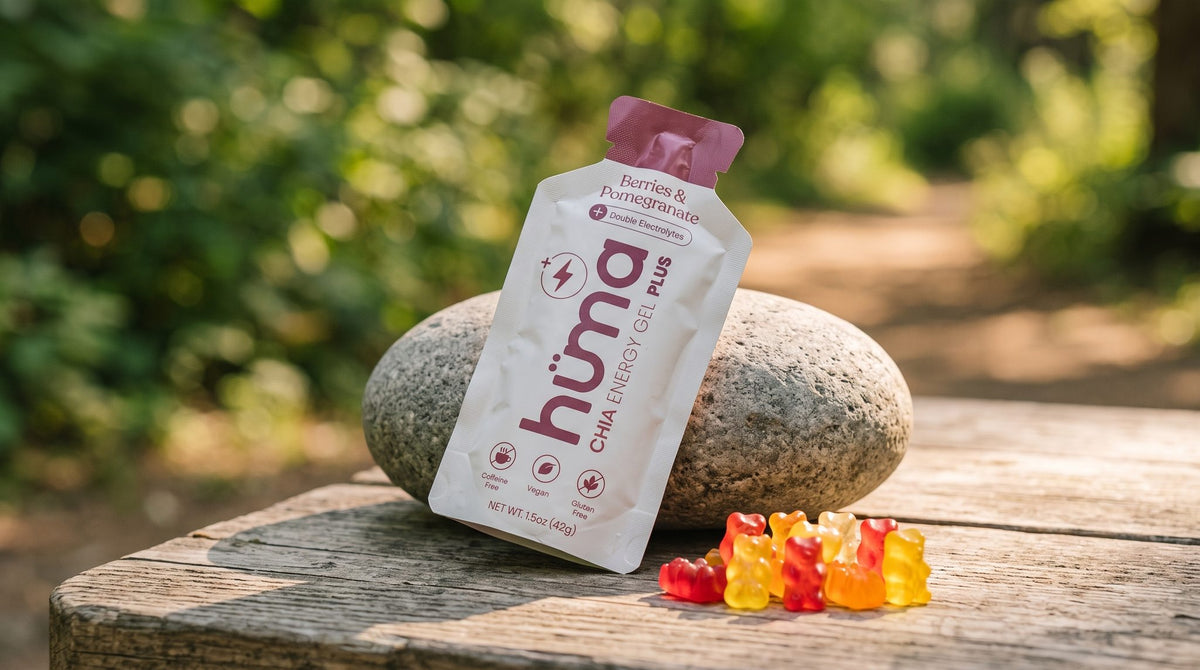
The packaging is doing different jobs, too. A candy bag is optimized for snacking — reach in, share a handful, reseal, leave it in the pantry. A gel pouch is optimized for endurance sport: one pre-measured dose in a tear-top you can open one-handed mid-stride, sized to ride in a shorts pocket, race belt, or flask holster, sealed against heat and sweat, with a wrapper that folds flat to stash until the finish. A handful of bears loose in your shorts at mile 16 is an open invitation to spill; a gel was engineered for exactly that pocket. None of this is a knock on candy — it was just built for the snack shelf, not mile 20.
When is candy genuinely fine?
More often than the sports-nutrition aisle would like — on your easy, low-stakes days. Conversational pace, no time goal, nothing riding on the session: precision matters less, and a pocket of gummy bears does the carb job for pennies. Those non-critical training days are where fueling budgets actually go. Saving your gels for the days that genuinely need the precision — race day and the hard, race-specific workouts that rehearse it, where dose, timing, and a fast swallow all matter — is smart fueling, not cheap fueling, and why are energy gels so expensive makes that case honestly. Bananas, dates, and raisins do the same easy-day work — real-food alternatives to energy gels covers the whole pantry.
When does a gel earn its spot?
On the days that count — and there are two kinds, not one. Race day is the obvious one: at effort you want a full dose you can swallow in seconds without breaking rhythm (chewing fifteen bears at half-marathon pace is a skill not worth learning), a sealed gel shrugs off the heat that turns candy into a fused bear-brick, and a plan on autopilot — one dose every 20 to 40 minutes, on the clock — runs on built-in precision. Hot days raise those stakes further. Your hard training days matter just as much, for a different reason: race fuel only works if you've rehearsed it. Your key workouts and long runs are where you practice the exact gels, dose, and timing you'll use on race day — training your gut and proving the plan while the stakes are still low. Never debut a gel on race morning; practicing gel fueling in training is where that rehearsal lives. Save the candy for the easy days, run gels on the days that mirror the race, and race morning becomes just execution — Endurance Nutrition 101 walks the basics if you're building the plan for the first time.
The candy instinct, done right — with Hüma
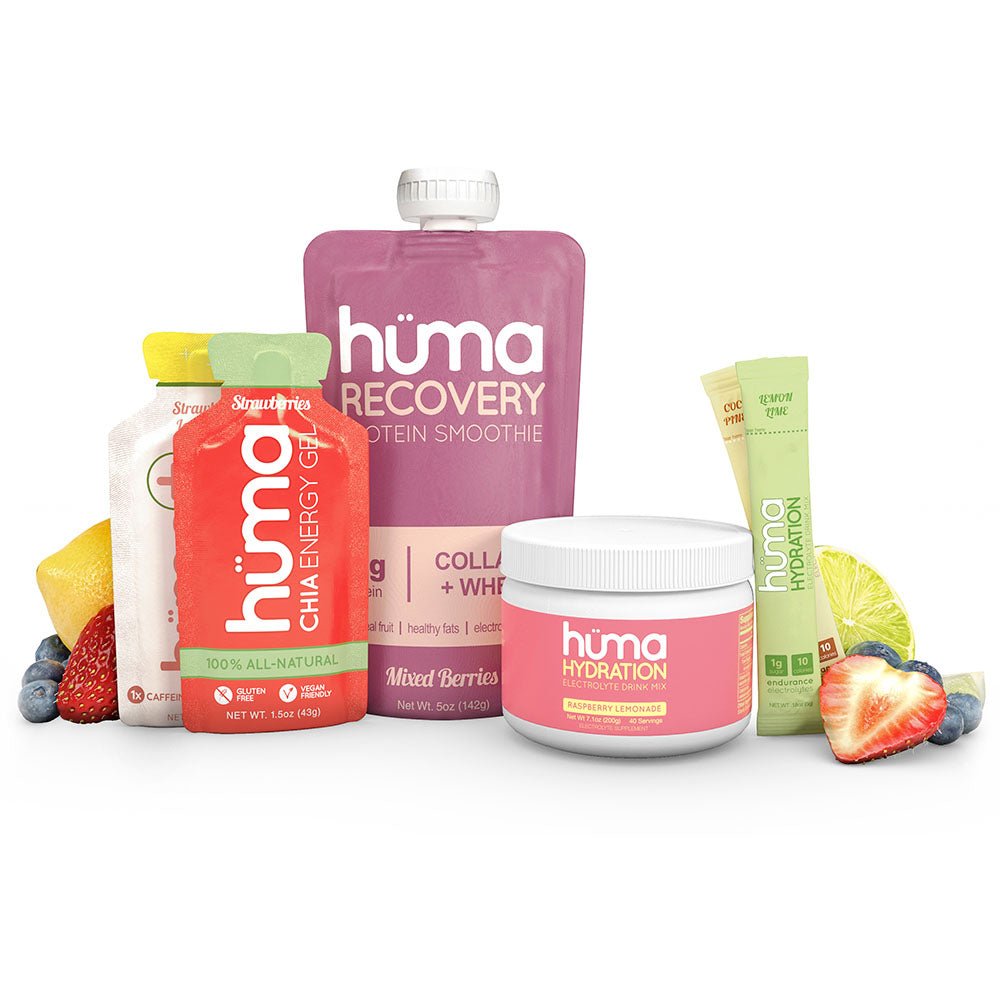
The candy instinct gets one big thing right: fuel should taste like something you actually want to eat. Hüma just comes at it from the fruit bowl instead of the candy aisle. Each Original pouch is 24 grams of real-food carbs from brown rice syrup and cane sugar, built on real fruit purees — and real fruit naturally carries both glucose and fructose, the paired sugars that don't queue up. Sea salt covers the sodium candy skips. The fruit purees bring water into the formula, so a Hüma is semi-concentrated — it goes down smooth with a few sips of water, no chewing, no counting. Two to three per hour and the math is done. It's the treat-that-works idea, grown up.
Related guides
- Energy gels vs. chews vs. sports drinks
- Real-food alternatives to energy gels
- Why are energy gels so expensive?
- How many carbs per hour for a marathon
- Endurance Nutrition 101: the basics of fueling
FAQ
Can you run a marathon on gummy bears?
People have. Candy is fast carbs and your muscles will burn it — the hard part is logistics: a dozen-plus bears per dose, chewing late in the race, melting, and no sodium. It works; a gel does the same job with less to manage.
How many gummy bears equal one energy gel?
Roughly a dozen to fifteen standard gummy bears match the 20 to 25 grams of carbs in one gel. A typical bear carries about 1.5 to 2 grams of carbs; check the label before building a plan on it.
Do gummy bears have electrolytes?
Essentially none. Candy covers carbs only — there's no meaningful sodium to replace what you sweat out. If you fuel with candy on long or hot days, plan your sodium separately.
Why do runners use gels instead of candy?
Precision and packaging. A gel is one known dose you swallow in seconds, with sodium included, in a single-serve pouch sized for a shorts pocket that survives heat and sweat. Candy comes in a bag built for snacking, and needs counting, chewing, and cool weather. On easy days that trade is fine; at race effort it isn't.
Is candy a good budget option for training runs?
For easy, low-stakes miles, yes — cheap fast carbs that work. Save the gels for your hard workouts and race day: those are where you need the precision and, just as important, where you rehearse the exact fuel you'll race on. Never debut a gel on race morning.