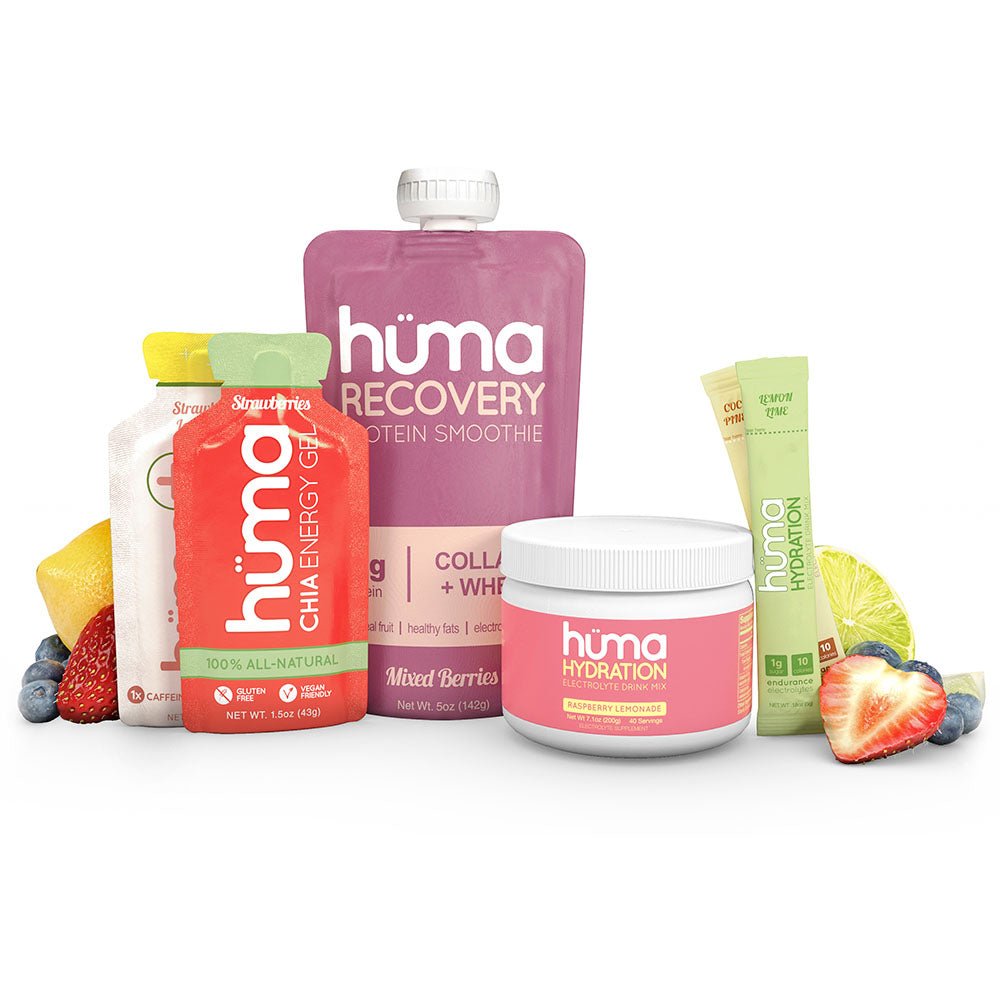


Carbs and electrolytes do two completely different jobs, and on a long day you need both. Carbs are fuel — the energy your muscles burn. Electrolytes, sodium chief among them, run the fluid system: they help your body hold on to the water you drink and replace what you sweat out. A gel feeds you; sodium keeps the water where it belongs. Short or cool efforts run fine on carbs and plain water. Long, hot, sweaty ones are where sodium starts to matter too.
What's the actual difference between carbs and electrolytes?
They're not two versions of the same thing — they're two separate systems. Carbs are fuel: your body stores them as glycogen, burns through that store in roughly 90 minutes to two hours at effort, and gels top the tank back up so you don't run dry. That's the energy side, and it's covered in endurance nutrition 101. Electrolytes are minerals — sodium, potassium, magnesium, calcium — dissolved in your body's fluids, and they manage water: how much you hold, where it goes, how well what you drink actually gets absorbed instead of sloshing around. Fueling and hydrating are different tasks, and mixing them up is where a lot of long-day trouble starts.
What does sodium actually do?
Sodium is the electrolyte that does the heavy lifting for fluid balance, and its job is refreshingly plain: it holds water where your body needs it. When you drink, sodium helps your body absorb and retain that fluid rather than pass it straight through — which is why the American College of Sports Medicine's position stand on exercise and fluid replacement (Sawka et al., 2007) notes that including sodium during longer efforts aids fluid retention and keeps you drinking. The other half of its job is replacement. You lose sodium in sweat, a lot of it on a hard day — and how much varies enormously between people, with sweat sodium commonly ranging anywhere from roughly 230 to 1,700 milligrams per liter. Replace the water without the salt, and the fluid system runs low on the very mineral that keeps it working.
When does water alone stop being enough?
On short or cool efforts, plain water is genuinely fine — you're not sweating enough to run your sodium down, and a gel with a few sips of water covers you. The picture changes on long, hot days. When you're sweating hard for hours and drinking constantly to keep up, you're pouring in water while pouring out salt — and drinking plain water constantly for hours can dilute your body's sodium, which is one more reason salt belongs in the plan on long days, not a scare to lose sleep over. The practical read is simple: if your effort is measured in hours and your shirt comes off crusted with salt, water alone is doing half the job. Add sodium and it does the whole job. For how the water side works with your gels, see do you need water with energy gels.
Why do sodium needs vary so much between people?
Because sweat is personal. Two athletes in the same race and the same heat can lose wildly different amounts of sodium — that 230-to-1,700 range isn't a measurement error, it's how differently people are built. Some finish a long run with white salt rings on a dark shirt and a gritty face; others barely show it, and sweat rate varies just as much. That's why there's no single sodium number right for everyone, and why it pays to read your own signals — how salty your sweat looks, how you feel deep into hot efforts — rather than copy a training partner's plan. Your fluid system is yours.
Where do carbs and electrolytes live in the Hüma system?
Hüma splits the two jobs across the lineup so you can dial each one independently:
| Job | What carries it | What it delivers |
|---|---|---|
| Fuel (carbs) | Hüma gels — Original, PLUS, Ultra | 24g of real-food carbs per pouch (40g in Ultra) for energy |
| Fuel plus a bigger electrolyte dose | Hüma PLUS | Same 24g of carbs as Original, with double the electrolytes — built for hot weather and heavy sweat |
| Fluid and electrolytes | Hüma Hydration drink mix | The most sodium in the lineup with almost no sugar, to replace what you sweat out |
The gels carry the carbs, so your fueling never stops being about energy. When the day turns hot, PLUS is the easy call — Original's formula with double the electrolytes, so you get more salt in the same pouch that's feeding you. And Hüma Hydration is the piece built purely for the fluid system: you stir it into your bottle and it replaces water and sodium without adding more carbs on top of your gels, so you can raise your fluids and electrolytes without touching your fueling math. The full side-by-side is in Hydration vs. the gels.
When do you need what?
Here's the honest, no-overthinking version, by how long and how hot:
| Effort | Cool day | Hot day |
|---|---|---|
| Under ~60–90 min | Water, plus a gel if you're near the upper end | Water and a gel; a heavy sweater may want electrolytes too |
| 1–3 hours | Gels for fuel; the sodium in your gels often covers the salt | Switch to PLUS and add Hydration in the bottle |
| 3+ hours | Gels for fuel, with electrolytes worth adding as it runs long | PLUS plus Hydration throughout — this is where the fluid system carries the day |
The pattern is consistent: carbs are on the plan at every duration because you always need fuel, while electrolytes scale up with heat, sweat, and hours. For the full hot-day playbook, see how to fuel in hot weather, and for the gel-side electrolyte details, Original vs. PLUS.
Shop Hüma gels →
Shop Hüma Hydration →
FAQ
What's the difference between carbs and electrolytes?
Carbs are fuel — the energy your muscles burn, replaced by gels. Electrolytes are minerals like sodium that run your fluid system, helping your body hold the water you drink and replacing what you sweat out. They're two separate jobs, and long efforts need both.
What does sodium do during exercise?
Two things: it helps your body absorb and hold on to the fluid you drink instead of passing it straight through, and it replaces the sodium you lose in sweat. The ACSM position stand on fluid replacement notes sodium aids fluid retention and encourages drinking on longer efforts.
Do you need electrolytes if you drink enough water?
On short or cool efforts, plain water is fine. On long, hot days when you're sweating hard and drinking constantly for hours, water alone leaves your sodium running low — that's when salt matters too, so your body can actually hold the fluid you're taking in.
Why do some people need more sodium than others?
Because sweat is highly individual. Sweat sodium commonly ranges from roughly 230 to 1,700 milligrams per liter across athletes, and sweat rates vary just as much. Watch your own signals — salty shirt, gritty face, how you feel late in hot efforts — rather than copying someone else.
Should I use PLUS or Hydration for electrolytes?
PLUS is a gel with double the electrolytes, so it adds salt in the same pouch that fuels you — handy on hot days. Hydration is a drink mix that carries the most sodium with almost no sugar, so you can raise fluids and electrolytes without adding carbs. Many athletes use both on long, hot days.