
Mostly, elites drink their fuel — custom high-carb bottles set out at personal fluid stations every 5K, often with a gel taped on. But that bottle service takes a team to mix, label, and place: it's a logistics luxury, not a fueling secret. Strip away the crew and what's left is the part that actually matters — a known dose on a rehearsed schedule. For everyone without a support team, which is nearly all of us, a gel delivers exactly that, no crew required.
What's in an elite's bottles — and what it takes to run that system?
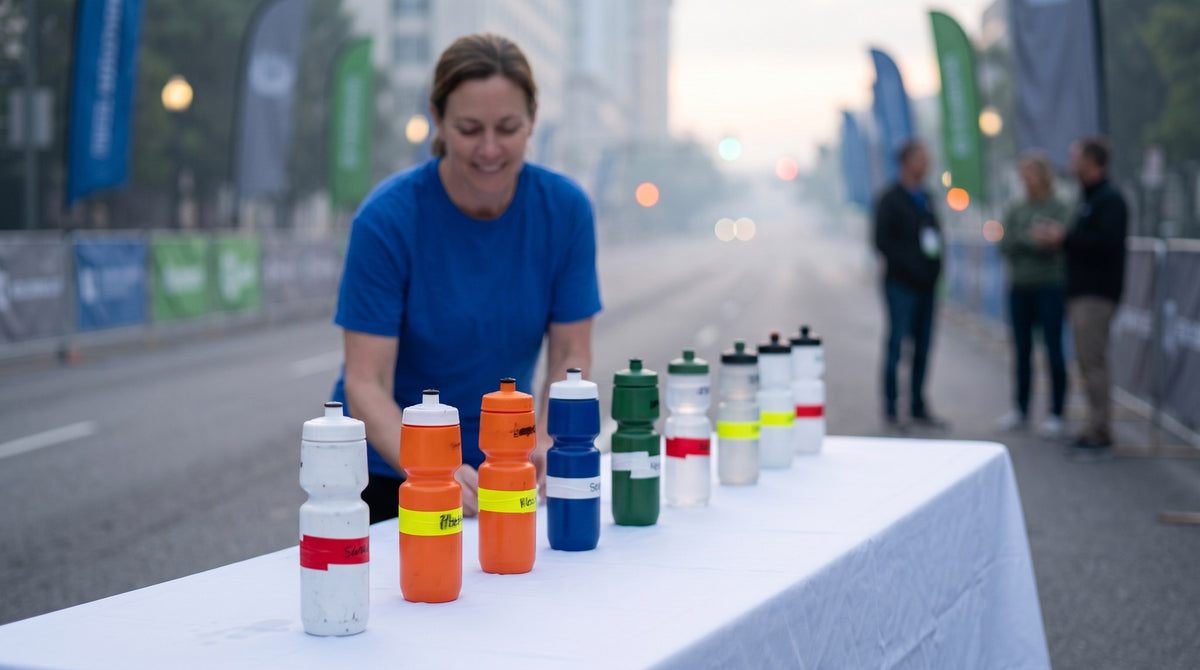
At the majors, elite and sub-elite runners skip the paper-cup scramble entirely. Race organizers set out personal fluid tables roughly every 5K, and each athlete's own bottles — prepped in advance, marked so they're grabbable at race pace — are waiting on them. Inside is usually a custom carb drink: a glucose-fructose mix blended to the athlete's rehearsed concentration, sometimes with caffeine timed for the late miles. Here's the part the highlight reels skip: none of that runs itself. It takes a coach or nutritionist to build the mix, hands to fill and label every bottle, and race infrastructure that sets out elite-only tables and staffs them. The system earns its keep two ways: the fuel is dialed and automatic, and grabbing a fresh bottle every 5K means the athlete carries nothing between stations — and at world-record pace, even a few grams shed is a few seconds saved. It's a small operation per athlete — and it's exactly the operation the rest of us don't have.
Do elite marathoners use energy gels?
Some do — a gel taped to the bottle (grab one, get both) or carried for a planned moment in the race. Others run entirely on the drink mix; elites are format-agnostic, using whatever delivers the rehearsed grams on the rehearsed schedule — the same conclusion the rest of us reach in gels vs. chews vs. sports drinks. But notice which part of that kit you could actually take with you: the gel. It's the one piece of the elite setup that needs no table, no team, and no mixing station — self-contained fuel you carry in a pocket. The bottle system stays at the elite tables; the gel comes with you.
So can you fuel like an elite?
Two honest answers, because people mean two different things. Could you copy the delivery — personal bottles of custom mix handed to you every 5K? Only with the funds, the crew, and the organization to run your own private aid operation mid-race. It's not that you're not worthy; it's that you'd need to staff it, and for nearly everyone that's neither practical nor worth it. Could you copy the carb rate — 90-plus grams an hour? Only with the trained gut that rate demands, built over months. What you can copy — and should — is the principle underneath both: a precise, rehearsed dose delivered on schedule, with nothing new on race day. And the tool that puts that principle in the hands of a runner with no team is the gel.
How many carbs per hour do elites take — and what should you?
A lot — and this is where copying the number goes wrong. Front-of-pack marathoners commonly fuel at 90-plus grams of carbs an hour, the fastest marathons ever run were reportedly fueled above 100, and the most extreme protocols in pro cycling push toward 120. Those numbers are real, but earned, not chosen: they require glucose-fructose mixes and months of deliberate gut training. An elite finishes in a little over two hours at an intensity that burns carbs at a rate a four-hour marathoner never reaches — their 90-plus solves a problem you don't have. For most runners, cyclists, and triathletes, 30 to 60 grams of carbs an hour is the range that actually fits, beginners closer to 30 to 40, with room to build from there. Match the rate to your gut, not to the leaderboard — the carb sweet spot maps the whole ladder.
Why a gel is the most accessible way to fuel
For anyone not chasing a world record, a gel is hands down the easiest, most reliable way to fuel — not a compromise, but the right tool. It packages the exact thing the elite bottle service exists to deliver — a known dose, the same every time, taken on a rehearsed schedule — into something you carry yourself, open one-handed, and swallow in seconds, no table, team, or mixing station involved. You get the elite principle without the elite apparatus: pockets, a belt, or a vest stand in for the every-5K tables, a written plan stands in for the coach, and the dose is identical from the first pouch to the last. And here's the tradeoff that flips in your favor: a big reason elites take handoffs instead of carrying fuel is weight — at world-record pace, even a few grams shed across a marathon is seconds saved, worth a whole support crew to chase. You're not chasing those seconds, so carrying your own fuel costs you nothing you'd ever feel. An elite spends a support operation to shave grams and make fueling automatic. A gel hands you the part that matters to your race — automatic, rehearsed fuel — for the price of the gel.
What's actually worth copying?
Their habits, not their infrastructure. Strip away the custom mixes and the bottle service, and the elite playbook is a set of moves that cost nothing — and that a pocket of gels delivers on any budget:
| The elite move | Your version — free, no crew |
|---|---|
| Personal bottles placed every 5K by a team | Gels you carry, so every dose is on you before the gun — no table required |
| A custom mix built by a coach | A simple written plan: which gel, at which minute |
| 90-plus grams an hour, earned over months | 30 to 60 grams an hour, rehearsed on long runs until it's automatic |
| Nothing new on race day | Nothing new on race day — the rule transfers word for word |
Every one of those is available at every pace. How to practice gel fueling in training turns them into a routine.
Rehearsing like a pro, with Hüma
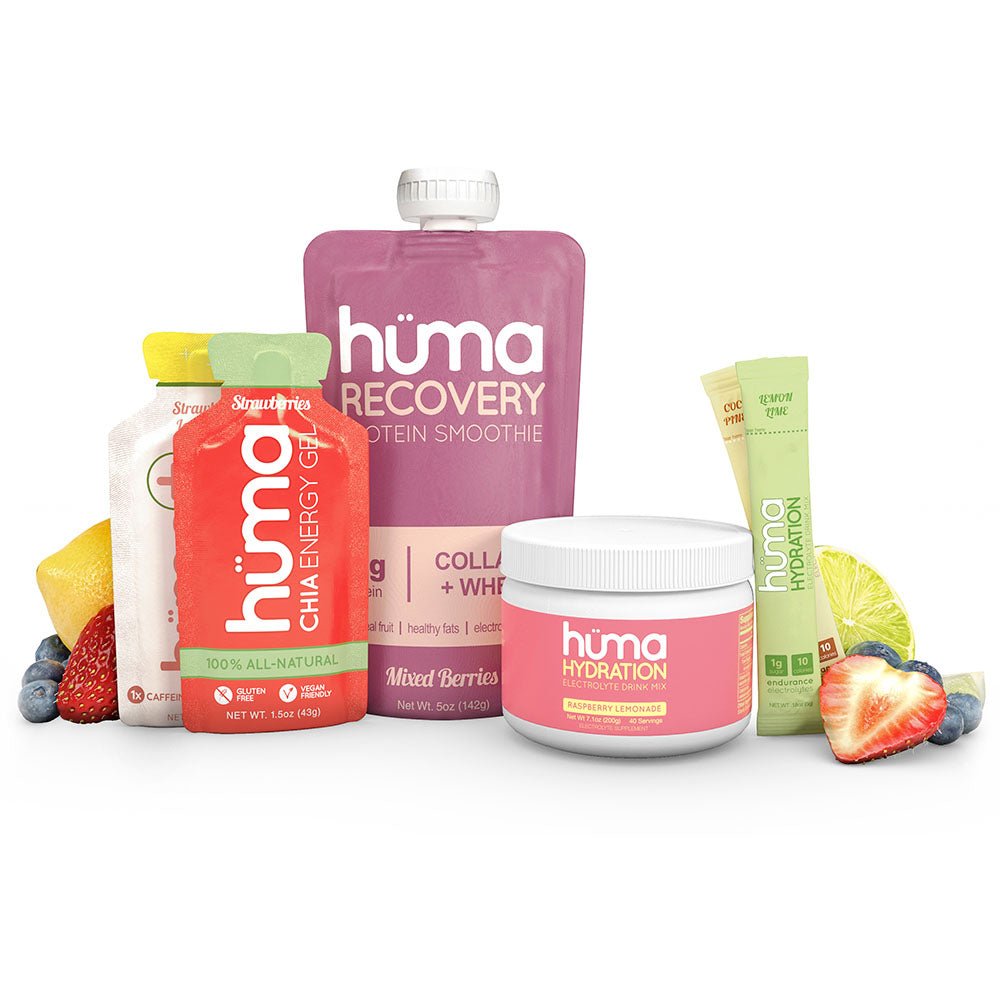
Hüma's version of the elite lesson is the rehearsal, not the bottle service — and a gel you can actually carry. Pick a flavor you genuinely like (taste is what keeps a plan followed at mile 20) and run the same routine on your long runs that you'll run on race day: two to three Hüma per hour, each with a few sips of water, starting 30 to 45 minutes in. Each pouch is 24 grams of real-food carbs, the same known dose every time — so by race week your fueling is as practiced as your pacing, no support crew required. That's the whole secret behind the elite tables: the fuel was boring long before it was fast. The gel just lets you do it without the team.
Related guides
- How to practice gel fueling in training
- The carb sweet spot: beginners vs. advanced
- How many carbs per hour for a marathon
- How to train your gut to absorb more carbs
- How to fuel your first marathon
FAQ
Do elite marathoners use energy gels?
Some do — a gel taped to a personal bottle or carried for a planned late-race moment. Most of an elite's carbs come from custom drink mixes in bottles set out at elite fluid stations every 5K. The gel is the one part of that kit a runner without a support team can actually carry and use.
What do elite marathoners drink during a race?
Custom glucose-fructose drink mixes blended to a rehearsed concentration, from personal bottles at dedicated elite fluid tables set out every 5K. The mix, the labeling, and the bottle placement all take a team and race infrastructure to run — which is why most runners fuel from gels they carry instead.
How many carbs per hour do elite marathoners take?
Commonly 90-plus grams an hour, with reports above 100 in record-setting races. Those rates require glucose-fructose mixes and months of deliberate gut training — they're the top of a long progression, not a starting point.
Should beginners fuel like elite marathoners?
No — both the 90-plus grams an hour and the every-5K bottle service are out of reach without a trained gut and a support crew. Beginners do best starting at 30 to 40 grams of carbs an hour, most endurance athletes at 30 to 60, delivered by gels they carry and rehearse on long runs.
What can everyday runners copy from elite fueling?
The practice, not the infrastructure: a written plan, every dose accounted for before the start, the whole routine rehearsed in training, and nothing new on race day — all delivered by gels you carry, no support crew needed.