
Store energy gels like the shelf-stable food they are: somewhere cool, dry, and out of direct sun, sealed in their pouches. Heat is the main enemy — hot cars and sunny windowsills age a gel fastest — while deep cold mostly makes gels thick and slow to squeeze. Sort your stash by best-by date, rotate the oldest to the front, and keep race-day pouches out of the car.
What's the best way to store energy gels at home?
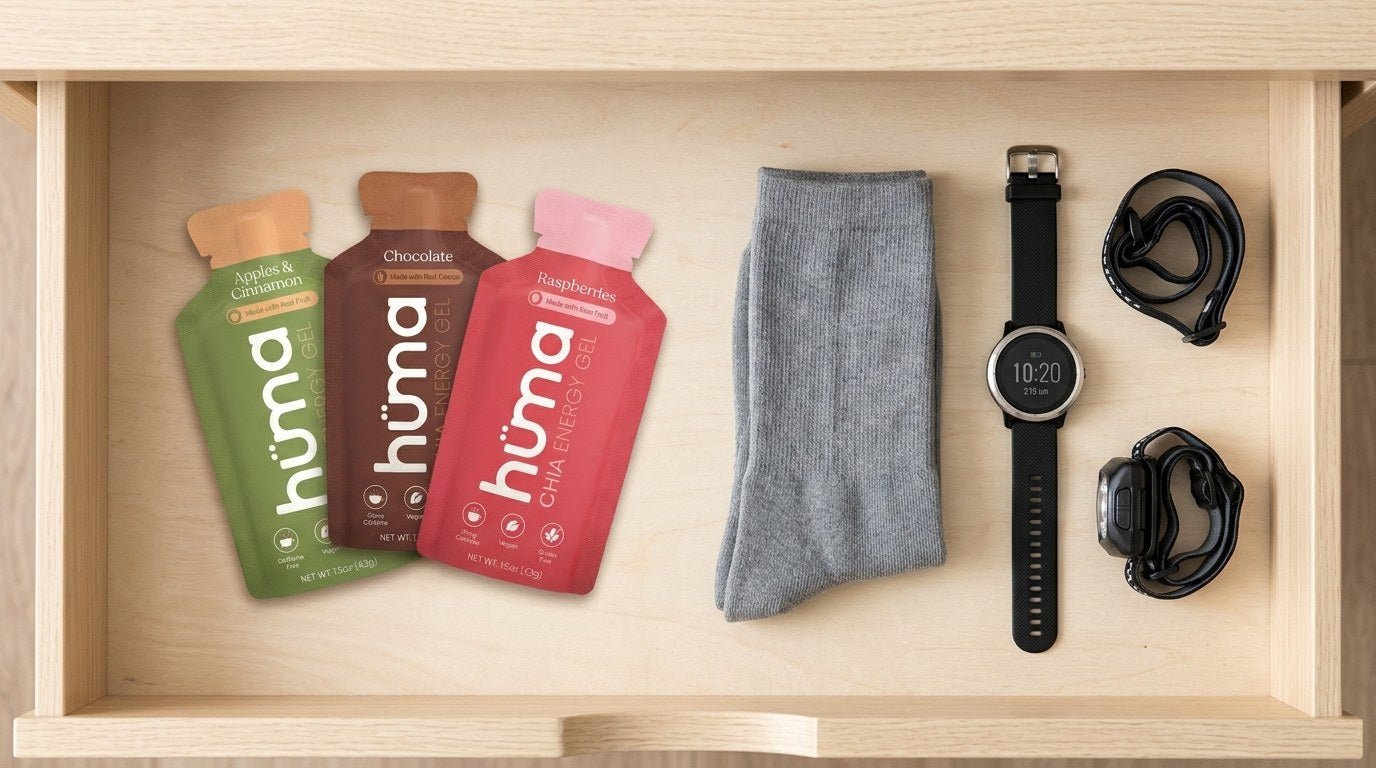
A pantry shelf, a drawer, a bin in the closet — anywhere cool, dry, and dark, with the pouches sealed until you need them. Gels are shelf-stable by design, so no refrigeration required. The one habit worth building is rotation: newest to the back, oldest to the front, and a glance at the best-by date when you restock. What that date actually means — and the shelf-life story behind it — has its own guide: do energy gels expire?
| Situation | Do | Skip |
|---|---|---|
| Home storage | Cool, dry, dark spot; sealed pouches; oldest first | Sunny windowsills, spots near the oven or a radiator |
| Summer and the car | Bring the box inside; carry only what you'll use | Glovebox or trunk as long-term storage |
| Winter training | Inner pocket, close to your body | Outer pack pockets in deep cold |
| Race morning | Stage pouches with your kit the night before | Leaving them in the car overnight |
Can energy gels go bad in a hot car?
The hot car is the classic mistake — every endurance athlete — runner, cyclist, or triathlete — has done it at least once. So, do the gels go bad? Not from one hot afternoon. A sealed gel is shelf-stable by design — it doesn't spoil the way fresh food does, and a pouch that rode through a warm day is fine. What heat costs is quality, and the cost compounds: a parked car in summer turns into an oven with cupholders, far hotter inside than the day outside, and week after week of that ages a gel's texture and flavor well ahead of its best-by date. A stash that spends the season in the trunk won't taste like the one that lived on the pantry shelf. And the commonsense check applies regardless of where a pouch has been: swollen, leaking, or smells wrong when you open it — toss it. Otherwise, treat the car as transport, not storage — bring the box in, and on hot race days keep your pouches shaded until you head out. Fueling in the heat has its own playbook: how to fuel in hot weather.
What happens to energy gels in the cold?
Cold's effect is mechanical: gels thicken as they get colder, and a very cold gel turns slow and stubborn to squeeze at exactly the moment your fingers are at their clumsiest. The fix is body heat. On winter runs and rides, carry your gels in an inner pocket close to you rather than an outer pack pocket — they'll stay soft enough to actually get out of the pouch, and a gel that's gone thick loosens back up as it warms. Where exactly to stash them, layer by layer, is covered in how to carry gels on a run.
How should you prep gels for race morning?
The night before: count out what your plan calls for, check the best-by dates, and stage the pouches with your kit — in the house, not the car. In the morning, load your belt, vest, or shorts pockets, and keep any spares out of direct sun while you wait around the start. Cold morning? The inner-pocket rule applies in the corral too. None of this is complicated — it just has to happen the night before, because race morning is exactly when you don't want to be negotiating with your fuel. If you're still deciding how many to bring, how many gels for a marathon, half, or ultra does the math.
Storing Hüma gels
Hüma gels carry a 3-year shelf life from the date of manufacture — about a year longer than most energy gels — and the date printed on the pouch is a best-by date: it marks peak texture and flavor, not a cliff. That long shelf life comes from heat processing — pasteurization — not from the artificial preservatives many shelf-stable foods rely on, so a sealed pouch of real fruit purees, brown rice syrup, and chia keeps on its own. Which makes gels easy to buy for a whole training block: stock up, store them cool and dry, rotate oldest first, and they're ready whenever you are. For everything about the date itself, see do energy gels expire? — and for how long a gel works once it's in you, that's how long does an energy gel last.
Related guides
- Do energy gels expire?
- How to carry gels on a run
- How to fuel in hot weather
- How long does an energy gel last?
- Do Energy Gels Freeze? Fueling in Cold Weather
FAQ
How long do energy gels last in storage?
Hüma gels carry a 3-year shelf life from the date of manufacture — about a year longer than most energy gels. Stored cool, dry, and sealed, they hold their quality; the date on the pouch is a best-by date marking peak texture and flavor.
Do energy gels go bad if they're left in a hot car?
Not from one hot afternoon — sealed gels are shelf-stable by design and don't spoil the way fresh food does. What sustained heat costs is quality: a summer in the trunk ages texture and flavor well ahead of the best-by date. Keep the stash indoors, and toss any pouch that's swollen, leaking, or smells wrong.
What do you do if a gel gets too cold on a winter run?
Cold gels thicken and get hard to squeeze. Carry them in an inner pocket close to your body so they stay soft — a gel that's gone thick in the cold loosens back up as it warms.
What does the best-by date on a gel mean?
On a Hüma pouch it marks peak quality — texture and flavor — not a hard safety cutoff. Rotate your stash oldest-first and check dates when you restock; the full shelf-life story is in the guide "Do energy gels expire?"
Where should gels go the night before a race?
Staged with your race kit in a cool room — counted out and dates checked — not in the car overnight. In the morning they go straight into your belt, vest, or pockets, and stay out of direct sun until the start.