

Energy gels don't freeze solid on a typical winter run — but they don't stay easy, either. Sugar keeps a gel's freezing point well below water's, so true freezing takes seriously bitter cold. What happens first is thickening: the colder a gel gets, the slower and more stubborn it squeezes, right when your fingers are at their clumsiest. The fix is body heat — carry gels in an inner pocket, close to you, and they stay usable all winter.
Do energy gels actually freeze?
Not at the temperatures most people train in. A gel is mostly sugars and water, and all that dissolved sugar pushes its freezing point well below water's — the same reason maple syrup stays pourable in a cold pantry. On a below-freezing morning your water bottle will ice up long before your gels do. What a gel does instead is thicken, steadily and noticeably, as the temperature drops. A pouch that pours like jam at room temperature squeezes like cold honey at freezing, and somewhere well below that it becomes a genuine wrestling match. So the practical question isn't "will my gel freeze?" — it's "will I be able to get it out of the pouch?" That one has a good answer.
Why are cold gels so hard to eat?
Two problems arrive together. The gel thickens, so each squeeze delivers less. And your hands are cold, gloved, or both, so each squeeze is weaker and clumsier. The combination is the classic winter fueling scene: an endurance athlete at the side of the trail, mittens clamped in their teeth, negotiating with a pouch. None of this changes the fuel itself — a cold gel carries exactly the same carbs, and it loosens right back up as it warms. It's purely a mechanical problem, which means it has mechanical fixes.
| Cold-weather problem | The fix |
|---|---|
| Gel has gone thick and stubborn | Carry it in an inner pocket, close to your body — body heat keeps it soft |
| One's already cold and stiff | Warm the pouch in your glove or against you for a few minutes before opening |
| Can't work the tear tab in gloves | Bare fingers for a few seconds, or use your teeth — don't pre-tear |
| Not thirsty, skipping water | Drink on schedule anyway — thirst is a poor guide in the cold |
How do you keep gels warm on a winter run?
Body heat is the whole strategy. Stash your gels in a pocket that sits close to you — an inner jacket pocket, a base-layer pocket, the front pouch of a vest worn under your shell — instead of an outer pack pocket, where they'll sit at air temperature all morning. A gel riding near your body stays soft enough to squeeze no matter what the thermometer says, and one that's already gone thick loosens back up after a few minutes in a glove or against your torso. This is the same inner-pocket rule from the winter section of how to store energy gels, and the layer-by-layer options are in how to carry gels on a run.
Should you pre-tear gels so you don't fight them with gloves?
No — pouches stay sealed until you eat them. A pre-torn pouch riding in a pocket is a gel-coated pocket waiting to happen, and an open gel collects whatever else lives in there. The glove problem has better answers: warm the pouch first (a stiff gel is harder to open and harder to squeeze, so the glove trick solves both), then tear at the notch with bare fingers for a few seconds — ten seconds of cold fingertips beats gel in your mitten — or use your teeth, which work fine in any weather. The full move is in how to open an energy gel; winter just adds the warm-up step.
Do you still need water with gels in the cold?
Yes. Cold weather blunts thirst — you can be losing real fluid under all those layers and never feel like drinking — but the gel doesn't know it's winter. It's still a concentrated dose of carbs, and it still absorbs better and sits easier with a few sips of water, exactly as covered in do you need water with energy gels. The winter habit worth building: drink on a schedule rather than by feel, and pair a sip with every gel. If your bottle valve is the thing freezing, an insulated bottle carried under a layer follows the same body-heat logic as the gels.
Do you burn more carbs in cold weather?
Modestly, sometimes — staying warm costs energy, shivering costs more, and winter running adds its own taxes: heavy layers, headwinds, and snow or slush underfoot that make every mile more work. But the difference isn't dramatic enough to need a new fueling plan. Fuel a cold long effort like any long effort — first gel 30 to 45 minutes in, then one every 20 to 40 minutes — and let effort and duration set the plan, not the thermometer. The bigger winter risk isn't burning more; it's fueling less, because cold hands and blunted appetite make skipping easy. Keep the schedule.
Cold weather, with Hüma
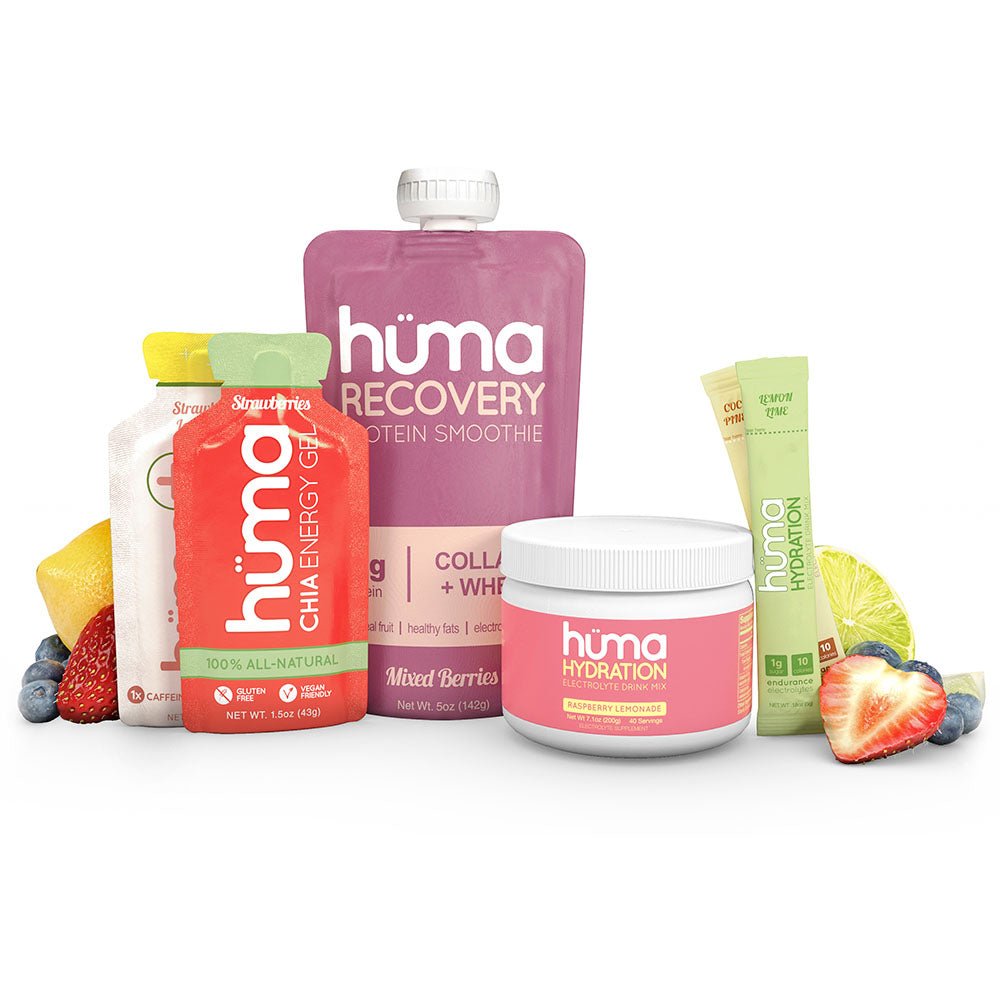
Hüma gels handle winter the way any gel does — they thicken as they cool and loosen as they warm — so the inner-pocket rule applies. What helps is where the texture starts: real fruit purees carry more water into the formula, so a Hüma is semi-concentrated rather than thick and syrupy to begin with, and it goes down smooth even when the miles are frozen. Real-food carbs from brown rice syrup and real fruit work the same at 20°F as at 70°F. Store the winter stash indoors, not in a car that's doing its own freeze-thaw cycles, and this post's summer twin covers the other extreme: how to fuel in hot weather.
Related guides
- How to store energy gels
- How to fuel in hot weather
- How to carry gels on a run
- How to actually eat an energy gel mid-run
- Do you need water with energy gels?
FAQ
At what temperature do energy gels freeze?
Well below the temperatures most people train in. The dissolved sugars push a gel's freezing point far under water's, so gels thicken long before they freeze — your bottle will ice up first. Treat thickening, not freezing, as the winter problem to solve.
How do you keep energy gels from getting hard in the cold?
Carry them in an inner pocket close to your body — inside your jacket or in a vest under your shell — instead of an outer pack pocket. Body heat keeps them soft, and a gel that's gone stiff loosens back up after a few minutes in a glove or against you.
Should you pre-open a gel before a winter run?
No. Pouches stay sealed until you eat them — a pre-torn gel in a pocket is a mess in the making. Warm the pouch in your glove first, then tear with bare fingers for a few seconds or with your teeth.
Is a gel that froze or got very cold still good?
Yes. Cold changes texture, not the fuel — the carbs are unchanged, and the gel returns to its normal consistency as it warms. Deep cold is far easier on a gel than a summer in a hot car.
Do you need to drink water on cold runs?
Yes. Cold blunts thirst, but you're still losing fluid under your layers, and gels still absorb best with a few sips of water. Drink on a schedule rather than waiting to feel thirsty.