
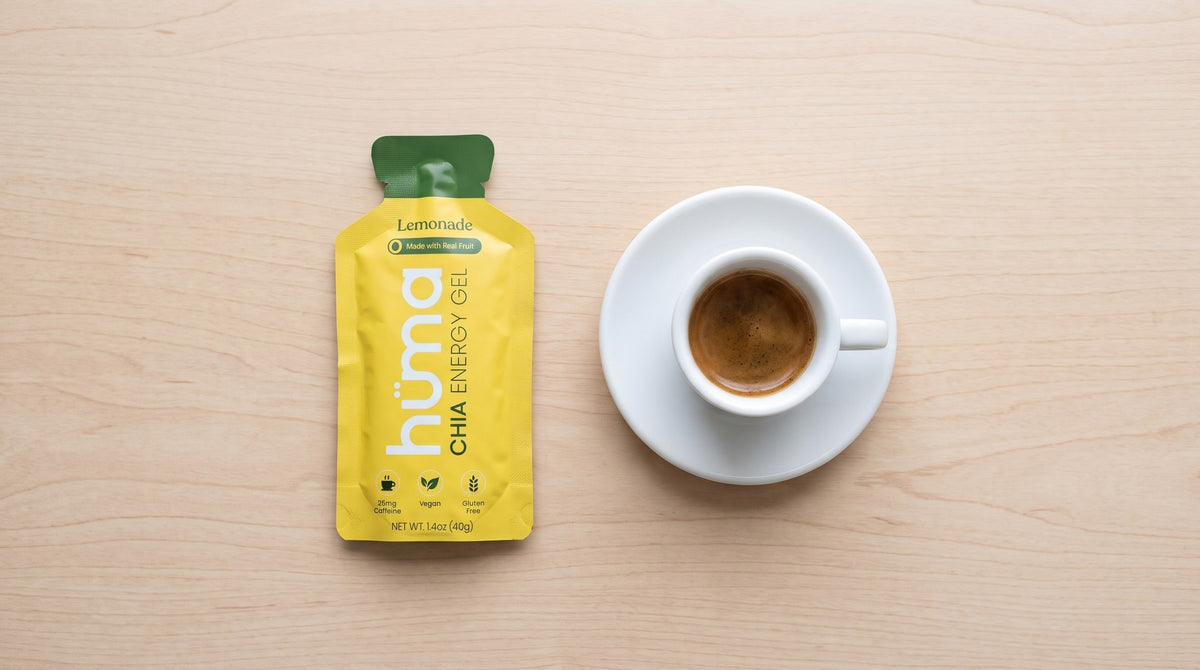
More caffeine isn't automatically better. Research keeps landing in the same place: a low-to-moderate dose captures most of caffeine's endurance benefit, while piling on more mostly adds jitters, gut trouble, and a rough night's sleep — and can even blunt the payoff. What matters most is your total from every source. Caffeine adds up, period: coffee, pre-workout, soda, and gels all count — so if you had a cup before the start, count it.
Is more caffeine better?
No — not past a point. Sports-nutrition research consistently finds that a low-to-moderate caffeine dose delivers most of the performance you're after — steadier endurance, sharper focus, lower perceived effort — while very high doses add little on top and start stacking downsides: a racing heart, a jittery stomach, trouble concentrating, and wrecked sleep afterward. In some studies a high dose actually performed worse than a smaller one. Caffeine follows a curve, not a straight line up. The goal is the sweet spot, not the maximum — which is good news, because the sweet spot is gentler on your stomach and your sleep too.
How much caffeine actually helps — and where does a gel fit?
The performance range most research points to is roughly 1.4 to 2.7 milligrams of caffeine per pound of body weight — the research states it as 3 to 6 mg per kilogram — which for a 150-pound runner works out to somewhere around 200 to 400 milligrams, taken about an hour before or spread across the effort. Here's the part that trips people up: that's a total, not a per-gel number. A single caffeinated gel is usually a top-up, not a full dose. A 25-milligram gel is a light nudge — about a quarter of a coffee. A 100-milligram gel is a real jolt — about a full cup. Neither is meant to deliver the whole research dose on its own; they're how you top up and steer your total during the effort, on top of whatever you started the day with.
Caffeine adds up — count every source
This is the rule that matters most, and the one most runners skip. Your body doesn't care whether the caffeine came from a mug, a can, a pre-workout scoop, or a gel — it all lands in the same total. So the real question isn't "how much caffeine is in my gel?" It's "how much am I taking today, from everything?" If you drink coffee before a run — most of us do — that cup is already 80 to 100 milligrams on the board before you take a step. Count it. A pre-race coffee plus a couple of caffeinated gels can quietly climb into a big dose, which is exactly how runners end up over-caffeinated and wondering why their stomach turned at mile 18 — one of the usual suspects in can you take too many energy gels. Add up your day first, then decide how much more the gels should carry.
How to use a low dose (about 25 mg)
A low-dose gel is the flexible one. Because 25 milligrams is a light touch, you can spread several across a long effort and keep your total in a comfortable range — a gentle, repeatable lift rather than one big spike. It's the friendlier choice if you're caffeine-sensitive, racing early in the morning, or just want to stay clear of the jitters. Think of low-dose gels as a dial you turn up gradually: take one when focus starts to slip, another later if you still need it, and stop when you've had enough. Since most of caffeine's benefit lives in this low-to-moderate zone anyway, staying measured costs you nothing.
How to use a high dose (about 100 mg)
A high-dose gel is a single, deliberate hit — not something to stack. One 100-milligram gel is roughly a full coffee, so it's best saved for a specific moment: the deep low late in a long race, the final hard push, or one planned dose timed 30 to 45 minutes before you'll need it (it takes that long to fully kick in). Use it once, place it well, and count it heavily toward your total — two of them plus a pre-race coffee is a lot of caffeine for anyone. If you're caffeine-sensitive, the high-dose gel is the one to approach carefully, or skip in favor of spreading low doses instead.
Low dose vs. high dose: how to deploy each
| Low dose (~25 mg) | High dose (~100 mg) | |
|---|---|---|
| Best for | A gentle, repeatable lift | One strong, deliberate hit |
| How to use it | Spread several; dial up gradually | Take once; place it at the low point or final push |
| Stackable? | Yes — within your daily total | No — one and done |
| Caffeine-sensitive? | The friendlier option | Approach carefully, or skip |
| Counts toward your total | ~a quarter coffee each | ~a full coffee |
Timing, tolerance, and the one rule that never changes
Two things hold no matter which dose you choose. First, timing: caffeine takes about 30 to 45 minutes to fully kick in, so take it a little before the low point, not after — a caffeinated gel works best arriving just as you need it. Second, tolerance is personal — the same dose that sharpens one runner leaves another wired and queasy. Many health authorities suggest healthy adults keep total daily caffeine under about 400 milligrams, but your own comfortable ceiling for racing might sit well below that, and only training will tell you where. And the rule that never changes: never test a new caffeine plan on race day. Rehearse it on long runs first — how to practice gel fueling in training builds it into your schedule — so race morning runs on a plan you already trust.
Building your caffeine plan with Hüma
Hüma's lineup is built for exactly this kind of control: six flavors at a light 25 milligrams, Double-Shot Mocha at a strong 100, and eight flavors with none at all. So you can build whichever strategy fits you — spread 25-milligram gels for a measured, repeatable lift, place one Double-Shot Mocha for a single deliberate jolt, or fuel entirely caffeine-free and get every bit of the carb benefit with zero caffeine. Each gel is 24 grams of real-food carbs either way, so the fueling never changes — only the caffeine does. Add up your total, coffee included, then let taste pick the rest. Caffeine in energy gels has the full per-flavor breakdown.
Related guides
- Caffeine in energy gels
- Which Hüma flavors are caffeinated?
- Can you take too many energy gels?
- How to practice gel fueling in training
- The Hüma flavor guide
FAQ
Is more caffeine better for running?
No. A low-to-moderate dose delivers most of caffeine's endurance benefit; very high doses add little and bring more jitters, stomach trouble, and disrupted sleep — sometimes even performing worse. Aim for the sweet spot, not the maximum.
How much caffeine should you take before a run?
Research points to roughly 1.4 to 2.7 milligrams per pound of body weight as a total — about 200 to 400 milligrams for a 150-pound runner, from all sources combined. A single gel is a top-up within that total, not the whole dose.
Does coffee count toward your caffeine for a race?
Yes — caffeine adds up regardless of source. A pre-race coffee is already 80 to 100 milligrams before you start, so count it along with any caffeinated gels when you plan your total.
When should you use a low-dose vs. a high-dose caffeine gel?
Use low-dose gels (around 25 mg) to spread a gentle, repeatable lift across a long effort and keep your total in check. Use a high-dose gel (around 100 mg) as one deliberate hit for a deep low or the final push — placed once, not stacked.
How much caffeine is too much for a run?
It's personal. Many health authorities suggest keeping total daily caffeine under about 400 milligrams for healthy adults, but your comfortable ceiling for racing may be lower. High doses raise the odds of jitters, GI upset, and a racing heart — start conservative and rehearse in training.