
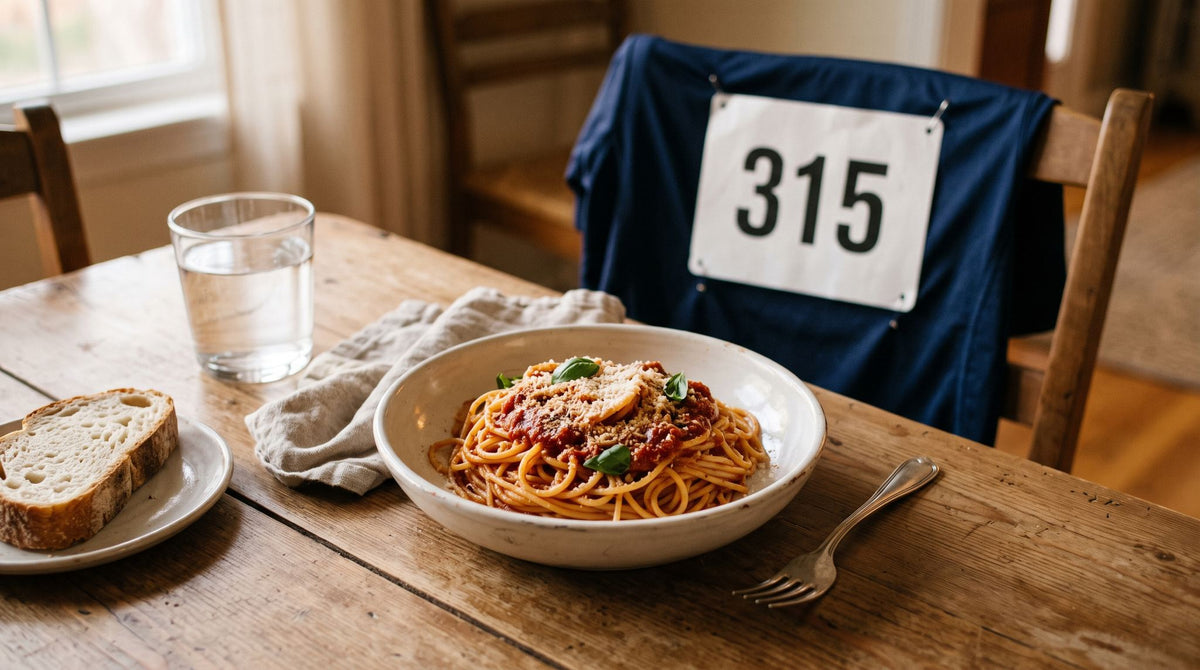
The night before a race, eat a normal-to-large carb-forward dinner you've eaten many times before — pasta, rice, potatoes — with low fiber, low fat, and nothing new. Not a feast: the real carb loading happened over the previous days, and tonight is just the last normal deposit. Eat at your usual hour, keep sipping water, and let the meal be a little boring. Boring digests beautifully.
What should the night-before dinner look like?
Carb-forward, familiar, and normal-to-large — a plate you'd be happy to see any Tuesday, tilted toward the carbs. Simple starches do the heavy lifting; a modest portion of lean protein rides along; the vegetables show up cooked and in small numbers. Tonight is not the night your dinner earns a medal — it just has to show up, digest quietly, and leave the stage. Some proven plate shapes:
| Plate | Why it works |
|---|---|
| Pasta with simple tomato sauce and chicken, bread on the side | The classic for a reason — big carbs, low fat, low fiber |
| White rice with teriyaki chicken or salmon | Rice is about as gentle as carbs get; easy to size up |
| Baked or mashed potatoes with a lean protein | Familiar, starchy, and easy on the gut |
| A rice-heavy burrito bowl — easy on the beans and cheese | Carb-forward as long as the rice, not the toppings, is the star |
Why shouldn't it be a feast?
Because the loading is already done. If you've spent the last day or two eating carb-forward — the job carb loading before a marathon walks through — your glycogen stores are nearly full before you sit down tonight. Dinner tops off the last few percent; it can't cram in what two days were for. And an oversized meal keeps your gut working overnight, which is exactly the system you want quiet at 6 a.m. A feast tonight doesn't add fuel — it adds a heavy stomach at the start line.
What should you skip the night before a race?
- Anything new — ever. Not the intriguing local restaurant, not a teammate's favorite dish, not a cuisine you've been meaning to try. Race eve is the worst possible night to gather data.
- High-fiber plates. Big raw salads, bean-heavy dishes, whole-grain everything — fiber keeps your gut busy well into the morning.
- High-fat and fried food. Cream sauces, deep-fried anything, a very good burger — fat digests slowly and can still be sitting there at bedtime.
- Spicy dishes — unless spicy is genuinely your everyday normal.
- The second beer. One with dinner won't ruin anything if it's your routine; a few work against your sleep and your hydration. Save the toast for the finish line.
When should you eat dinner before a race?
At your normal dinner hour — just not late. The goal is to be done eating early enough that digestion is finished before bed, not happening in it. For a 7 a.m. start, most endurance athletes — runners, cyclists, and triathletes alike — land dinner between 6 and 8 p.m. If race-day logistics push dinner late, size it down rather than powering through a big plate at 9:30 — a lighter dinner plus a familiar evening snack beats a heavy meal you take to bed.
What about drinking water tonight?
Sip steadily through the evening and have water with dinner — that's it. There's no need to chug; you can't store a surplus overnight, and the main thing a heroic water bottle achieves is a 2 a.m. wake-up. If it's been a hot week or you're a heavy sweater, salting your dinner normally and adding a glass of something with electrolytes covers it. Show up to the morning normally hydrated and let breakfast do the rest.
Does the plan continue in the morning?
It does — tonight's dinner and tomorrow's breakfast are two halves of the same handoff. The dinner leaves your stores topped off; the morning meal, two to four hours before the gun, replaces what the night's sleep quietly spent. What to eat the morning of a race takes it from your alarm to the start line, and if you're newer to all of this, Endurance Nutrition 101 ties the whole picture together — with how to fuel your first marathon carrying it through the race itself.
The night before, with Hüma
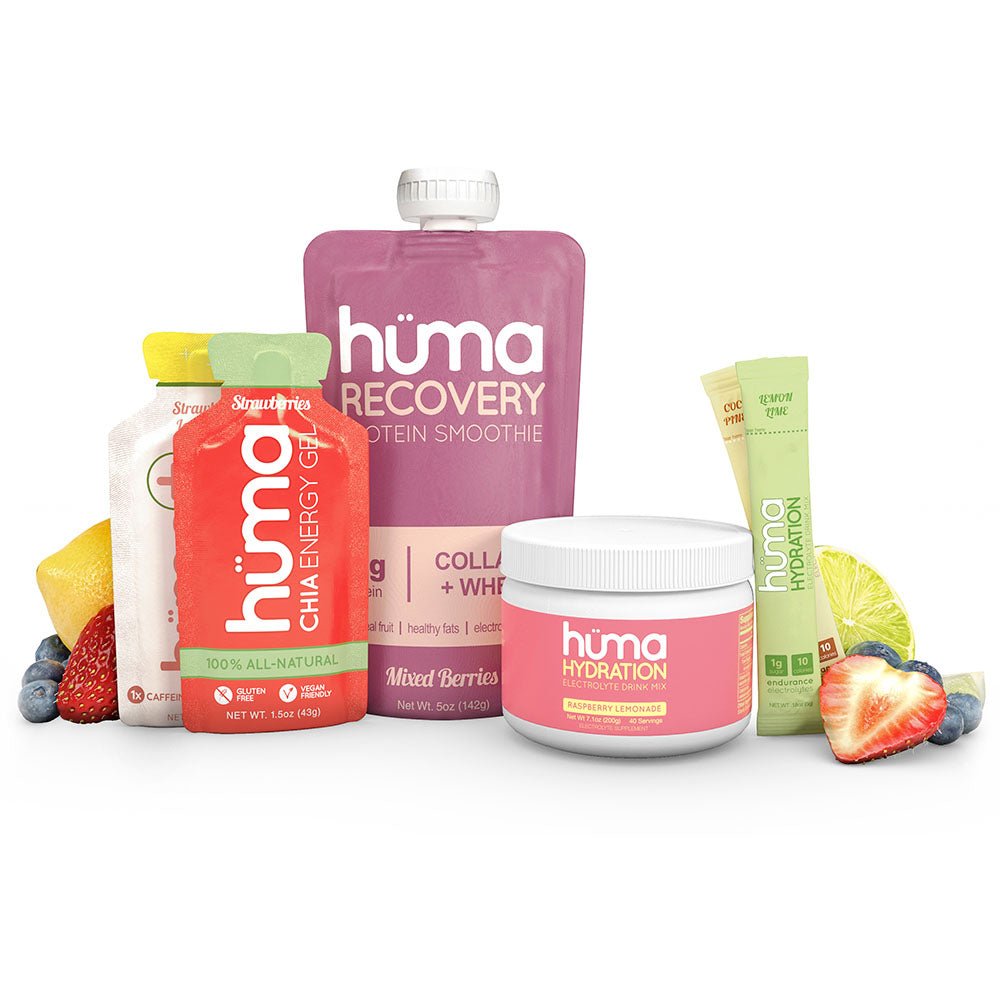
Dinner is your kitchen's job — Hüma's part of race eve is the flat-lay. When you set out the bib and pin the timing chip, count out tomorrow's gels and tuck one in the pocket you'll actually reach. The nothing-new rule covers fuel too: race morning's gels should be flavors you've already run with, picked by taste — 24 grams of real-food carbs each, from brown rice syrup and real fruit purees, with chia, ready to go down smooth on a race-morning stomach.
Related guides
- How to carb load before a marathon (without overdoing it)
- What to eat the morning of a race (and how long before)
- What to eat after a long run
- How to fuel your first marathon
- Endurance Nutrition 101: the basics of fueling
FAQ
What is the best dinner the night before a race?
A normal-to-large carb-forward meal you've eaten many times — pasta with simple sauce, rice with lean protein, or potatoes. Low fiber, low fat, nothing new.
Should you eat a huge pasta dinner the night before?
No — normal-to-large, not a feast. Carb loading happens over the previous one to three days; one big dinner can't do that job, and an oversized meal just sits heavy on race morning.
What foods should you avoid the night before a race?
Anything new, high-fiber plates like big salads and beans, high-fat and fried food, unfamiliar spice, and more than a routine single drink.
What time should you eat dinner before a race?
Your normal dinner hour, finished early enough that digestion wraps up before bed — roughly 6 to 8 p.m. for a 7 a.m. start. If dinner runs late, make it lighter.
Should you drink extra water the night before a race?
No need to chug. Sip steadily through the evening and drink water with dinner — you can't bank a surplus overnight, and overdoing it mostly costs you sleep.