

After a long run, eat carbs and protein within a couple of hours — a real meal, not a wrapper. The famous 30-minute window is softer than advertised: unless you're training again soon, your total for the day matters more than beating a stopwatch. And a gel isn't your best recovery tool — not because its carbs don't count, but because recovery wants carbs and protein in meal-size amounts, more than one pouch is built to carry. The run is done; the fork takes over.
What does your body need after a long run?
Three things, in plain terms: carbs to refill the glycogen the run spent, protein to give your muscles material to rebuild with, and fluids to replace what you sweated out. A long effort can drain most of the roughly 90-minutes-to-two-hours of stored carbs you started with, so the refill is real work — but it's pleasant work, done at a table, at meal size. The same hourly-carb logic that governs the run itself is laid out in Endurance Nutrition 101; recovery is just that story run in reverse.
Do you have to eat within 30 minutes?
Not the way the myth says. Your muscles do restock glycogen fastest in the first hour or so after a run — that part is real. But the window matters most when you're training again the same day or early the next morning, and hardly at all when your next hard effort is days out. For most of us running one long run a week, eating a solid carbs-plus-protein meal within a couple of hours — and eating normally the rest of the day — restocks the tank just fine. So if the drive home eats your first half hour, nothing is lost. The window is a nice-to-hit, not a deadline with consequences.
What are good post-run meals?
Anything that puts carbs and protein on the same plate and sounds good to a tired human. Some proven combinations:
| Meal or snack | What it delivers |
|---|---|
| Chocolate milk and a bagel | The classic bridge — quick carbs plus protein while real food gets going |
| Eggs, toast, and fruit | The long-run brunch: protein, carbs, and something fresh |
| Yogurt with granola and berries | Easy on a not-quite-hungry stomach, carbs and protein together |
| Rice bowl with chicken | A full glycogen refill with the protein built in |
| Peanut butter and jelly with a glass of milk | Cheap, fast, and quietly near-perfect for the job |
One shortcut worth naming: when a full meal is still a while off — or your appetite hasn't clocked in yet — a protein shake or a high-protein snack (Greek yogurt, a protein bar, a handful of jerky) is the fastest way to get the protein in. Just pair it with a carb source — a banana, a bagel, a glass of juice — since powders and bars tend to run protein-heavy and carb-light, and the carbs are half the recovery job.
What about fluids and electrolytes?
Drink to thirst, and keep drinking past the first glass — thirst switches off before you've fully caught up after a long, sweaty effort. Sodium comes back the easy way: salt your food normally, and let the meal do double duty. If it was a hot one and you finished crusted in salt, something with electrolytes alongside the water helps the fluid stick around instead of passing straight through. The fuller during-the-run picture of fluids versus fuel lives in hydration vs. gels.
Is a gel ever recovery fuel?
It can be — just not efficiently. A gel's carbs are the same carbs your muscles restock with, so in a pinch one will do something; this was never about the wrong nutrient. It's about size and price. A single pouch carries a fraction of the carbs a full refill calls for, brings no protein to rebuild with, and at a few dollars a gel it's an expensive way to buy carbs a meal delivers for less. Where a gel does earn its place is the gap — a trailhead far from food, a long drive home — as a bridge to the real thing, not the real thing itself. For the actual job, reach for carbs and protein together: a meal, a protein shake with a carb alongside, or a recovery product built for it.
Recovery and the next run, with Hüma
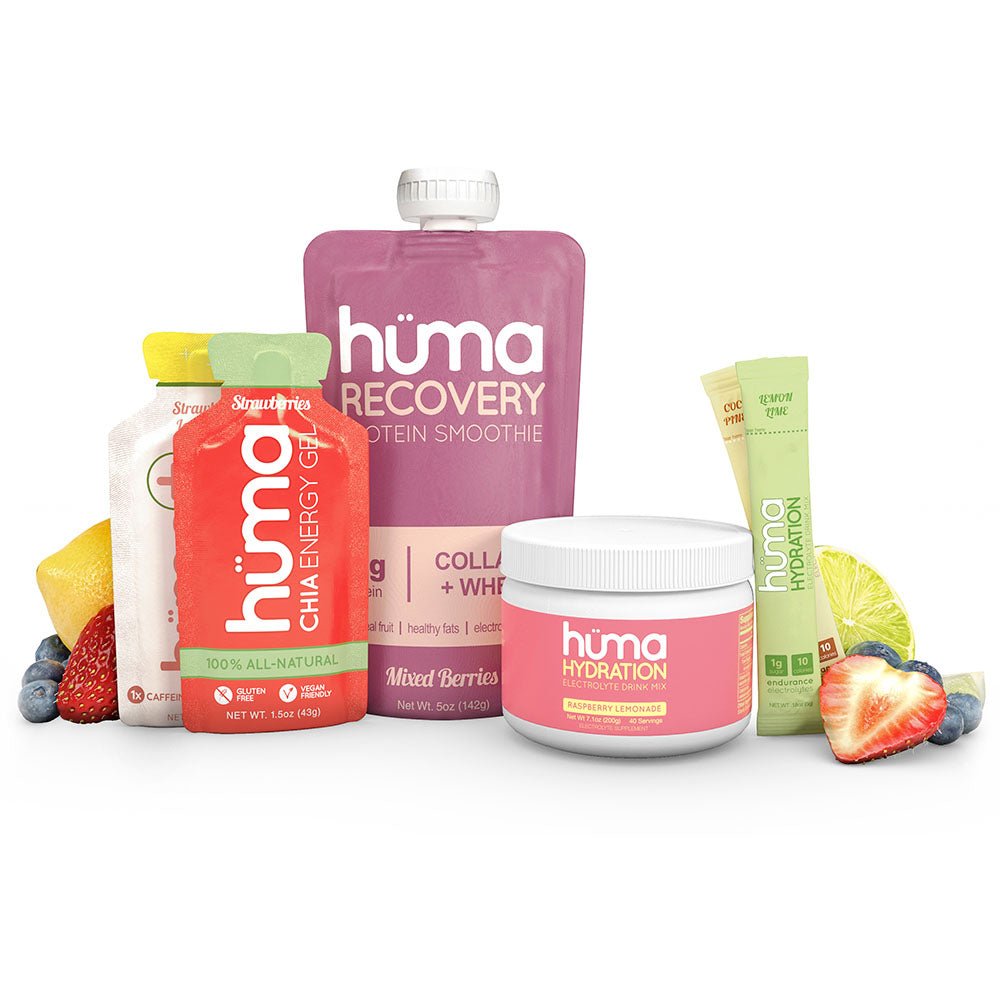
Recovery is your kitchen's job — Hüma's part is the run itself. Where the two meet is the restock: the end of a long run is when you notice the gel box is running low, and next week's effort deserves the flavors you actually like (taste leads — Strawberries is the not-sure-where-to-start pick). Each pouch is 24 grams of real-food carbs from brown rice syrup and real fruit purees, with chia, ready for the next time you're mid-run rather than post-run. If you're still dialing in that during-the-run rhythm, how to practice gel fueling in training is the place to start — and when a race lands on the calendar, carb loading flips this whole refill logic into pre-race mode.
Related guides
- How to carb load before a marathon (without overdoing it)
- What to eat the night before a race
- What to eat the morning of a race (and how long before)
- How to practice gel fueling in training
- Endurance Nutrition 101: the basics of fueling
FAQ
What should you eat after a long run?
A real meal with carbs and protein within a couple of hours — eggs and toast, a rice bowl with chicken, yogurt with granola. When a meal isn't handy, a protein shake or a high-protein snack with some carbs alongside (chocolate milk and a bagel, a shake with a banana) bridges the gap fast. Then eat normally the rest of the day.
Is the 30-minute recovery window real?
Partly. Muscles restock glycogen fastest in the first hour, but that urgency only matters if you're training again the same day or early the next morning. Otherwise, a meal within a couple of hours plus a normal day of eating does the job.
Are energy gels good for recovery?
They can be, but they're not efficient at it: one pouch is short on total carbs, has no protein, and costs more than the same carbs from food. A gel works as a bridge when you're far from a meal — but recovery's real job, carbs plus protein in meal-size amounts, belongs to a meal, a protein shake, or a recovery product built for it.
What should you drink after a long run?
Water to thirst and then some, since thirst quits early. Salt your food normally to replace sodium, and after a hot, sweaty run add something with electrolytes so the fluid stays with you.
What if you're not hungry after a long run?
Common — appetite often goes quiet after a hard effort. Start with liquids like chocolate milk, juice, or a protein shake, and eat the real meal when your appetite returns within the next couple of hours. No forcing required.