

That sweet film an energy gel leaves on your tongue comes down to three things: how concentrated the gel is, how intensely sweet it tastes, and where the flavor comes from — real food or added flavoring. Despite what you'll read online, none of it comes from a hidden sweetener. The quickest fix mid-run is a mouthful of water, swished for a second before you swallow — and yes, some gels leave far more film than others.
Why do energy gels leave an aftertaste?
A gel is a deliberately concentrated dose of sugars, and concentrated sweetness lingers. The residue physically coats your tongue, and your taste buds keep registering it for a while after you swallow — the same reason a spoonful of syrup stays with you longer than a sip of juice. Three honest drivers explain almost all of it. Concentration: a thick, syrupy gel leaves more film than a thinner one. Sweetness intensity: the sweeter the hit, the longer the tail. And where the flavor comes from: added flavorings — natural or artificial — are concentrated, assertive compounds built to stand out, so they tend to cling and linger, while flavor that comes from real food is usually subtler and fades more cleanly. Worth clearing up one myth while we're here, because the internet gets it wrong: the culprit is not artificial sweeteners. Energy gels don't use them — the carbs a gel is built on are already sweet on their own, so there's no sweetener additive to blame. Aftertaste is a story about concentration, sweetness, and flavor source — not a hidden ingredient to hunt down.
Do some gels leave more aftertaste than others?
They do — and it comes down to formula, not luck. Texture is the biggest lever: the thicker and more syrupy a gel, the more it coats your mouth and the longer the film hangs around, while a gel that carries more water goes down less concentrated and rinses away easily. Flavor source is the other big one. Gels that lean on added flavoring to taste like something tend to leave more of a lingering note, because those flavor compounds are built to be assertive; gels whose taste comes from real food are usually gentler on the way out. It's a real enough factor that a few gels skip added flavor entirely and go essentially unflavored — nothing added means nothing extra to linger, and it sidesteps flavor fatigue and keeps the recipe simple and cheap besides, though going flavorless trades away the variety that keeps fueling pleasant over a long day. If you've written off gels because one left your mouth coated for a mile, that's a property of that gel's formula — not of gels as a category.
| What drives the aftertaste | What it means for you |
|---|---|
| Concentration — thick, syrupy gels | More film, longer to clear; a few sips of water help more |
| Water content — thinner, less concentrated gels | Less coating, rinses cleaner on its own |
| Sweetness intensity | A stronger sweet hit leaves a longer tail, whatever the source |
| Flavor source — real food vs. added flavoring | Added flavorings are built to be assertive and can linger; real-food flavor tends to fade cleaner |
How do you get rid of gel aftertaste mid-run?
Water is the whole answer, used two ways. The simplest is a rinse: after your last sip of gel, take a mouthful of water, swish it around for a second or two, and swallow — it lifts the residue off your tongue and resets your mouth. The other is to alternate as you go: a sip of gel, a sip of water, a sip of gel, which thins each swallow and never lets the film build up in the first place. Both are covered as part of the wider swallowing technique in how to actually eat a gel mid-run, and the reason a gel wants water alongside it either way is in do you need water with energy gels. The reason it's worth bothering: a lingering sweet film is exactly what makes the next gel harder to face at mile 18 — clearing it keeps you on your fueling plan.
What clears it after the run?
Once you're done, the options widen. Plain water still does most of the work, but a few extras help reset a tired palate faster:
- Something tart or fresh. A piece of fruit, a slice of orange, anything acidic cuts through lingering sweetness fast.
- Milk. The proteins in milk bind to what's left on your tongue — one reason chocolate milk is a popular post-run reach for more than its carbs.
- Chewing gum or brushing. Both stimulate saliva and physically clear residue; a quick brush and tongue-scrape resets things completely.
None of this is urgent — it's comfort, not fueling. If the taste dragging on is really a case of the same flavor wearing out its welcome over hours rather than a single gel's residue, that's a different problem with its own fix: how to avoid flavor fatigue covers rotating flavors so nothing gets old.
Does an aftertaste mean the gel is bad for you?
No — an aftertaste is a taste sensation, nothing more. It tells you how concentrated and how sweet a gel is; it says nothing about whether the fuel works or whether it's good or bad for you. A gel that leaves a heavier film delivers its carbs exactly as well as one that rinses clean — the difference is comfort in your mouth, not function in your muscles. If a gel's aftertaste bugs you, that's a fine reason to switch to one you find more pleasant, but it isn't a health signal. The thing that actually matters is that you keep fueling.
Less aftertaste, with Hüma
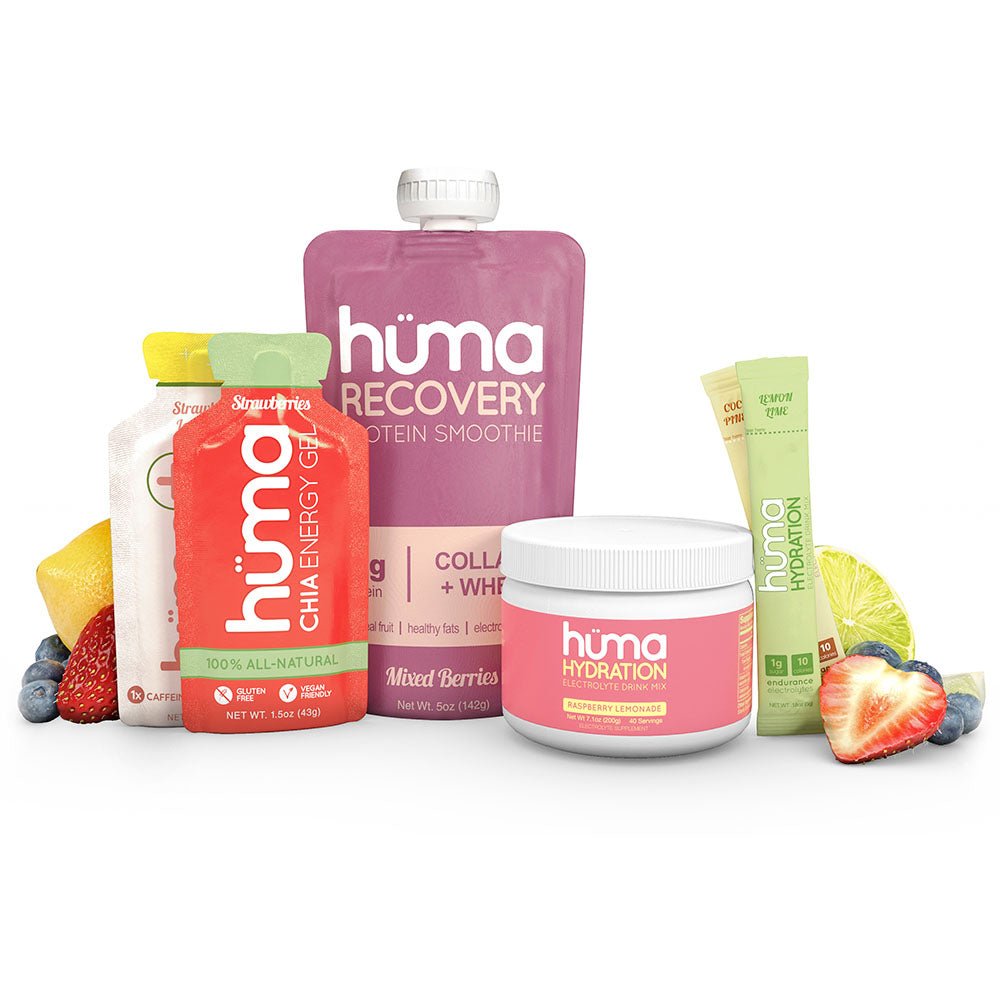
This is one place Hüma's formula has an honest, structural edge. Real fruit purees carry more water into the gel, so a Hüma is semi-concentrated rather than thick and syrupy — it goes down less coating to begin with and rinses cleaner with a sip of water. The flavors come from real fruit rather than a strong synthetic profile, which many runners find fades more gently once they've swallowed. It's not magic and palates differ, but if a coated-mouth feeling is what soured you on gels, a less concentrated one is worth a try. Real-food carbs from brown rice syrup and real fruit purees, with chia, two to three per hour — take each with a few sips of water and the film barely gets a chance to settle. The Hüma flavor guide walks the lineup if you want to pick by taste.
Related guides
- How to actually eat an energy gel mid-run
- How to avoid flavor fatigue
- Do you need water with energy gels?
- Real food vs. maltodextrin energy gels
- The Hüma flavor guide
FAQ
Why do energy gels leave an aftertaste?
Because a gel is a concentrated dose of sugar, and concentrated sweetness lingers — the residue coats your tongue and your taste buds keep registering it after you swallow. The main drivers are how thick the gel is, how intensely sweet it tastes, and whether its flavor comes from real food or from added flavoring that clings. It is not caused by artificial sweeteners; energy gels don't use them.
Do energy gels have artificial sweeteners?
No. The carbs a gel is built on are already sweet on their own, so no sweetener additive is needed — which is why the aftertaste comes down to concentration and sweetness intensity, not a hidden sweetener.
How do you get rid of gel aftertaste while running?
Rinse with a mouthful of water and swish it before you swallow, or alternate sips of gel and water as you take it so the film never builds up. A less concentrated gel leaves less to clear in the first place.
Do some energy gels leave less aftertaste than others?
Yes — it comes down to formula. Thick, syrupy gels coat the mouth more; gels that carry more water go down less concentrated and rinse cleaner. Flavor source matters too: added flavorings tend to linger, while flavor from real food fades more cleanly — which is why a few gels skip added flavor entirely and go unflavored.
Does an aftertaste mean a gel is low quality or bad for you?
No. Aftertaste is a taste sensation tied to concentration and sweetness, not a sign of quality or a health signal. A gel that leaves more film delivers its carbs just as well — the difference is comfort in your mouth, not how the fuel works.